How Doctors Choose the Right Insulin for Diabetes Patients

Many diabetes patients know they need insulin, but they do not always understand why their doctor chooses one type instead of another. One person may be given fast-acting insulin before meals. Another may be given long-acting insulin once a day. Someone else may be placed on premixed insulin like NovoMix, Mixtard, Humulin 70/30, or Humalog Mix.
These choices are not random. Doctors choose insulin based on your blood sugar pattern, meal routine, type of diabetes, risk of low blood sugar, lifestyle, and how easily you can use and store the insulin.
In this article, you will learn:
- Why different patients need different insulin types
- How doctors choose between rapid-acting, short-acting, long-acting, and premixed insulin
- What your blood sugar pattern can say about the insulin you need
- Why meal timing matters when using insulin
- Common insulin mistakes to avoid
- Why you should not switch insulin brands without medical advice
- How insulin storage affects safety
- What to ask your doctor or pharmacist before buying insulin
What Is Insulin and Why Do Some Diabetes Patients Need It?
Insulin is a hormone that helps move sugar from your blood into your body’s cells, where it can be used for energy. When insulin is not working properly, sugar can build up in the blood.
People with diabetes may need insulin for different reasons.
In type 1 diabetes, the body makes little or no insulin, so insulin treatment is usually needed for survival.
In type 2 diabetes, the body may still make insulin, but it may not use it well. Some people with type 2 diabetes can manage their blood sugar with food changes, exercise, tablets, or other injectables. But if blood sugar remains high, a doctor may add insulin.
Some women with gestational diabetes may also need insulin during pregnancy if blood sugar is not controlled with diet and other measures.
The goal of insulin treatment is not just to “bring sugar down.” The goal is to control blood sugar safely without causing frequent low blood sugar.
Why There Are Different Types of Insulin
Insulin types are grouped by how fast they start working and how long they last.
Some insulins work quickly and are used around meals. Some work slowly and help control blood sugar through the day and night. Some are mixed together to give both actions in one product.
| Insulin Type | Main Role |
|---|---|
| Rapid-acting insulin | Helps control blood sugar rise after meals |
| Short-acting insulin | Helps with mealtime blood sugar but starts slower |
| Long-acting insulin | Gives background blood sugar control |
| Ultra-long-acting insulin | Gives longer background control |
| Premixed insulin | Combines mealtime and background insulin in one product |
This is why two diabetes patients may both be on insulin but use completely different products.
The Main Thing Doctors Look At: Your Blood Sugar Pattern
Before choosing insulin, doctors may look at your blood sugar readings. They want to know when your sugar is highest and when it drops too low.
They may check:
- Fasting blood sugar
- Blood sugar before meals
- Blood sugar after meals
- Bedtime blood sugar
- HbA1c result
- Episodes of low blood sugar
- Meal timing
- Exercise pattern
- Other medicines you use
If your fasting blood sugar is high, your doctor may think about background insulin support.
If your sugar rises mainly after eating, your doctor may consider mealtime insulin.
If both fasting and after-meal sugar are high, your doctor may use a combination plan or premixed insulin.
This is why blood sugar monitoring matters. Products like Accu-Chek Machine Active, On Call Plus II Glucose Meter, On Call Plus II Test Strips, and Accu-Chek Active Test Strips can help patients track their readings at home when advised by a healthcare professional.
How Doctors Choose Rapid-Acting Insulin
Rapid-acting insulin is often used when blood sugar rises after meals. It starts working quickly, so it is commonly taken close to mealtime, depending on the doctor’s instruction.
Doctors may choose rapid-acting insulin when:
- Blood sugar spikes after breakfast, lunch, or dinner
- The patient needs insulin around meals
- The patient has type 1 diabetes and needs mealtime insulin
- The patient uses a basal-bolus insulin plan
- The patient needs more flexible control around food
- The patient’s after-meal readings are still high
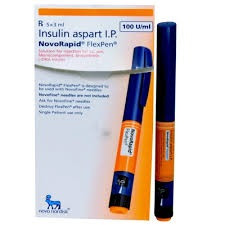
An example of rapid-acting insulin available on HubPharm is NovoRapid FlexPen Insulin Aspart 100U/ml.
NovoRapid is commonly used around meals to help manage blood sugar rises after eating. It should only be used as prescribed. Taking rapid-acting insulin and delaying food can cause low blood sugar.
How Doctors Choose Short-Acting Insulin
Short-acting insulin also helps control blood sugar around meals, but it usually starts slower than rapid-acting insulin. This means timing matters. Some short-acting insulin may need to be taken earlier before food, depending on the prescription.
Doctors may choose short-acting insulin when:
- It fits the patient’s meal routine
- It is the insulin the patient has been stable on
- The doctor wants a mealtime insulin option
- Cost or availability is part of the treatment decision
- The patient can follow the timing instructions
HubPharm lists Actrapid 100IU x 10ml as a short-acting insulin option.
Actrapid contains human insulin and may be used for blood sugar control in people with diabetes. Since it is not the same as rapid-acting insulin, patients should follow the timing given by their doctor or pharmacist.
How Doctors Choose Long-Acting Insulin

Long-acting insulin is often called background insulin or basal insulin. It helps keep blood sugar steady between meals and overnight.
Doctors may choose long-acting insulin when:
- Fasting blood sugar is high
- Blood sugar rises overnight
- The patient needs steady background insulin
- Tablets or other medicines are no longer enough
- The patient has type 1 diabetes and needs basal insulin
- The patient has type 2 diabetes and needs added insulin support
Long-acting insulin is not mainly for covering food. It helps with background control. So if your blood sugar rises mostly after meals, long-acting insulin alone may not be enough.
HubPharm long-acting insulin options include Lantus SoloStar Insulin Glargine and Levemir FlexPen Insulin Detemir 100U/ml.
How Doctors Choose Ultra-Long-Acting Insulin
Ultra-long-acting insulin gives background insulin cover for a longer period. It may offer more flexibility for some patients, but it still needs to be used correctly and consistently.
Doctors may consider ultra-long-acting insulin when:
- The patient needs long background control
- The patient has a higher risk of overnight low blood sugar
- The patient needs a more flexible basal insulin plan
- The doctor wants a flatter insulin action profile
An example available on HubPharm is Tresiba Insulin Degludec.
Tresiba is used as a long-acting insulin option for people with diabetes. The dose must be individualized by a healthcare professional.
How Doctors Choose Premixed Insulin
Premixed insulin combines two actions in one product. It usually contains a mealtime part and a background part.
Doctors may choose premixed insulin when:
- The patient needs both mealtime and background insulin
- The patient eats at regular times
- A simpler insulin routine is needed
- The patient may struggle with many injections
- The doctor wants a fixed insulin combination
- The blood sugar pattern fits a mixed insulin plan
Premixed insulin can be helpful, but it is less flexible than using separate mealtime and background insulin. If meals are skipped, delayed, or much smaller than usual, the risk of low blood sugar can increase.
Premixed insulin options on HubPharm include NovoMix 30 FlexPen Insulin Aspart 100U/ml, Mixtard HM 100IU/ml Premixed 30/70, Mixtard 30 FlexPen 100/ml Injection 3ml, Humulin 70/30 Insulin Pen, and Humalog Mix 25 100U/ml.
Basal-Bolus vs Premixed Insulin
Some patients use one insulin. Some use more than one. It depends on the treatment goal.
A basal-only plan usually uses long-acting insulin for background control. This may be used in some type 2 diabetes patients.
A basal-bolus plan uses long-acting insulin for background control and rapid-acting insulin for meals. This is common in type 1 diabetes and may also be used in some type 2 diabetes patients.
A premixed insulin plan uses one product that already contains two insulin actions. This may be easier for some patients, but it requires regular meal timing.
| Plan | How It Works | Who It May Suit |
|---|---|---|
| Basal only | Long-acting insulin once or twice daily | Some type 2 diabetes patients |
| Basal-bolus | Long-acting plus mealtime insulin | Type 1 diabetes and some type 2 patients |
| Premixed insulin | Mealtime and background insulin in one product | Patients with regular meal patterns |
| Correction insulin | Extra insulin to correct high sugar | Only when prescribed |
Why Meal Timing Matters With Insulin
Insulin and food timing must match. This is one of the biggest reasons doctors ask about your eating pattern before choosing insulin.
They may ask:
- Do you eat breakfast every day?
- Do you skip meals?
- Do you eat at regular times?
- Do you fast?
- Do you work shifts?
- Do you exercise often?
- Can you monitor your blood sugar?
If you take rapid-acting insulin and delay food, your sugar may drop too low. If you take premixed insulin and skip a meal, the same thing can happen.
This is why insulin is not just about the product name. It is also about how your real life works.
Low Blood Sugar Risk Affects the Insulin Choice
One of the most important side effects of insulin is low blood sugar, also called hypoglycemia.
Signs of low blood sugar may include:
- Sweating
- Shaking
- Hunger
- Weakness
- Fast heartbeat
- Dizziness
- Headache
- Blurred vision
- Confusion
Doctors may choose or adjust insulin based on your risk of low blood sugar. This risk may be higher if you skip meals, exercise more than usual, take too much insulin, have kidney problems, drink alcohol, or use certain diabetes medicines.
Every patient using insulin should know what low blood sugar feels like and how to treat it.
Why You Should Not Switch Insulin Brands on Your Own
Insulin products are not automatically interchangeable. Even when two products are used for diabetes, they may work at different speeds, last for different lengths of time, or require different timing.
For example:
NovoRapid is not the same as NovoMix.
Lantus is not the same as Mixtard.
Actrapid is not the same as Tresiba.
Premixed 30/70 insulin is not always the same as another insulin mix.
Switching without medical advice can lead to low blood sugar, high blood sugar, wrong timing, or wrong dosing. If your prescribed insulin is not available, speak with your doctor or pharmacist before buying an alternative.
Insulin Pens, Vials, and Devices Matter Too
Doctors also consider the delivery method.
Some insulin comes in a vial. Some comes in a prefilled pen. Some patients may need cartridges or specific pen needles.
The delivery method matters because:
- Pens may be easier for some patients
- Vials may require syringes and more training
- Some products need specific devices
- Wrong technique can affect the dose
- Injection site rotation is important
- Patients should not share insulin pens
If you are buying insulin online, confirm whether the product is a pen, vial, cartridge, or FlexPen before making payment.
Insulin Storage Is Part of Insulin Safety
Insulin is sensitive to heat, freezing, and sunlight. If insulin is stored wrongly, it may not work properly.
This is very important in Nigeria because of heat, travel time, and power supply issues.
General storage points:
- Unopened insulin often needs refrigeration
- Do not freeze insulin
- Do not leave insulin in direct sunlight
- Do not leave insulin in a hot car
- Follow the storage instructions on the product label
- Ask how long the insulin can stay at room temperature after opening
- Check if the insulin looks unusual before use
If insulin has changed appearance, has particles, has been frozen, or has been exposed to heat for too long, speak with a pharmacist before using it.
Common Insulin Mistakes Patients Should Avoid
Many insulin problems come from small mistakes that affect timing, storage, or dose.
Common mistakes include:
- Taking fast-acting insulin and delaying food
- Skipping meals after premixed insulin
- Changing dose without doctor advice
- Switching brands without confirmation
- Using expired insulin
- Using insulin that was stored badly
- Freezing insulin
- Leaving insulin in heat
- Injecting the same spot every time
- Not rotating injection sites
- Sharing insulin pens
- Not checking blood sugar
- Confusing similar-looking insulin pens
- Taking long-acting insulin instead of mealtime insulin by mistake
If you use more than one insulin, label them clearly and confirm each one before injecting.
What to Ask Your Doctor Before Starting Insulin
Before starting insulin, ask:
- What type of insulin am I using?
- Is this insulin for meals, background control, or both?
- When exactly should I take it?
- Should I take it before or after food?
- What should I do if I skip a meal?
- What should I do if I miss a dose?
- What blood sugar level is too low?
- How do I treat low blood sugar?
- Can I use this with my other diabetes medicines?
- How should I store it?
- How long can it stay outside the fridge?
- When should I come back for review?
These questions help you use insulin safely, not blindly.
What to Ask Your Pharmacist Before Buying Insulin
Before buying insulin, ask:
- Is this the exact insulin my doctor prescribed?
- Is it rapid-acting, short-acting, long-acting, or premixed?
- Is it a pen, vial, cartridge, or FlexPen?
- Does it need a special needle or device?
- What is the strength?
- What is the expiry date?
- How should it be stored?
- How will it be delivered?
- What should I do if it arrives warm?
- Can this be substituted safely?
HubPharm Africa can help patients confirm the right product before payment, especially when the prescription name, brand name, or insulin type is confusing.
Buying Insulin Online in Nigeria
If you are buying insulin online in Nigeria, be careful. Insulin is not like a regular product you can swap casually.
Before buying, confirm:
- The exact insulin name
- The active ingredient
- The strength, such as 100U/ml
- Whether it is a pen or vial
- The expiry date
- Storage and delivery conditions
- Whether you need needles, syringes, or test strips
- Whether the product matches your prescription
You can check insulin options on HubPharm Africa, including rapid-acting insulin like NovoRapid FlexPen, short-acting insulin like Actrapid, long-acting options like Lantus SoloStar, Levemir FlexPen, and Tresiba, as well as premixed options like NovoMix 30 FlexPen, Mixtard HM, Mixtard 30 FlexPen, Humulin 70/30, and Humalog Mix 25.
Prices may change due to exchange rate, and shipping is calculated at checkout. Speak with a pharmacist if you are unsure before making payment.
Conclusion
Doctors choose insulin based on how your blood sugar behaves, not just the name of the product. Some insulin works quickly for meals. Some works slowly in the background. Some combines both actions in one injection.
The right insulin depends on your diabetes type, blood sugar readings, meals, lifestyle, risk of low blood sugar, and ability to store and use insulin safely.
If your doctor has prescribed insulin, do not switch brands or types on your own. Confirm the exact product, ask about storage, and speak with a pharmacist if anything is unclear.
FAQ
What are the main types of insulin?
The main types include rapid-acting, short-acting, long-acting, ultra-long-acting, and premixed insulin.
How do doctors choose the right insulin?
Doctors look at your blood sugar pattern, diabetes type, meals, lifestyle, low blood sugar risk, other medicines, and how easily you can use and store insulin.
Which insulin is taken before meals?
Rapid-acting and short-acting insulin are commonly used around meals, depending on the prescription.
Which insulin works all day?
Long-acting and ultra-long-acting insulin provide background blood sugar control through the day and night.
What is premixed insulin used for?
Premixed insulin combines mealtime and background insulin in one product. It may suit patients who need both actions and eat at regular times.
Is NovoMix 30 fast-acting or long-acting?
NovoMix 30 is premixed insulin. It contains a rapid-acting part and an intermediate-acting part.
Can I switch from one insulin brand to another?
No. Do not switch insulin brands or types without medical advice because the timing, dose, and action may differ.
Can insulin cause low blood sugar?
Yes. Low blood sugar is one of the most important risks of insulin, especially if meals are delayed, doses are too high, or activity increases.
How should insulin be stored?
Storage depends on the product. Many unopened insulins need refrigeration, but insulin should not be frozen or exposed to heat. Always check the leaflet.
Can I buy insulin online in Nigeria?
Yes, but buy from a trusted pharmacy, confirm the exact product, and ask about storage and delivery before payment.