Skin Health: Common Conditions and Treatments
Healthy skin is more than appearance. Your skin is the body’s largest organ and helps protect you from the environment, regulate temperature and prevent excessive loss of water.
However, skin conditions such as acne, hyperpigmentation and melasma can affect people of all ages and skin tones. The right approach depends on the specific condition, its cause and the individual’s skin type.
For people with darker skin, early and appropriate treatment is particularly important because inflammation or irritation can sometimes leave persistent dark marks.
What Is Skin Health?
Skin health refers to maintaining the skin’s normal structure and function while managing conditions that can affect it.
Healthy skin care generally involves:
- Gentle cleansing
- Adequate moisturization
- Protection from ultraviolet radiation
- Avoiding unnecessary irritation
- Treating skin conditions appropriately
- Seeking professional advice when symptoms persist
A complicated skincare routine is not always necessary. The most appropriate routine depends on your skin and any underlying condition.
Common Skin Conditions
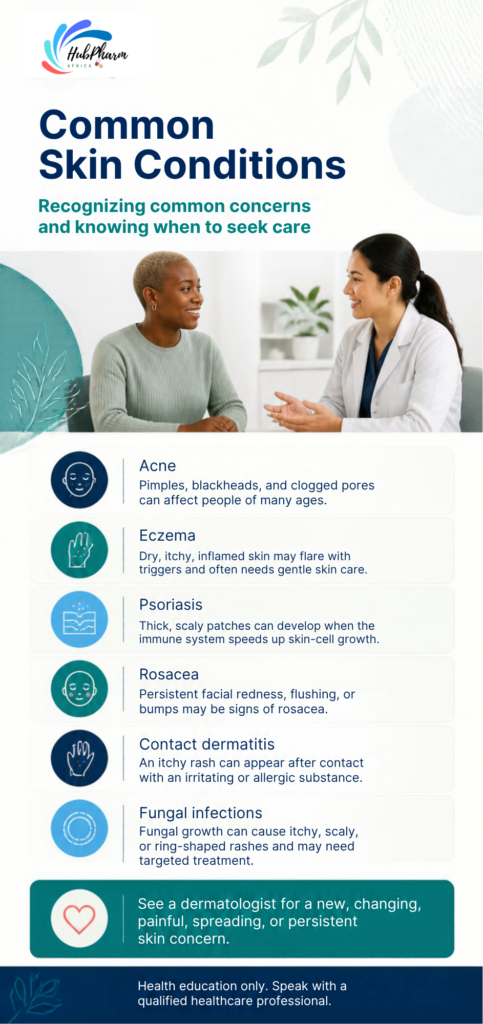
Acne
Acne is one of the most common skin conditions. It develops when hair follicles become blocked with oil and dead skin cells.
It can appear as:
- Blackheads
- Whiteheads
- Pimples
- Nodules
- Cysts
Acne can also leave dark marks called post-inflammatory hyperpigmentation (PIH) after individual spots heal. This is particularly common in people with darker skin tones.
Treating acne early can help reduce inflammation and the likelihood of persistent marks and scarring.
Hyperpigmentation
Hyperpigmentation occurs when areas of skin become darker than the surrounding skin because of increased melanin production.
Dark spots can develop after:
- Acne
- Insect bites
- Cuts or other injuries
- Inflammation
- Certain medicines
- Hormonal changes
- Skin irritation
The underlying cause needs to be addressed before choosing a treatment. In many cases, the marks gradually fade, although this can take months or longer.
Melasma
Melasma causes darker patches, commonly on the face. It can be associated with factors such as sun exposure, hormonal changes, pregnancy, certain medications and other triggers.
Melasma can be persistent and may require a combination of sun protection and professionally selected treatments.
Uneven Skin Tone
Uneven pigmentation can have many causes. Acne, inflammation, sun exposure and hormonal changes can all contribute.
Trying to lighten individual areas aggressively can sometimes irritate the skin and make pigmentation worse. A gradual, evidence-based approach is generally safer.
What Causes Acne?
Acne can develop when excess oil, dead skin cells and other factors contribute to blocked hair follicles.
Hormonal changes can also influence oil production and acne.
Other factors can include:
- Genetics
- Certain medicines
- Skin-care products
- Stress
- Friction or pressure on the skin
Not every person with acne has the same triggers, which is why treatment needs to be individualized.
How Is Acne Treated?
Treatment depends on the severity and type of acne.
Dermatologists may use treatments that:
- Unclog pores
- Reduce inflammation
- Reduce acne-causing bacteria
- Prevent new breakouts
- Reduce the risk of scarring and dark spots
Evidence-based acne treatments include topical retinoids, benzoyl peroxide, azelaic acid and, in selected cases, antibiotics or other prescription treatments.
There is no single acne treatment that works for everyone.
Treating Hyperpigmentation
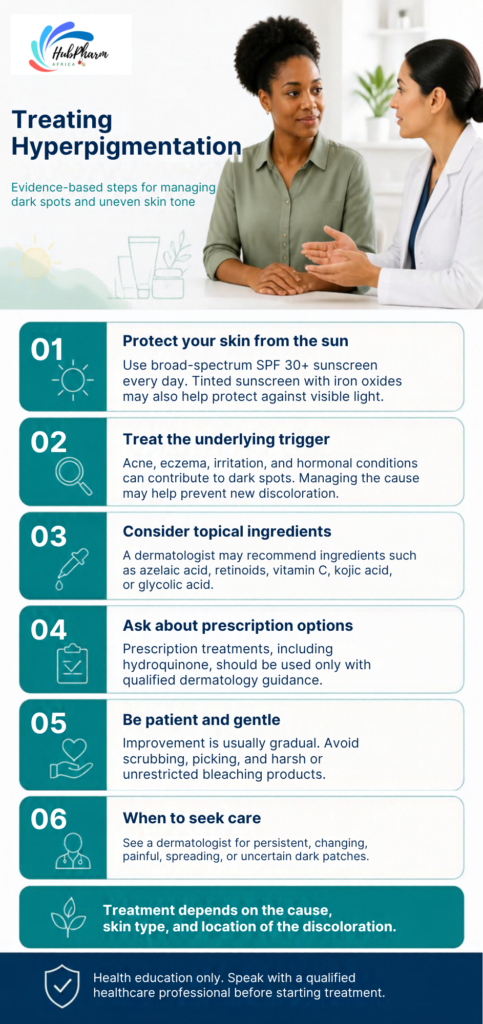
The first step is identifying what caused the pigmentation.
For example, if acne is causing repeated inflammation, treating only the resulting dark marks without controlling the acne may allow new spots to continue developing.
Sun protection is also important. Dermatologists recommend broad-spectrum sunscreen, and tinted sunscreen containing iron oxide can provide additional protection against visible light that may worsen pigmentation.
Some dermatologists may recommend topical treatments such as azelaic acid or other pigment-targeting medicines depending on the cause.
Treating Melasma
Melasma can be difficult to manage because several factors may contribute to it.
Treatment commonly combines:
- Consistent sun protection
- Gentle skin care
- Topical medicines selected by a healthcare professional
- Additional dermatological treatments in selected cases
The American Academy of Dermatology notes that treatment plans can include medicines such as hydroquinone, tretinoin-containing treatments or azelaic acid, depending on the individual.
Results can take time. The AAD notes that improvement may take several months, particularly when melasma has been present for a long time.
Why Sun Protection Matters
Sun exposure can worsen several pigmentation problems.
For people managing melasma or hyperpigmentation, dermatologists commonly recommend:
- Broad-spectrum sunscreen
- SPF 30 or higher
- Protection from prolonged direct sunlight
- Protective clothing where appropriate
- Tinted sunscreen containing iron oxide when appropriate
Daily protection is important because ultraviolet and visible light can contribute to increased pigmentation.
Common Skin Treatments
Several categories of treatment may be used depending on the condition.
Retinoids
Retinoids such as tretinoin can be used for certain forms of acne and may also be incorporated into treatment plans for pigmentation and other skin concerns.
Azelaic Acid
Azelaic acid can be useful for acne and can also help with dark marks left after acne. The AAD includes azelaic acid among evidence-based acne treatment options.
Hydroquinone
Hydroquinone is a pigment-lightening medicine used in some treatment plans for conditions such as melasma. Because pigmentation disorders can have different causes, its use should be guided by an appropriate healthcare professional.
Antibiotic Treatments
Some antibiotics can be used in the management of acne when clinically appropriate. Dermatology guidelines distinguish between topical and oral antibiotic treatment and emphasize appropriate use alongside other acne therapies.
Why You Should Avoid Random Skin-Lightening Products
Not every product marketed for brighter or clearer skin is appropriate for everyone.
Using irritating products can worsen inflammation and pigmentation. This is especially important when managing dark spots because irritation itself can trigger additional pigmentation.
A product that works for one person may not be suitable for another.
Skin Health at HubPharm
HubPharm’s Lifestyle Health programme includes Skin Health among the conditions it supports, covering concerns such as acne, hyperpigmentation, melasma and other skin-related needs.
HubPharm’s current online catalogue also includes skin-care and dermatology-related products. Its creams and lotions category includes products containing ingredients such as tretinoin and azelaic acid, while its beauty and skin category includes additional skin-care products and supplements.
The important point is that skin treatment should be matched to the condition. A pharmacist or dermatologist can help determine whether a product is appropriate and when a more detailed clinical assessment is needed.
When Should You See a Healthcare Professional?
Consider seeking professional advice if:
- Your acne is severe or painful.
- Acne is leaving scars or persistent dark marks.
- Pigmentation is spreading or changing.
- You develop sudden changes in your skin.
- A skin product causes significant burning or irritation.
- Your condition does not improve despite consistent care.
- You are unsure whether a skin problem is acne, melasma or another condition.
For persistent or difficult skin conditions, a dermatologist can provide a more detailed assessment and treatment plan.
Frequently Asked Questions
What is the best treatment for acne?
There is no single treatment that works for everyone. Treatment depends on the type and severity of acne. Evidence-based options include topical retinoids, benzoyl peroxide and azelaic acid, among others.
What causes dark spots on the skin?
Dark spots can develop after acne, inflammation, injuries, hormonal changes and other triggers. Identifying the underlying cause is important before choosing treatment.
Can acne cause hyperpigmentation?
Yes. Acne inflammation can leave dark marks after the spots heal, particularly in people with darker skin tones.
Can melasma go away?
Sometimes melasma fades, particularly when a trigger is removed. However, it can also persist for years and may require professional treatment.
Does sunscreen help with hyperpigmentation?
Yes. Sun protection is an important part of managing hyperpigmentation and melasma because sunlight can stimulate additional pigment production.
Can skin products make pigmentation worse?
Yes. Irritating products can cause inflammation, which may lead to additional darkening. Gentle skin care is particularly important when treating pigmentation.
When should I see a dermatologist for acne?
Consider seeing a dermatologist if acne is severe, painful, persistent, scarring or associated with significant dark marks. Early treatment can help reduce complications.
The Bottom Line
Good skin health starts with understanding your skin condition rather than simply trying different products.
Acne, hyperpigmentation and melasma can have different causes and therefore require different approaches. Gentle skin care, appropriate treatment and consistent sun protection can all play important roles.
If your skin condition is persistent, worsening or leaving scars or dark marks, professional assessment can help you find an appropriate treatment plan.
References
- American Academy of Dermatology. Acne Resource Center.
- American Academy of Dermatology. Adult Acne Treatment.
- American Academy of Dermatology. Updated Guidelines for Acne Management.
- American Academy of Dermatology. Melasma: Diagnosis and Treatment.
- American Academy of Dermatology. Melasma: Self-Care.
- American Academy of Dermatology. How to Fade Dark Spots in Darker Skin Tones.
- HubPharm Africa. Creams and Lotions.
- HubPharm Africa. Beauty and Skin Supplements.
- HubPharm Africa. Azelaic Acid Gel 20% w/w.
- HubPharm Africa. Acretin 0.025% Cream (Tretinoin).
Medical note: This article is for general health education and does not replace individual medical advice, diagnosis or treatment.