Hair Health: Common Problems and Treatments
Healthy hair starts with a healthy scalp and good hair-care practices. However, problems such as dandruff, dryness, hair breakage, scalp irritation and hair loss are common.
The right approach depends on what is causing the problem. While some concerns can improve with better hair care, persistent scalp symptoms or noticeable hair loss may require professional assessment.
What Does Hair Health Mean?
Hair health refers to the condition of both the hair shaft and the scalp.
Healthy hair-care practices can help reduce breakage, dryness and damage. They can also help prevent certain types of hair loss.
Your hair type matters too. Straight, curly, coily, fine and thick hair can have different care requirements, so there is no single routine that works for everyone.
Common Hair and Scalp Problems
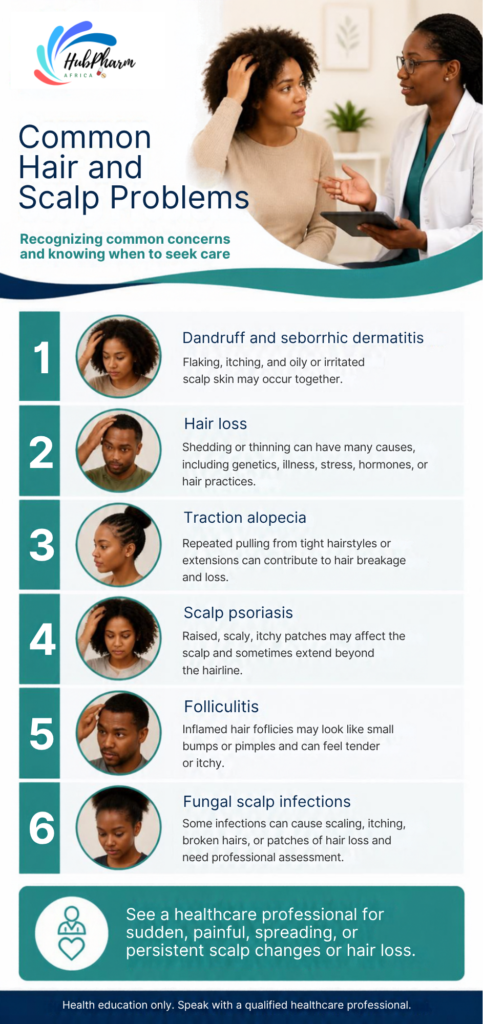
Dandruff
Dandruff is a common scalp condition that causes flakes and may cause itching.
It is not caused by poor hygiene, although it can become more noticeable when the scalp is not washed regularly.
Dandruff can have several causes, including oily skin, hair-care habits and certain skin conditions.
Dry Scalp
A dry scalp and dandruff can look similar, but they are not necessarily the same thing.
Dry scalp occurs when the skin loses too much moisture. Certain hair-care products, weather conditions and other factors can contribute to dryness.
Using a gentle, non-medicated shampoo may help when simple dry skin is the cause. Persistent itching or flaking should be assessed to rule out other conditions.
Hair Breakage
Hair breakage occurs when the hair shaft becomes damaged and breaks.
It can be caused by:
- Excessive heat
- Chemical treatments
- Tight hairstyles
- Rough handling
- Excessive brushing
- Frequent use of certain styling products
- Poor hair-care practices
Damaged hair is more fragile and can become increasingly prone to breakage.
Scalp Itching
An itchy scalp can have many causes.
Dandruff is one possibility, but itching can also occur with reactions to hair products, eczema, psoriasis, fungal infections and other scalp conditions.
Because these conditions can look similar, persistent or severe itching should not simply be treated as dandruff without considering other causes.
Hair Loss
Hair loss can have many causes, including hereditary factors, medical conditions, hormonal changes, nutritional problems, certain medicines and physical or emotional stress.
Hair loss should be assessed according to its pattern and possible cause rather than treated with a single product.
How to Maintain Healthy Hair
Wash Your Hair According to Your Hair Type
There is no universal washing schedule.
People with straight hair and an oily scalp may need to wash more frequently, while people with dry, curly or thick hair may need to wash when necessary.
The goal is to keep the scalp clean without unnecessarily drying or irritating the hair.
Focus Shampoo on the Scalp
Shampoo is primarily intended to clean the scalp and remove accumulated oil, dead skin and product residue.
Instead of aggressively rubbing shampoo through the entire length of the hair, gently massage it into the scalp and allow the water to carry the shampoo through the hair as you rinse.
Use Conditioner
Conditioner can help moisturize the hair, reduce friction and make detangling easier.
For fine or straight hair, conditioner can generally be concentrated on the ends. People with dry or curly hair may benefit from applying conditioner along more of the hair length.
Be Gentle With Wet Hair
Wet hair can be more vulnerable to breakage.
Avoid roughly rubbing wet hair with a towel. Instead, gently wrap the hair in a towel or soft T-shirt to absorb excess water.
The appropriate way to detangle also depends on hair texture.
Protect Your Hair From Heat
Frequent exposure to high heat can damage hair.
Blow dryers, flat irons and curling irons can contribute to dryness and breakage when used excessively.
Dermatologists recommend reducing heat exposure and using lower temperature settings where possible.
Be Careful With Tight Hairstyles
Braids, cornrows, ponytails, buns and extensions can create tension on the hair.
Repeated or prolonged pulling can cause traction alopecia, a form of hair loss caused by tension.
If a hairstyle feels painful or repeatedly pulls on the scalp, that is a warning sign that the style may be causing too much tension.
Hair Relaxers, Perms and Colouring
Chemical treatments can change the structure of the hair and may contribute to damage.
If you use colouring, relaxing or perming treatments, allowing adequate time between treatments and maintaining good conditioning can help reduce damage.
If your hair becomes increasingly brittle, breaks easily or your scalp becomes irritated, consider discussing the problem with a healthcare professional.
Dandruff Treatment
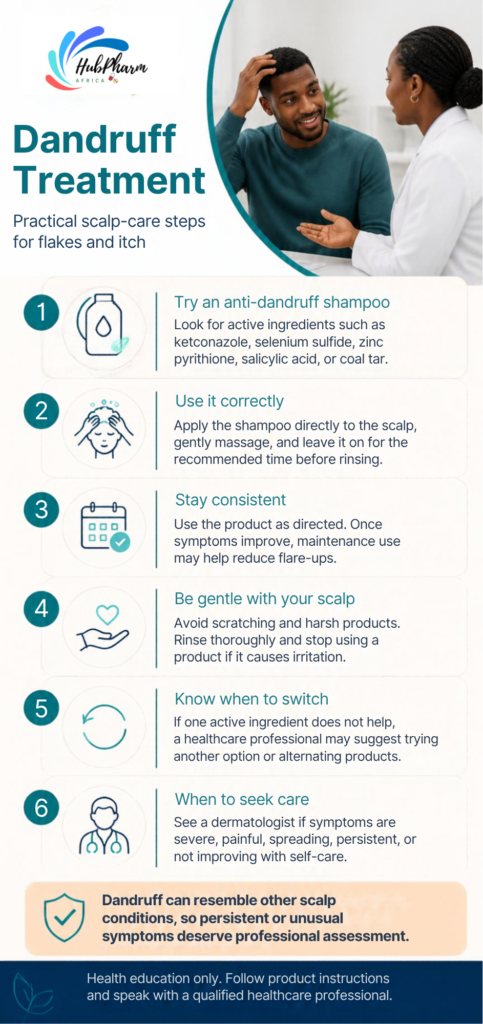
Mild dandruff can often be managed with an appropriate anti-dandruff shampoo.
Common active ingredients include:
- Ketoconazole
- Selenium sulfide
- Salicylic acid
- Zinc pyrithione
- Sulfur
- Coal tar
Different products contain different active ingredients, and the instructions can vary. Some anti-dandruff shampoos need to remain on the scalp for several minutes before being rinsed.
If dandruff does not improve, becomes severe or is accompanied by significant redness, swelling or pain, professional assessment is recommended.
When Dandruff May Be Something Else
Not every flaky scalp is dandruff.
Conditions that can produce similar symptoms include:
- Seborrheic dermatitis
- Scalp psoriasis
- Eczema
- Tinea capitis, also known as scalp ringworm
- Contact dermatitis
For example, tinea capitis can cause scaling together with broken hairs or patches of hair loss and requires appropriate medical treatment.
This is why persistent scalp symptoms should not always be treated by simply changing shampoos.
Hair Products and Scalp Problems
Hair products can sometimes contribute to scalp irritation or other skin problems.
If a new shampoo, conditioner, dye, gel or styling product causes itching, burning, redness or flaking, stop using it and observe whether the symptoms improve.
Some oily hair products can also contribute to small breakouts around the hairline and forehead.
Hair Health and Nutrition
A balanced diet provides nutrients needed for normal hair growth and overall health.
However, taking large amounts of hair-growth supplements is not automatically beneficial. Excessive amounts of certain nutrients can actually worsen hair loss.
If you think a nutritional deficiency may be contributing to hair problems, speak with a healthcare professional rather than taking high-dose supplements without assessment.
Hair Health Products Available at HubPharm
If you’re looking for products to support common hair and scalp concerns, HubPharm offers a range of hair-care and scalp-care products.
Anti-Dandruff and Scalp Treatments
For dandruff and certain fungal scalp conditions, products containing ketoconazole may be recommended by healthcare professionals.
Examples available through HubPharm include:
- Nizoral Shampoo (Ketoconazole) – an anti-dandruff shampoo containing ketoconazole.
- Meso-Ket Shampoo 2% (Ketoconazole) – a ketoconazole-containing shampoo used for scalp conditions such as dandruff and seborrhoeic dermatitis.
Other ingredients commonly used in anti-dandruff products include selenium sulfide, salicylic acid, zinc pyrithione, sulfur and coal tar.
The appropriate product depends on the cause and severity of the scalp problem. If symptoms are persistent, severe or associated with hair loss, professional assessment is recommended.
Hair-Care and Scalp-Care Products
HubPharm also provides a range of hair-care, scalp-care and beauty products that can form part of an appropriate hair-care routine.
These products may support general hair and scalp maintenance, but they should not be considered a replacement for medical treatment when an underlying scalp condition or hair-loss disorder is present.
Hair Supplements
HubPharm also offers selected hair, skin and beauty supplements.
However, supplements are most useful when they address an identified nutritional need. Taking high doses of vitamins or minerals without professional guidance does not necessarily improve hair growth and, in some cases, excessive supplementation can contribute to problems.
Find Hair and Scalp Products at HubPharm
If you’re looking for anti-dandruff shampoos, scalp-care products, hair-care products or hair supplements, you can explore the relevant categories on the HubPharm website.
For persistent dandruff, unexplained hair loss, scalp irritation or other concerning symptoms, speak with a pharmacist or healthcare professional before choosing a treatment.
When Should You See a Healthcare Professional?
You should consider professional advice if:
- Hair loss is sudden or increasing
- You develop bald patches
- Your scalp is painful or swollen
- Your scalp is severely itchy
- You develop sores or crusting
- Dandruff does not improve with appropriate care
- You notice broken hairs together with patches of scalp scaling
- A hair product causes significant irritation
- Your hair is becoming increasingly fragile despite changing your hair-care routine
Persistent symptoms can sometimes indicate an underlying scalp or medical condition that requires specific treatment.
Frequently Asked Questions
How often should I wash my hair?
It depends on your hair type and how oily or dirty your scalp becomes. People with oily, straight hair may need more frequent washing, while people with dry, curly or textured hair may wash less frequently.
What is the best shampoo for dandruff?
There is no single best shampoo for everyone. Products containing ingredients such as ketoconazole, selenium sulfide, salicylic acid, zinc pyrithione or coal tar can help manage dandruff.
Can tight hairstyles cause hair loss?
Yes. Repeated tension from tight hairstyles can cause traction alopecia and, if the tension continues, potentially permanent hair loss.
Does heat damage hair?
Yes. Frequent or excessive heat from blow dryers, flat irons and curling irons can contribute to hair damage and breakage.
Is dandruff caused by poor hygiene?
No. Dandruff is not simply a result of poor hygiene. Several factors, including oily skin, hair-care habits and certain medical conditions, can contribute to it.
Can supplements stop hair loss?
Not necessarily. Hair loss has many possible causes, and taking supplements without identifying the cause may not help. Excessive amounts of some nutrients can even worsen hair loss.
When should I see a dermatologist?
Consider seeing a dermatologist if you have persistent scalp symptoms, significant hair loss, bald patches, severe itching, pain, inflammation or symptoms that do not improve with appropriate basic care.
The Bottom Line
Healthy hair starts with healthy scalp care and gentle hair-care practices.
Washing according to your hair type, conditioning regularly, limiting excessive heat, avoiding persistent tension and treating dandruff appropriately can all help protect your hair.
However, persistent dandruff, scalp irritation, hair breakage or hair loss may have an underlying cause that requires professional assessment.
Medical note: This article is for general health education and does not replace individual medical advice, diagnosis or treatment.
References
- American Academy of Dermatology — Tips for Healthy Hair.
- American Academy of Dermatology — How to Treat Dandruff.
- NHS — Dandruff.
- American Academy of Dermatology — How to Stop Damaging Your Hair.
- American Academy of Dermatology — Dry Scalp and Other Scalp Conditions.
- American Academy of Dermatology — Hair Styling Without Damage.
- American Academy of Dermatology — Hair Loss: Tips for Managing.
- American Academy of Dermatology — Everyday Scalp Care.
HubPharm product references: Nizoral Shampoo (Ketoconazole) and Meso-Ket Shampoo 2% (Ketoconazole), as identified in the HubPharm catalogue.