Low Testosterone: Causes, Symptoms and Treatment
Low testosterone, sometimes called testosterone deficiency or hypogonadism, occurs when the body does not produce enough testosterone for normal body function.
Testosterone is an important hormone involved in reproductive health, muscle and bone health, red blood cell production and other body processes. Testosterone levels naturally change with age, but a low level can also result from medical conditions, certain medicines or problems affecting the testicles, pituitary gland or brain. (niddk.nih.gov)
What Is Testosterone?
Testosterone is a hormone produced primarily by the testicles in males, although smaller amounts are also produced by the adrenal glands.
It plays several important roles, including supporting:
- Sexual development
- Sperm production
- Sex drive
- Muscle mass
- Bone strength
- Red blood cell production
- Mood and energy
Testosterone production is regulated through communication between the brain, pituitary gland and testicles. Problems at different points in this system can contribute to testosterone deficiency. (niddk.nih.gov)
What Causes Low Testosterone?
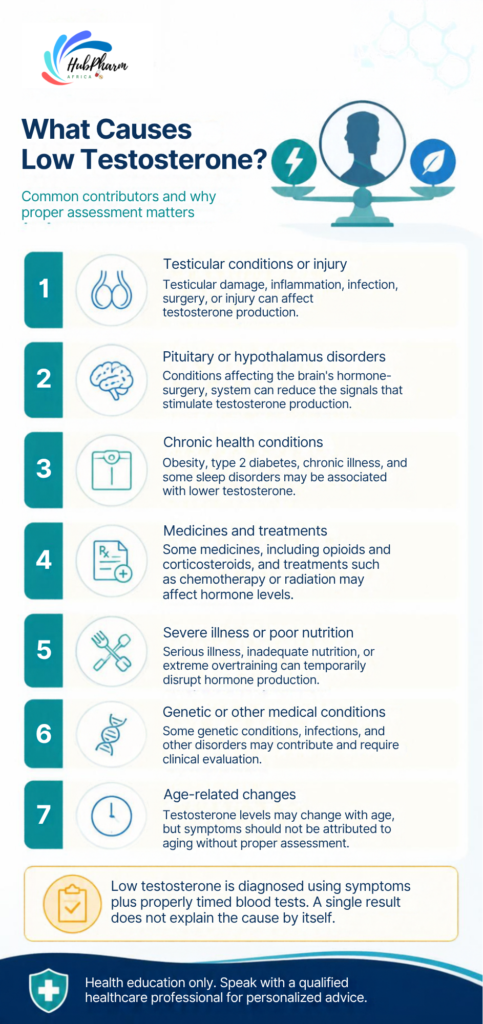
Low testosterone can have many causes.
These may include:
- Problems affecting the testicles
- Pituitary gland disorders
- Certain genetic conditions
- Obesity
- Type 2 diabetes
- Chronic illness
- Certain medications
- Injury to the testicles
- Cancer treatment
- Problems affecting hormone production
Testosterone levels also tend to decline gradually as men age. However, ageing alone does not mean that every man with a lower testosterone level requires treatment. (endocrine.org)
Symptoms of Low Testosterone
Symptoms vary from person to person.
Possible symptoms include:
- Reduced sex drive
- Erectile difficulties
- Reduced energy
- Reduced muscle mass
- Reduced body hair
- Mood changes
- Difficulty concentrating
- Reduced bone density
- Problems with fertility
Some of these symptoms can also occur because of other health conditions. Therefore, symptoms alone cannot confirm testosterone deficiency.
Low Testosterone and Sexual Health
Testosterone plays an important role in sexual health.
Low testosterone may be associated with reduced sexual desire and can sometimes contribute to erectile difficulties.
However, erectile dysfunction does not automatically mean that testosterone is low. Erectile problems can have many causes, including cardiovascular disease, diabetes, medication effects, psychological factors and other medical conditions.
For this reason, testosterone should not be assumed to be the cause of every sexual-health problem.
Low Testosterone and Fertility
Testosterone is important for male reproductive function, but taking testosterone replacement is not the same as treating male infertility.
In fact, external testosterone can reduce the body’s own production of reproductive hormones and may decrease sperm production.
Men who are concerned about fertility should therefore discuss their goals with a qualified healthcare professional before considering testosterone treatment.
How Is Low Testosterone Diagnosed?
A diagnosis should not be made based on symptoms alone.
Healthcare professionals generally consider:
- The person’s symptoms and medical history.
- Physical examination where appropriate.
- Blood testing to measure testosterone.
- Whether testosterone levels are consistently low.
- Additional tests to investigate the underlying cause.
The Endocrine Society recommends diagnosing hypogonadism only in men who have symptoms or signs consistent with testosterone deficiency together with consistently low testosterone concentrations. (endocrine.org)
Why One Testosterone Test May Not Be Enough
Testosterone levels naturally fluctuate.
The timing of the blood test can therefore matter. Healthcare professionals may recommend testing testosterone in the morning and repeating the measurement when necessary.
A single low result does not necessarily mean that someone has testosterone deficiency.
The cause of a low result also needs to be investigated.
Treatment for Low Testosterone
Treatment depends on the underlying cause.
If a medical condition, medication or lifestyle factor is contributing to low testosterone, addressing that issue may be an important part of treatment.
For men with confirmed testosterone deficiency and appropriate symptoms, a healthcare professional may consider testosterone replacement therapy (TRT).
Treatment should be individualized because testosterone therapy is not appropriate for everyone.
Testosterone Replacement Therapy
Testosterone replacement can be administered in different forms, depending on the treatment selected by a healthcare professional.
Possible forms include:
- Gels
- Injections
- Patches
- Other testosterone preparations
The choice depends on the person’s medical circumstances, preferences, treatment goals and the available formulation.
Testosterone therapy requires appropriate monitoring because treatment can have risks and may affect several aspects of health. (endocrine.org)
Medicines and Treatments for Low Testosterone
Treatment for confirmed testosterone deficiency may involve testosterone replacement medicines.
Depending on the clinical situation, healthcare professionals may prescribe testosterone preparations such as:
- Testosterone gel
- Testosterone injections
- Testosterone patches
- Other prescribed testosterone formulations
These are prescription treatments and are not suitable for self-treatment.
The exact medicine and dosage must be determined by an appropriately qualified healthcare professional after confirming the diagnosis.
Who Should Not Automatically Take Testosterone?
Testosterone treatment is not a general energy or performance supplement.
Healthcare professionals need to consider potential risks and contraindications before treatment.
For example, the Endocrine Society recommends against starting testosterone therapy in certain situations, including men planning fertility in the near term and some men with specific prostate, cardiovascular or blood-related conditions. (endocrine.org)
This is why obtaining testosterone without proper assessment can be unsafe.
Can Lifestyle Changes Improve Testosterone?
Lifestyle and overall health can influence hormone levels.
Maintaining a healthy lifestyle can include:
- Regular physical activity
- Adequate sleep
- Balanced nutrition
- Maintaining a healthy weight
- Managing chronic health conditions
- Limiting harmful substance use
These measures support overall health and may improve factors associated with testosterone levels.
However, lifestyle changes should not be presented as a guaranteed treatment for medically confirmed hypogonadism.
Low Testosterone and Obesity
Obesity is associated with lower testosterone levels in some men.
Weight management may therefore form part of an overall treatment plan.
However, the relationship between body weight and testosterone is complex. A healthcare professional should determine whether symptoms are actually caused by testosterone deficiency or another condition.
Low Testosterone and Diabetes
Men with type 2 diabetes are more likely to have low testosterone than men without diabetes.
This does not mean that every man with diabetes needs testosterone treatment.
Instead, symptoms and laboratory results should be assessed before making a diagnosis.
When Should You Seek Medical Advice?
Consider speaking with a healthcare professional if you experience:
- Persistent reduction in sex drive
- Erectile difficulties
- Unexplained fatigue
- Reduced muscle strength
- Fertility concerns
- Significant changes in mood
- Other symptoms associated with hormonal changes
You should also seek professional assessment before taking testosterone or products marketed as testosterone boosters.
Low Testosterone Products and Services at HubPharm
HubPharm includes Low Testosterone among its Lifestyle Health challenges.
Because testosterone treatment requires proper diagnosis and monitoring, the appropriate approach is not simply to select a testosterone product based on symptoms.
HubPharm’s pharmacist-led healthcare model can provide a pathway for discussing symptoms, understanding whether further medical assessment may be appropriate and supporting patients who have been prescribed treatment.
For prescription hormone treatments, availability and suitability should be confirmed with a qualified healthcare professional.
Testosterone Boosters: Be Careful
Products marketed as “testosterone boosters” are not equivalent to medically prescribed testosterone replacement.
Some supplements may contain vitamins, minerals or herbal ingredients, but evidence for their ability to correct clinically diagnosed testosterone deficiency varies.
Taking supplements without understanding the underlying cause of symptoms can also delay proper diagnosis.
If you are concerned about low testosterone, professional assessment is more appropriate than relying on products marketed as quick testosterone boosters.
Frequently Asked Questions
What are the symptoms of low testosterone?
Symptoms can include reduced sex drive, erectile difficulties, low energy, reduced muscle mass, mood changes and fertility problems. However, these symptoms can have many other causes.
How is low testosterone diagnosed?
Diagnosis generally involves symptoms or signs consistent with testosterone deficiency together with consistently low testosterone blood levels. Additional testing may be required to determine the cause. (endocrine.org)
Does low testosterone cause erectile dysfunction?
It can contribute to sexual difficulties, but erectile dysfunction has many possible causes. Having erectile dysfunction does not automatically mean that testosterone is low.
Can testosterone treatment improve low testosterone?
For men with confirmed testosterone deficiency, medically supervised testosterone replacement may improve certain symptoms. Treatment is not appropriate for everyone and requires professional assessment and monitoring. (endocrine.org)
Can testosterone treatment affect fertility?
Yes. External testosterone can suppress the body’s natural reproductive hormone production and reduce sperm production. Men who want to preserve fertility should discuss this with a healthcare professional before treatment.
Does ageing always mean you have low testosterone?
No. Testosterone levels generally decline with age, but a lower level by itself does not establish a diagnosis of hypogonadism.
Should I take a testosterone booster?
Products marketed as testosterone boosters should not be considered a substitute for medical assessment. If you have symptoms of low testosterone, identifying the underlying cause is more important than simply taking a supplement.
The Bottom Line
Low testosterone can have several causes, and diagnosis requires more than simply experiencing a few symptoms.
Blood testing, medical history and professional assessment help determine whether testosterone deficiency is actually present and what may be causing it.
For people with confirmed testosterone deficiency, treatment may include medically supervised testosterone replacement. However, testosterone therapy is not appropriate for everyone and can affect fertility and other aspects of health.
If you are experiencing symptoms associated with low testosterone, speak with a qualified healthcare professional rather than self-treating with hormones or testosterone-boosting products.
Medical note: This article is for general health education and does not replace individual medical advice, diagnosis or treatment.
References
- National Institute of Diabetes and Digestive and Kidney Diseases (NIDDK). Hypogonadism in Men.(niddk.nih.gov)
- Endocrine Society. Hypogonadism in Men. (endocrine.org)
- Endocrine Society. Testosterone Therapy in Men With Hypogonadism: Clinical Practice Guideline.(endocrine.org)
- American Urological Association. Testosterone Deficiency Guideline. (auanet.org)