Sleep Disorders: Causes, Symptoms & Treatment
Sleep is essential for physical health, learning, memory, concentration and emotional wellbeing. When sleep problems happen regularly, they can affect how a person functions during the day and may sometimes indicate an underlying sleep disorder. NHLBI, NIH
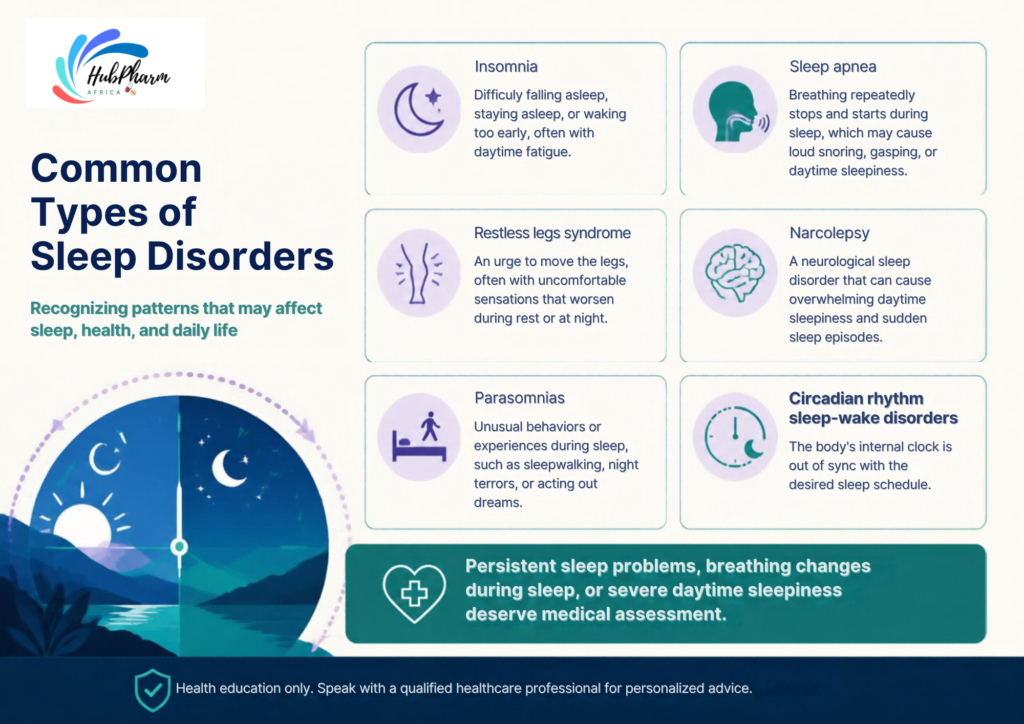
Sleep disorders are a group of conditions that affect the amount, timing or quality of sleep. Common examples include insomnia, sleep apnea, narcolepsy, restless legs syndrome and circadian rhythm disorders. NHLBI, NIH
What Are Sleep Disorders?
Sleep disorders are conditions that interfere with normal sleep or wakefulness.
Some people have difficulty falling asleep or staying asleep. Others may sleep for long periods but still feel excessively tired during the day. Some conditions affect breathing during sleep, while others disrupt the body’s internal sleep-wake clock.
Because there are many different types, treatment depends on the specific problem.
Common Types of Sleep Disorders
Insomnia
Insomnia involves difficulty falling asleep, staying asleep or getting enough restorative sleep.
It can be short-term or become a persistent problem. Stress, changes in routine, environmental factors, certain medicines and other health conditions can contribute to insomnia. NHLBI, NIH
Sleep Apnea
Sleep apnea causes repeated interruptions in breathing during sleep.
Possible warning signs include loud snoring, waking up gasping or feeling short of breath and excessive daytime tiredness. A healthcare professional may recommend a sleep study when sleep apnea is suspected. NHLBI, NIH
Narcolepsy
Narcolepsy is a neurological sleep disorder associated with excessive daytime sleepiness. Some people may also experience sudden muscle weakness. NHLBI, NIH
Restless Legs Syndrome
Restless legs syndrome can create an uncomfortable urge to move the legs, particularly when resting. It can interfere with falling asleep or staying asleep.
Circadian Rhythm Disorders
Circadian rhythm disorders occur when a person’s internal sleep-wake cycle does not align well with their environment or daily schedule.
Examples include jet lag and shift-work disorder. NHLBI, NIH
What Causes Sleep Disorders?
There is no single cause of sleep disorders.
Potential contributors include:
- Stress
- Irregular sleep schedules
- Shift work
- Travel across time zones
- Certain medicines
- Medical conditions
- Mental health conditions
- Environmental noise or light
- Excessive caffeine
- Some lifestyle habits
- Genetic factors
For insomnia specifically, changing schedules, stress, excessive daytime naps and electronic-device use close to bedtime can contribute to sleep problems. NHLBI, NIH
Symptoms of Sleep Disorders
Symptoms vary depending on the condition.
Common warning signs include:
- Difficulty falling asleep
- Frequently waking during the night
- Waking too early
- Excessive daytime sleepiness
- Difficulty concentrating
- Feeling unrefreshed after sleep
- Loud or persistent snoring
- Waking up gasping
- Irregular sleep patterns
- Unusual movements during sleep
Persistent symptoms deserve attention, particularly when they affect school, work, relationships, safety or daily activities.
How Are Sleep Disorders Diagnosed?
A healthcare professional may ask about your:
- Sleep schedule
- Bedtime routine
- Daytime symptoms
- Medical history
- Medicines
- Caffeine intake
- Sleep environment
- Snoring or breathing problems
Keeping a sleep diary can also help provide useful information about sleeping patterns. NHLBI, NIH
Depending on the symptoms, additional testing may be required.
Sleep Studies
A sleep study, also called polysomnography, can monitor things such as brain activity, heart rate, breathing and blood oxygen levels while a person sleeps.
Sleep studies can help diagnose conditions including sleep apnea and some other sleep-related disorders. NHLBI, NIH
Treatment for Sleep Disorders
Treatment depends on the specific diagnosis.
Possible approaches include:
- Healthy sleep habits
- Behavioural therapy
- Cognitive behavioural therapy for insomnia (CBT-I)
- Light therapy
- Medical treatment where appropriate
- CPAP or other devices for some cases of sleep apnea
- Treatment of an underlying medical condition
For long-term insomnia, CBT-I is generally recommended as a first-line treatment and can help people learn strategies for improving sleep. NHLBI, NIH
Healthy Sleep Habits
Improving sleep habits can support better sleep and may be part of treatment.
Helpful habits include:
Keep a Regular Sleep Schedule
Try to maintain consistent sleeping and waking times.
A regular schedule can help your body’s internal sleep-wake rhythm remain more predictable. NHLBI, NIH
Create a Sleep-Friendly Environment
A bedroom that is quiet, dark and comfortable can make it easier to sleep.
Electronic devices can also interfere with sleep patterns, so reducing their use close to bedtime may be helpful. NHLBI, NIH
Pay Attention to Caffeine
Caffeine can interfere with sleep, particularly when consumed close to bedtime.
People who experience sleep difficulties may benefit from discussing their caffeine intake with a healthcare professional. NHLBI, NIH
Exercise During the Day
Regular daytime physical activity can support healthy sleep.
However, exercising very close to bedtime may make it harder for some people to fall asleep. NHLBI, NIH
Treatment for Insomnia
Long-term insomnia is not simply a matter of needing stronger sleeping medicine.
Cognitive behavioural therapy for insomnia (CBT-I) addresses thoughts and behaviours that can interfere with sleep. It may involve sleep education, relaxation techniques, stimulus control and other behavioural strategies. NHLBI, NIH
Healthcare professionals may sometimes consider medicines, but many sleep medicines have side effects and are not intended for long-term use. NHLBI, NIH
Treatment for Sleep Apnea
Sleep apnea requires a different approach from insomnia.
Depending on the type and severity, treatment can include:
- CPAP
- Other breathing devices
- Oral devices
- Lifestyle measures
- Certain procedures or surgery
CPAP uses gentle air pressure to help keep the airway open during sleep. NHLBI, NIH
If you regularly snore loudly, wake up gasping or remain excessively tired during the day, speak with a healthcare professional about whether sleep apnea should be investigated.
Treatment for Circadian Rhythm Disorders
Treatment aims to realign the person’s sleep-wake cycle with their desired schedule.
Depending on the disorder, healthcare professionals may recommend:
- A consistent daily routine
- Light therapy
- Changes to sleep timing
- Carefully selected treatments
Light therapy can be used at particular times of day to help shift the body’s internal clock. NHLBI, NIH
Medicines and Sleep Disorders
Medicines can sometimes form part of treatment for certain sleep disorders, but they are not appropriate for every sleep problem.
The treatment selected depends on the diagnosis.
For example, healthcare professionals may use different medicines for insomnia, narcolepsy or particular circadian rhythm disorders. Some medicines can also cause sleep problems as a side effect. NHLBI, NIH
This is why persistent sleep problems should be assessed rather than treated by simply choosing a sleeping product.
Sleep Products Available at HubPharm
HubPharm’s Lifestyle Health programme includes Sleep Disorders as one of its supported health challenges.
For sleep concerns, the appropriate product or treatment depends on the underlying problem. A person experiencing occasional difficulty sleeping may need a different approach from someone with persistent insomnia, sleep apnea or another diagnosed sleep disorder.
HubPharm’s pharmacist-led care can help patients understand their symptoms and determine when professional assessment may be appropriate.
Do not use medicines or supplements specifically to treat persistent sleep problems without appropriate professional advice.
When Should You Seek Professional Help?
Speak with a healthcare professional if:
- Sleep problems persist
- You regularly feel excessively tired during the day
- You frequently wake during the night
- You regularly snore loudly
- You wake up gasping or short of breath
- Your sleep problems affect concentration or daily activities
- You regularly fall asleep unintentionally during the day
- Your sleep pattern has changed significantly without an obvious reason
A healthcare professional can determine whether further assessment or a sleep study is appropriate. NHLBI, NIH
Frequently Asked Questions
What are the most common sleep disorders?
Common sleep disorders include insomnia, sleep apnea, narcolepsy, restless legs syndrome and circadian rhythm disorders. NHLBI, NIH
What is the best treatment for sleep disorders?
There is no single treatment for all sleep disorders. Treatment depends on the diagnosis and can include behavioural therapy, lifestyle changes, devices, medicines or other medical interventions. NHLBI, NIH
Can stress cause sleep problems?
Yes. Stress and worrying can increase the risk of insomnia and may make existing sleep problems worse. NHLBI, NIH
Does snoring mean I have sleep apnea?
Not necessarily. However, loud or persistent snoring, particularly when accompanied by gasping or daytime sleepiness, can be a reason to seek assessment for sleep apnea. NHLBI, NIH
Can sleep disorders affect concentration?
Yes. Poor-quality or insufficient sleep can affect attention, learning, memory and the ability to think clearly. NHLBI, NIH
When should I see a healthcare professional about sleep?
Seek professional advice when sleep problems are persistent, interfere with daily life, or are accompanied by symptoms such as loud snoring, gasping, severe daytime sleepiness or unusual sleep-related behaviours.
The Bottom Line
Sleep disorders are treatable health conditions, but the right treatment depends on the type and cause of the problem.
Improving sleep habits can support better sleep, while conditions such as chronic insomnia, sleep apnea, narcolepsy and circadian rhythm disorders may require specific treatment.
If sleep problems persist or are affecting your daily life, don’t simply ignore them. A healthcare professional can help identify the underlying problem and determine the most appropriate next step.
Medical note: This article is for general health education and does not replace individual medical advice, diagnosis or treatment.
References
- National Heart, Lung, and Blood Institute (NHLBI). Sleep Science and Sleep Disorders. NHLBI, NIH
- NHLBI. Sleep Disorder Treatments. NHLBI, NIH
- NHLBI. Insomnia: Treatment. NHLBI, NIH
- NHLBI. Sleep Deprivation and Deficiency: Diagnosis and Treatment. NHLBI, NIH
- NHLBI. Insomnia: Causes and Risk Factors. NHLBI, NIH
- NHLBI. Insomnia: Diagnosis. NHLBI, NIH
- NHLBI. Circadian Rhythm Disorders: Treatment. NHLBI, NIH
- NHLBI. Why Is Sleep Important?