The Liver: What It Actually Does, Early Warning Signs of Liver Disease, and How to Protect It
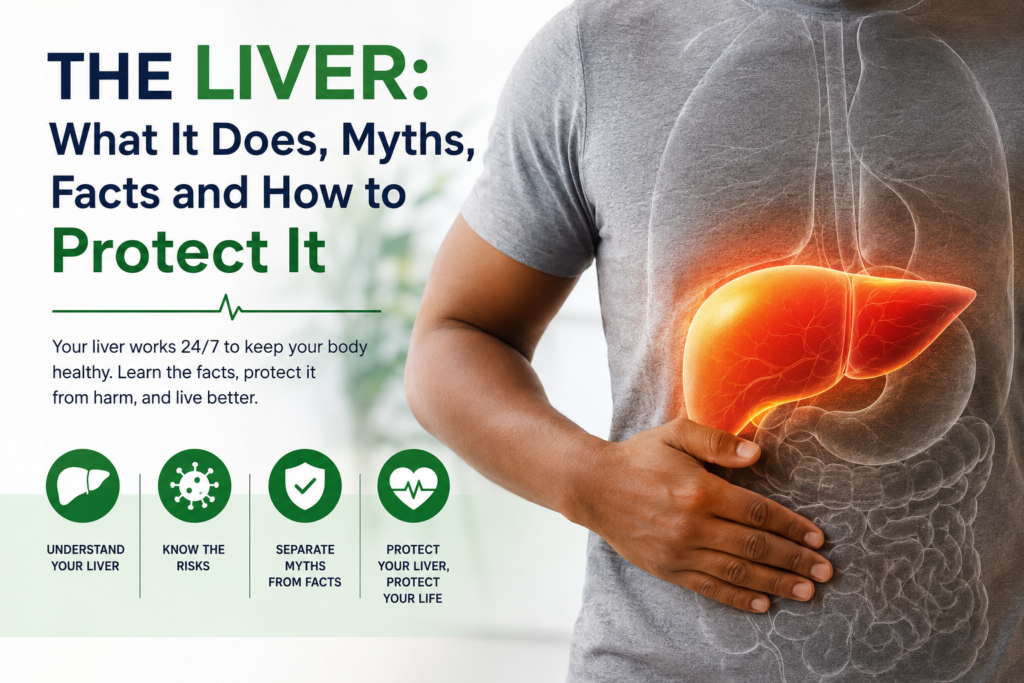
Your liver is one of the hardest-working organs in your body and probably one of the most ignored.
Most people only think about the liver when they hear about alcohol-related disease. But the truth is far broader and far more serious. The liver quietly performs hundreds of essential functions every single day, from filtering toxins and processing medications to helping control blood sugar, cholesterol, digestion, and energy storage.
And unlike many organs, the liver can keep functioning even while damaged. That is why liver disease is often called a “silent” condition. Many people do not notice symptoms until significant damage has already happened.
Across Africa, liver disease is becoming increasingly common due to viral hepatitis, alcohol misuse, obesity, diabetes, unsafe medications, herbal mixtures, and delayed diagnosis. According to the World Health Organization (WHO), hepatitis B and C alone account for hundreds of thousands of deaths globally every year, with Africa carrying a significant burden.
The good news is that many liver problems are preventable and when caught early, some are reversible.
What Does the Liver Actually Do?
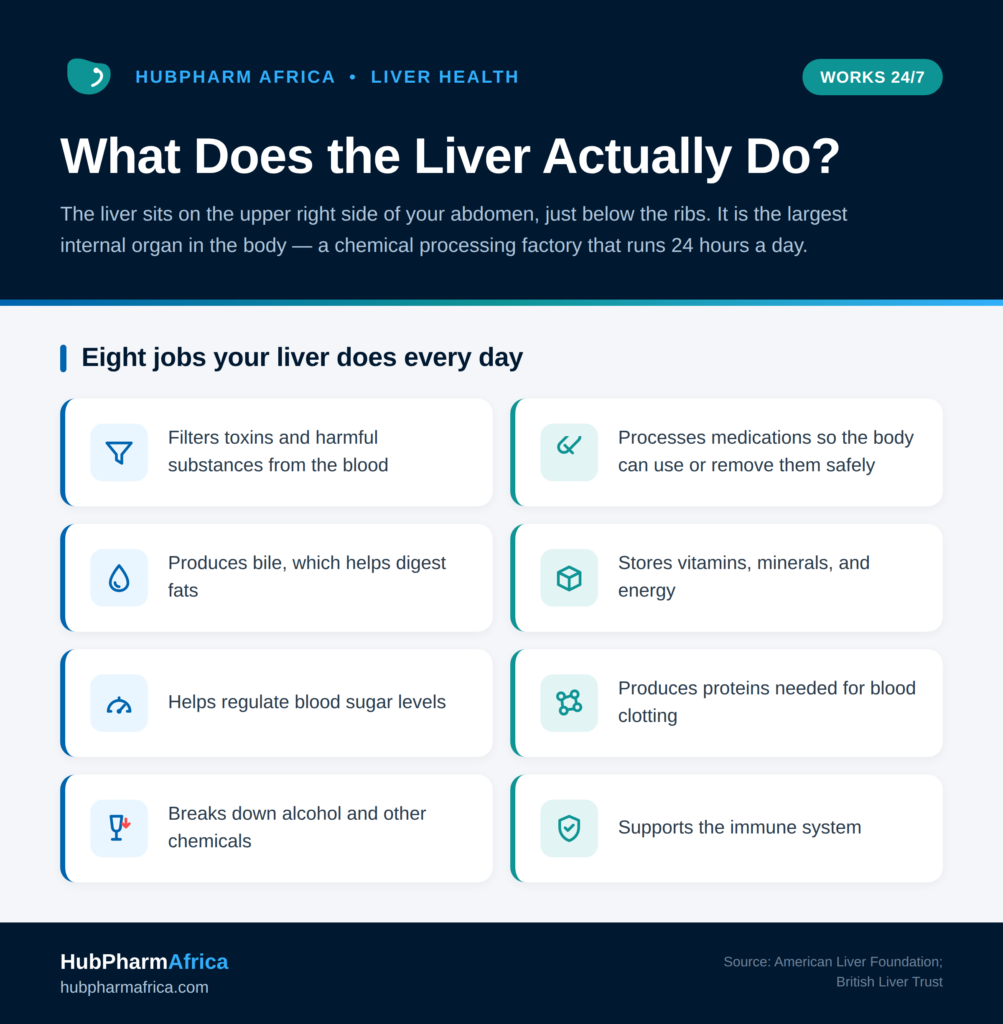
HubPharm liver functions infographic
The liver sits on the upper right side of your abdomen, just below the ribs. It is the largest internal organ in the body and acts like a chemical processing factory working 24 hours a day.
Some of its major functions include:
- Filtering toxins and harmful substances from the blood
- Processing medications so the body can use or remove them safely
- Producing bile, which helps digest fats
- Storing vitamins, minerals, and energy
- Helping regulate blood sugar levels
- Producing proteins needed for blood clotting
- Breaking down alcohol and other chemicals
- Supporting immune function
A healthy liver helps almost every other system in the body function properly.
Common Liver Diseases You Should Know About
Fatty Liver Disease
Fatty liver happens when excess fat builds up inside the liver. It is now one of the fastest-growing liver conditions worldwide, largely driven by obesity, diabetes, poor diet, and physical inactivity.
There are two main types:
- Alcohol-related fatty liver disease
- Non-alcoholic fatty liver disease (NAFLD)
Many people with fatty liver have no symptoms initially. Over time, however, inflammation can develop and progress to liver scarring (cirrhosis).
Hepatitis
Hepatitis means inflammation of the liver. Viral hepatitis, especially hepatitis B and C is a major public health problem in Africa.
Hepatitis B can spread through blood, sexual contact, or from mother to child during birth. Chronic hepatitis B significantly increases the risk of liver failure and liver cancer.
According to WHO estimates, millions of Africans are living with chronic hepatitis B, many without knowing it.
Liver Cirrhosis
Cirrhosis occurs when healthy liver tissue is gradually replaced with scar tissue. This reduces the liver’s ability to function properly.
Common causes include:
- Chronic hepatitis B or C
- Excessive alcohol use
- Fatty liver disease
- Long-term exposure to harmful substances
Cirrhosis can eventually lead to liver failure, internal bleeding, fluid build-up, and liver cancer.
Liver Cancer
Liver cancer is one of the deadliest cancers globally, partly because it is often diagnosed late. Chronic hepatitis infections and cirrhosis are major risk factors.
Early Signs of Liver Problems Many People Ignore
One dangerous thing about liver disease is that symptoms can be vague in the early stages.
Possible warning signs include:
- Persistent tiredness
- Loss of appetite
- Nausea
- Abdominal discomfort
- Unexplained weight loss
- Dark urine
- Yellowing of the eyes or skin (jaundice)
- Swelling in the legs or abdomen
- Itchy skin
- Easy bruising
These symptoms do not always mean liver disease, but they should never be ignored — especially if they persist.
Things That Quietly Damage the Liver
Excess Alcohol Consumption
Heavy alcohol intake remains one of the most common causes of liver damage worldwide. Over time, alcohol can trigger inflammation, fatty liver, cirrhosis, and liver failure.
Obesity and Poor Diet
High intake of processed foods, sugary drinks, and excess calories increases the risk of fatty liver disease. This is especially true in people with diabetes or high cholesterol.
Viral Hepatitis
Untreated hepatitis B and C infections can silently damage the liver for years before symptoms appear.
Unsafe Herbal Mixtures and Self-Medication
This is a major but often overlooked problem in many African countries.
Some herbal products contain toxic substances that directly injure liver cells. In addition, mixing herbs with prescription medications can increase liver toxicity.
The National Institutes of Health (NIH) has repeatedly warned that drug-induced liver injury can occur from both conventional medications and herbal supplements.
Misuse of Medications
Certain medications can damage the liver when taken incorrectly, at excessive doses, or without medical supervision.
A common example is paracetamol (acetaminophen). While safe at recommended doses, overdose can cause severe liver failure.
Myths and Facts About Liver Disease
Myth: Only alcoholics develop liver disease
Fact: Many people with liver disease do not drink alcohol at all. Fatty liver disease, hepatitis infections, obesity, diabetes, and medication toxicity are major causes.
Myth: Herbal remedies are always safe because they are natural
Fact: Natural does not automatically mean safe. Some herbal mixtures can seriously damage the liver, especially when ingredients are unknown or unregulated.
Myth: If there is no pain, the liver is healthy
Fact: Liver disease can progress silently for years without obvious pain or symptoms.
Myth: Liver disease cannot be prevented
Fact: Many liver conditions are preventable through vaccination, healthy lifestyle choices, reduced alcohol intake, and early treatment.
Myth: Detox teas cleanse the liver
Fact: The liver already has its own natural detoxification system. Most “detox” products have little scientific evidence behind them, and some may even be harmful.
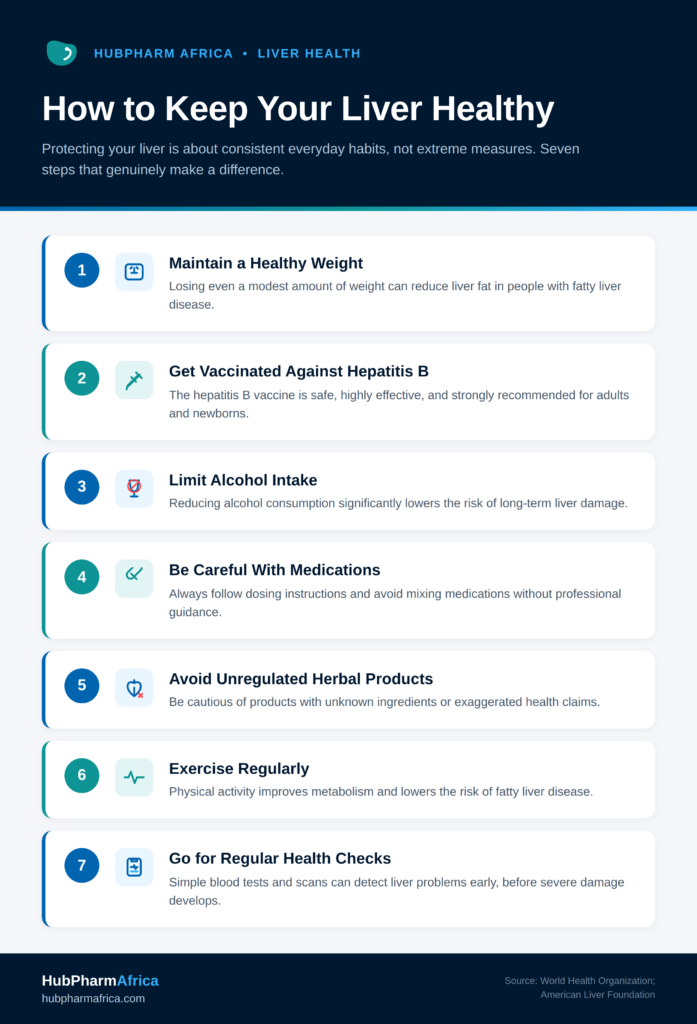
How to Keep Your Liver Healthy
liver health infographic
Protecting the liver is often about consistent everyday habits rather than extreme measures.
Maintain a Healthy Weight
Losing even a modest amount of weight can help reduce liver fat in people with fatty liver disease.
Get Vaccinated Against Hepatitis B
The hepatitis B vaccine is highly effective and strongly recommended.
Limit Alcohol Intake
Reducing alcohol consumption significantly lowers the risk of long-term liver damage.
Be Careful With Medications
Always follow dosing instructions and avoid mixing medications unnecessarily without professional guidance.
Avoid Unregulated Herbal Products
Be cautious about products with unknown ingredients or exaggerated health claims.
Exercise Regularly
Physical activity improves metabolism and reduces the risk of fatty liver disease.
Go for Regular Health Checks
Simple blood tests and imaging studies can detect liver problems early before severe damage develops.
Medication Management in Liver Disease
Medication management is extremely important in people with liver disease because the liver processes many of the drugs the body uses. When the liver is damaged, medications may build up in the body, become toxic, or stop working properly.
This is why patients with liver conditions should never start, stop, or adjust medications without medical supervision.
For hepatitis B, antiviral medications such as Tenofovir and Entecavir are commonly prescribed to help reduce viral activity and protect the liver from further damage.
Patients with hepatitis C may receive direct-acting antiviral medications such as Sofosbuvir in combination with other therapies, depending on the treatment plan recommended by their doctor.
People living with fatty liver disease often require medications that manage related conditions such as diabetes, hypertension, or high cholesterol. Drugs like Metformin, Insulin, and cholesterol-lowering medications may form part of treatment alongside lifestyle changes.
For patients with advanced cirrhosis, medications such as Lactulose may be used to reduce toxin build-up in the body, while diuretics like Spironolactone and Furosemide can help manage fluid retention and abdominal swelling.
Pain medications also require caution. Even common drugs like Paracetamol can become dangerous at high doses or when combined with alcohol or existing liver disease.
Because medication needs can vary significantly depending on the stage and type of liver condition, professional medication review and adherence support are essential. This is one reason why coordinated medication management systems and pharmacist support play such an important role in long-term liver care.
When Should You See a Doctor?
You should seek medical attention if you notice:
- Persistent yellowing of the eyes or skin
- Ongoing abdominal swelling
- Vomiting blood
- Severe fatigue
- Confusion or unusual sleepiness
- Dark urine lasting several days
- Sudden unexplained weight loss
Early diagnosis can make a major difference in treatment outcomes.
Have a prescription? Upload it here and we will prepare your order. Questions before you fill? Chat with a pharmacist on WhatsApp same-day delivery available across Lagos.
Final Thoughts
Your liver does far more than most people realise. It filters, stores, protects, regulates, and supports countless processes that keep the body alive every day. Yet many of the habits and conditions that damage it often go unnoticed until serious complications appear.
The encouraging part is that many liver diseases can be prevented, slowed, or managed effectively when identified early. Healthy lifestyle choices, vaccination, safe medication use, regular screening, and reliable access to medical care all play a critical role.
Most importantly, liver health is not something to think about only when symptoms appear. By the time obvious symptoms develop, significant damage may already have occurred.
Protecting your liver now is far easier than trying to repair it later.
References
- World Health Organization (WHO) – Hepatitis Overview
Comprehensive WHO resource on hepatitis types, prevention, vaccination, treatment guidelines, and global burden of liver disease. (World Health Organization) - CDC – Viral Hepatitis Basics
Overview of hepatitis A, B, and C, including symptoms, transmission, prevention, and treatment information. (CDC) - CDC – Clinical Overview of Viral Hepatitis
Clinical information on hepatitis symptoms, risk factors, diagnosis, vaccination, and disease progression. (CDC) - CDC – Global Viral Hepatitis Data
Global statistics on hepatitis infections, mortality, and the burden of liver disease worldwide. (CDC) - CDC – Viral Hepatitis Resource Center
Educational resource hub covering hepatitis prevention, screening, surveillance, and public health information. (CDC) - NIH LiverTox Database
National Institutes of Health resource on drug-induced liver injury, medication safety, and herbal supplement-related liver toxicity. - Mayo Clinic – Nonalcoholic Fatty Liver Disease (NAFLD)
Detailed explanation of fatty liver disease, symptoms, causes, complications, and prevention. - American Liver Foundation
Educational information on liver diseases, liver health, cirrhosis, hepatitis, and liver cancer. - National Institute of Diabetes and Digestive and Kidney Diseases (NIDDK) – Liver Disease Information
Patient-friendly information on liver diseases, symptoms, diagnosis, and treatment options. - WHO – Global Health Sector Strategies on HIV, Viral Hepatitis and STIs 2022–2030
WHO strategy document outlining global goals for reducing hepatitis-related illness and mortality.


