HIV PEP in Nigeria: What to Do After Exposure
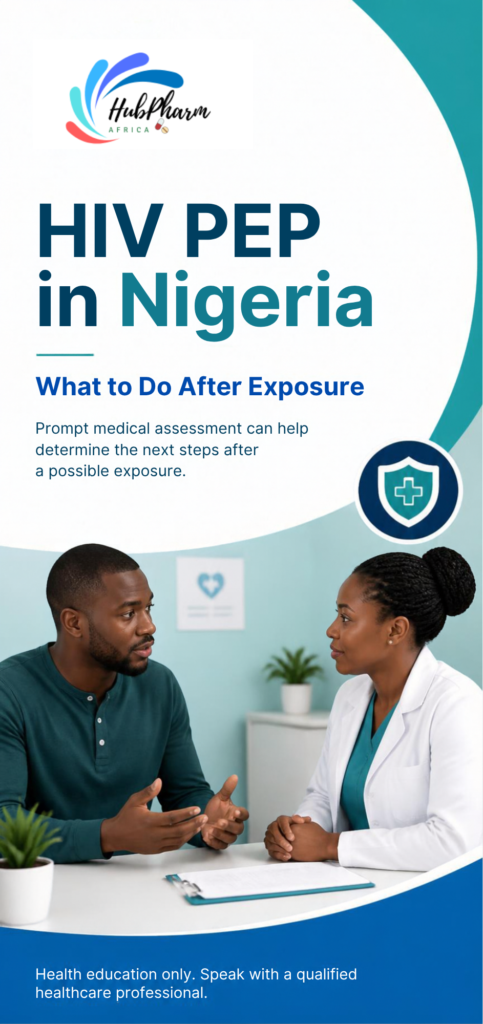
A needle-stick injury can happen in seconds. A blood splash can happen just as quickly.
For healthcare workers, these incidents can cause understandable concern. However, a possible exposure to HIV does notmean that you have acquired HIV.
What matters is acting quickly.
Post-exposure prophylaxis, commonly called PEP, uses HIV medicines after a potential exposure to reduce the chance of infection. PEP works best when healthcare professionals start it as soon as possible.
If you have recently experienced a possible HIV exposure, do not wait for symptoms before seeking medical attention.
What Is HIV PEP?
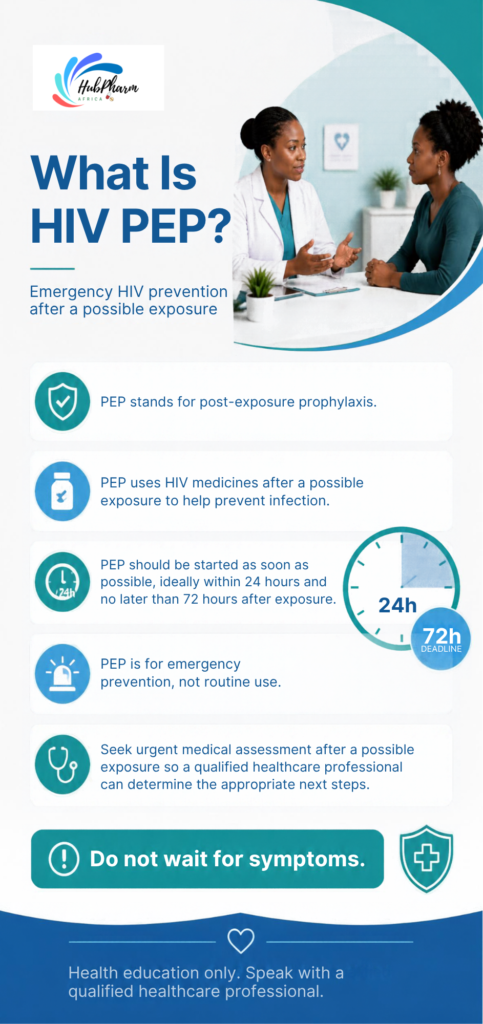
PEP means post-exposure prophylaxis.
It involves taking antiretroviral medicines after a potential exposure to HIV. The medicines aim to prevent HIV from establishing an infection.
PEP is different from PrEP.
PrEP helps prevent HIV before potential exposure, while PEP is an emergency prevention option used after a potential exposure.
PEP may be considered after occupational exposure, sexual exposure and other situations where HIV transmission could have occurred.
What Counts as a Possible HIV Exposure?
Not every contact with a person living with HIV creates a risk of transmission.
For healthcare workers, possible occupational exposures can include:
- A needle-stick injury
- A cut from a contaminated sharp instrument
- Blood splashing into the eyes
- Blood entering the mouth
- Blood contacting broken or damaged skin
- Exposure to certain potentially infectious body fluids
The type of exposure matters.
For example, intact skin provides a very different situation from a deep needle-stick injury involving a blood-contaminated needle.
A healthcare professional should therefore assess the exposure rather than trying to determine the risk yourself.
What Should You Do Immediately?
If you experience a possible occupational HIV exposure, act immediately.
After a needle-stick or cut
Wash the affected area thoroughly with soap and running water.
Do not scrub aggressively or use harsh chemicals in an attempt to disinfect the wound.
If blood enters your eyes
Rinse your eyes promptly with clean water or an appropriate eye-rinsing solution.
If blood enters your mouth
Rinse your mouth thoroughly with water.
After first aid
Report the incident according to your workplace’s occupational-exposure procedure and seek urgent medical assessment.
Do not wait until the next day if immediate assessment is available.
The sooner a healthcare professional assesses the exposure, the sooner they can determine whether PEP is appropriate.
The 72-Hour PEP Window
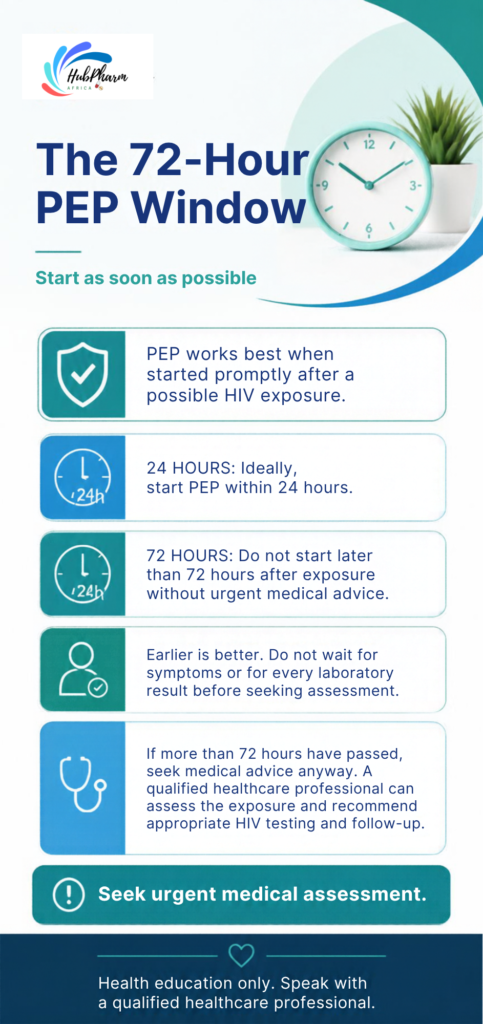
Timing is one of the most important things to understand about PEP.
WHO recommends starting PEP as soon as possible, ideally within 24 hours of exposure and no later than 72 hours after the exposure.
That means you should not spend hours trying to decide whether an exposure is serious enough.
Instead:
Exposure → first aid → report → urgent medical assessment.
If PEP is appropriate, the healthcare professional can start treatment promptly.
What if 72 hours have already passed?
Still seek medical attention.
PEP may no longer be recommended after the 72-hour window, but you may still need HIV testing, risk assessment and follow-up care.
Does Every Exposure Require PEP?
No.
A healthcare professional will consider the circumstances before recommending PEP.
They may assess:
- The type of exposure
- The body fluid involved
- Whether blood was present
- Whether the skin was intact
- The depth of a needle-stick or wound
- Whether the source person’s HIV status is known
- The source person’s viral-load status, when available
- How much time has passed since the exposure
For example, contact between potentially infectious blood and broken skin presents a different situation from contact with intact skin.
This is why you should report the exposure even if you are unsure whether it was significant.
What If the Patient’s HIV Status Is Unknown?
An unknown HIV status does not mean that the patient has HIV.
However, you should not delay your own assessment while waiting to find out.
If appropriate, the healthcare team may arrange HIV testing for the source patient. They can also assess whether the exposure warrants PEP based on the available information.
The important thing is to start the assessment quickly.
What Medicines Are Used for PEP?
PEP uses antiretroviral medicines.
Current WHO guidance recommends a three-drug regimen as the preferred approach for PEP and recommends a 28-day course for people who receive PEP.
For adults and adolescents, WHO’s HIV guidance identifies tenofovir disoproxil fumarate (TDF) with lamivudine (3TC) or emtricitabine (FTC) as the preferred backbone, with dolutegravir (DTG) as the preferred third medicine.
However, the appropriate regimen depends on the individual and should be selected by a qualified healthcare professional.
Do not borrow PEP medicines from another person or use leftover HIV medicines without medical assessment.
How Long Do You Take PEP?
A standard PEP course lasts 28 days.
Taking the medicines consistently is important.
Some people may experience side effects. If this happens, speak with the healthcare professional managing your PEP rather than stopping the medicines on your own.
Your healthcare team can explain how to manage side effects and arrange the appropriate follow-up.
What Happens After PEP?
PEP is not simply a matter of taking tablets for 28 days and forgetting about the exposure.
Follow-up may include:
- HIV testing
- Review of adherence
- Assessment of side effects
- Additional testing where appropriate
- Assessment for other blood-borne infections
- Further prevention counselling
The exact follow-up schedule depends on the exposure and the healthcare professional’s assessment.
Remember Hepatitis B and Hepatitis C
A healthcare worker exposed to blood or certain body fluids may face risks beyond HIV.
Hepatitis B and hepatitis C are also important considerations after occupational blood exposure.
This is one reason why occupational exposure should receive a complete medical assessment rather than focusing only on HIV.
Healthcare workers should also know their hepatitis B vaccination status and follow their facility’s occupational-health procedures.
What About the Source Patient?
If the source patient is known, their HIV status can help guide the risk assessment.
If they are living with HIV, their treatment and viral-load status may also be relevant.
However, do not delay your own medical assessment while waiting for this information.
Your healthcare team can coordinate appropriate source testing while assessing your need for PEP.
PEP Is Not a Replacement for Workplace Safety
PEP provides an important emergency prevention option, but preventing exposure in the first place remains essential.
Healthcare facilities should have clear procedures for:
- Safe handling of needles and sharps
- Proper disposal of contaminated equipment
- Use of appropriate protective equipment
- Reporting occupational exposures
- Rapid access to PEP
- Follow-up of exposed healthcare workers
Healthcare workers should also know where to go immediately if an exposure occurs.
Knowing the procedure before an accident happens can save valuable time.
How Can Healthcare Facilities Prepare?
Every healthcare facility should have a clear occupational-exposure plan.
Staff should know:
- Who to report an exposure to
- Where to obtain immediate medical assessment
- Where PEP can be accessed
- Who will arrange follow-up testing
- How the incident should be documented
Facilities should also make sure that healthcare workers understand standard precautions and have access to appropriate protective equipment.
An effective PEP programme is not only about having medicines available. It is also about ensuring that workers can access them quickly.
When Should You Seek Urgent Medical Care?
Seek urgent assessment if you have experienced:
- A needle-stick involving a potentially contaminated needle
- A cut from a contaminated sharp
- Blood entering your eye, mouth or another mucous membrane
- Blood contacting significantly broken skin
- Another exposure that could potentially transmit HIV
Do not wait for symptoms.
HIV does not need to cause symptoms immediately for an exposure to require assessment.
The purpose of PEP is to act before HIV establishes an infection, which is why time matters.
Getting Help With HIV Prevention in Nigeria
A possible HIV exposure can be stressful, especially when you are unsure about what to do next.
At HubPharm Africa, our pharmacists can help you understand prescribed medicines and answer questions about HIV prevention and treatment.
If you have questions about your PEP medicines, side effects, adherence or other medication-related concerns, talk to a HubPharm pharmacist.
However, if you have just experienced a possible HIV exposure, do not delay urgent clinical assessment while waiting to contact a pharmacist. PEP works best when started promptly.
Talk to a HubPharm pharmacist →
This section can also link internally to HubPharm’s PEP, PrEP, HIV testing and pharmacist support pages.
Frequently Asked Questions
What should I do immediately after a needle-stick injury?
Wash the area with soap and running water, report the incident according to your workplace procedure and seek urgent medical assessment.
How quickly should I start PEP?
As soon as possible. WHO recommends starting PEP ideally within 24 hours and no later than 72 hours after a potential exposure.
Does every needle-stick require PEP?
No. A healthcare professional needs to assess the type of exposure and other risk factors.
What if I don’t know the patient’s HIV status?
Seek medical assessment immediately. Do not wait for the source patient’s HIV test before seeking care.
How long does PEP last?
A standard PEP course lasts 28 days.
What if more than 72 hours have passed?
Seek medical care anyway. Although PEP may no longer be recommended after 72 hours, you may still need HIV testing, risk assessment and follow-up.
Can I use someone else’s PEP medicines?
No. PEP should be prescribed following an assessment of the exposure and the person’s circumstances.
The Bottom Line
A needle-stick injury, blood splash or other occupational exposure does not automatically mean you have acquired HIV.
What matters is what you do next.
Clean the affected area, report the exposure and seek urgent medical assessment. If PEP is appropriate, starting it as soon as possible gives you the best opportunity for effective prevention.
Remember the key number:
72 hours
But don’t wait 72 hours. Seek assessment immediately.
Medical note: This article provides health education and does not replace urgent medical assessment. If you have experienced a recent potential HIV exposure, seek medical care immediately.
References
- World Health Organization (WHO). Guidelines for HIV post-exposure prophylaxis. 2024.
- World Health Organization (WHO). HIV Post-Exposure Prophylaxis — Consolidated Guidelines and Recommendations.
- WHO HIV SMART Guidelines. HIV PEP decision-support guidance.
- National Agency for the Control of AIDS (NACA), Nigeria. National Guidelines for HIV Prevention, Treatment and Care in Nigeria.
- Federal Ministry of Health, Nigeria. National Consolidated Guidelines for HIV Prevention, Treatment and Care.