Cancer treatment in Nigeria: the data behind a deepening crisis
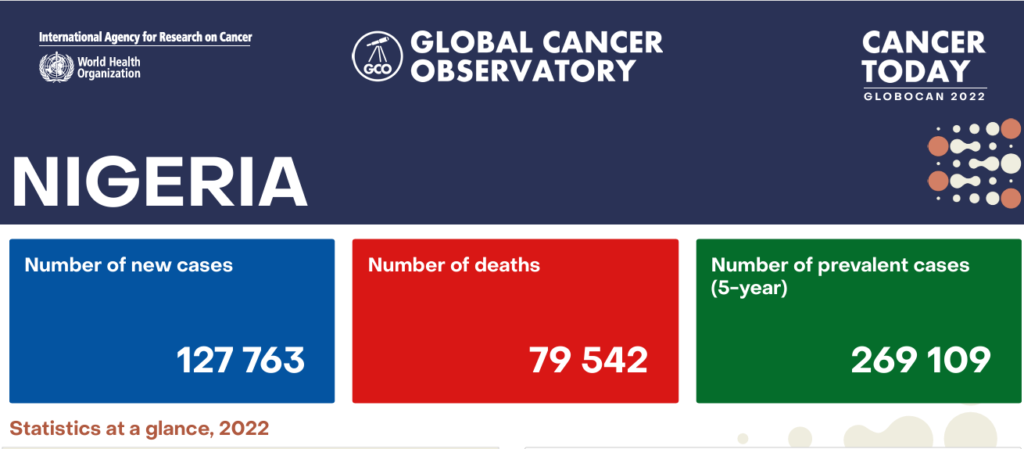
Nigeria bears the heaviest cancer burden in sub-Saharan Africa, with 127,763 new cases and 79,542 deaths annually who — a mortality-to-incidence ratio of 62.3% that is among the worst in the world (GLOBOCAN 2022, IARC/WHO). For every 10 Nigerians diagnosed with cancer, roughly 6 will die from it, compared to just 3 in high-income countries. This staggering gap is not driven by biology but by a systemic collapse across the entire cancer care continuum: late diagnosis, scarce infrastructure, unaffordable drugs, and an insurance system that largely excludes oncology. What follows is a data-rich examination of the crisis — from epidemiology to pharmacy shelves — drawing on GLOBOCAN, peer-reviewed literature, and Nigerian government sources to quantify exactly where the system fails and what is emerging to fix it.
Nigeria’s cancer burden: 128,000 new cases per year and climbing
According to GLOBOCAN 2022 (version 1.1, released February 2024), Nigeria recorded an estimated 127,763 new cancer cases and 79,542 cancer deaths in 2022, with an age-standardized incidence rate (ASR) of 113.6 per 100,000 and an age-standardized mortality rate of 74.6 per 100,000. The lifetime risk of developing cancer before age 75 is 12.1%, and the risk of dying from cancer is 8.0%. An estimated 269,109 Nigerians are living with a cancer diagnosed within the previous five years. PubMed Central +2
Breast cancer dominates, accounting for 32,278 new cases (25.3%) and 16,332 deaths annually, making it the leading cancer in both incidence and mortality. Prostate cancer follows with 18,019 cases (14.1%) and 11,443 deaths, then cervical cancer at 13,676 cases (10.7%) and 7,093 deaths. Colorectal cancer contributes 8,114 cases (6.4%) nihwho with a notably high mortality-to-incidence ratio of 72.9%, while leukaemia accounts for 2,404 cases (1.9%) who with an MIR of 80.3%. Liver cancer, though less common at 4,382 cases, who kills 97% of those diagnosed — the highest fatality ratio of any cancer type in the country.
Among women, breast cancer alone accounts for 40.5% of all new diagnoses, followed by cervical cancer at 17.2%. Among men, prostate cancer represents 37.5% of cases. whoIntechOpen Children make up approximately 7.2% of the total cancer burden, with leukaemia as the most common paediatric malignancy, nihPubMed Central and three major hospitals (UDUTH Sokoto, LUTH Lagos, and National Hospital Abuja) each diagnose 6–10 new paediatric cases monthly PubMed Centralnih (Ogunniyi et al., Health Science Reports, 2025).
These estimates carry important caveats. Nigeria’s population-based cancer registries cover only approximately 2.5% of the population, and the country lacks a comprehensive vital registration system. GLOBOCAN’s mortality figures are modelled from incidence data and survival estimates rather than directly observed. The true cancer burden may be substantially higher than reported.
More than 75% of patients are diagnosed too late to save
Nigerian Cancer Statistic 2025
The single most devastating statistic in Nigerian oncology is the rate of late-stage presentation. Across multiple studies and cancer types, over 70–80% of Nigerian cancer patients present at stage III or IV, Projectpinkblue when treatment options are limited and survival plummets.
For breast cancer — the most studied malignancy — a 2025 systematic review in ecancer covering 2018–2023 data found that 76% of cases were classified as late/advanced, rising to 82% (95% CI: 79–85%) in sensitivity analysis. PubMed Central The stage distribution was stark: just 6% stage I, 17% stage II, 56% stage III, and 21% stage IV PubMed Centralecancer (Agodirin et al., ecancer, 2025). Historical comparisons reveal disturbingly little progress — studies from the 1980s found 85–95% late-stage presentation, and the 2011–2018 aggregate was 79%. PubMed Centralecancer Four decades of public health efforts have barely moved the needle.
Cervical cancer shows similarly devastating patterns, with 75–89% of patients presenting at advanced stages across different Nigerian centres (NAUTH Nnewi: 75.4%; Acta Scientific Zaria: 85.5%; Abuja: 86%; Nnewi: 89.3%). PubMed Central Prostate cancer data indicates 81.4% late presentation, with 62% already metastatic at diagnosis PubMed and only 13% of men over 50 ever having undergone PSA testing American Society of Clinical Oncology (PMC12603683).
The survival consequences are catastrophic. Five-year breast cancer survival in Nigeria is just 32–33% GitnuxDOAJ compared to 87–91% in high-income countries Gitnux (CONCORD-3, Lancet, 2018). The ABC-DO prospective cohort study published in Lancet Global Health (2025) measured Nigeria’s three-year breast cancer survival at 36% — the lowest of six sub-Saharan African countries studied, The Lancet versus 59% in South Africa. Waocp Stage makes a measurable difference even within Nigeria: five-year survival for stage I/II breast cancer is 78.6%, compared to just 33.3% for stage III/IV PubMed Central +2 (Olasehinde et al., International Journal of Cancer, 2021). PubMed Central Prostate cancer outcomes are equally grim: 64% of patients die within two years in Nigerian series. Journal of Urology
Contributing to these delays: fewer than 15% of breast cancer patients present within three months of symptom detection. PubMed Central Only 218 facilities in Nigeria offer mammography, with merely 2.5% of breast ultrasound facilities offering biopsy capability. PubMed Central Just 58 MRI machines serve the entire country, all in urban areas. nihPubMed Central Cultural factors compound structural barriers — cancer is sometimes attributed to spiritual causation, Projectpinkblue and stigma remains pervasive. Projectpinkblue
Twenty-seven treatment centres for 220 million people
Nigeria’s cancer treatment infrastructure is profoundly inadequate relative to its population. The country has approximately 27 cancer treatment centres serving 218.5 million people PubMed Central — roughly one centre per eight million individuals PubMed Central (Ogunniyi et al., 2025). Only 8 government-funded radiotherapy centres exist, ScienceDirectPubMed with just 7 functional as of the most recent survey, against a WHO-estimated need for a minimum of 280 radiotherapy machines PubMed (JCO Global Oncology, 2023). The centres are heavily concentrated in the southwest (Lagos/Ibadan), which accounts for approximately 56% of patient throughput. PubMed Central
The workforce gap is equally severe. Nigeria has approximately Binaytara 44 radiation oncologists, 44 medical physicists, 42 radiation therapy technologists, and 57 oncology nurses working across government-funded centres Nicrat +2 (JCO Global Oncology, 2021 survey). The total number of clinical oncologists — medical and radiation combined — is fewer than 80 Binaytara for a country generating over 127,000 new cases annually, yielding a ratio of roughly one oncologist per 1,600 new patients. Slalom Seventy-five percent of radiotherapy centres lack a designated dosimetrist, and no centre has a medical physics residency training programme. PubMed Central
The flagship NSIA-LUTH Cancer Centre (NLCC) in Lagos, commissioned in 2019 as Bvgh an $11 million public-private partnership, NSIA is the country’s most advanced facility. PubMed Central Equipped with 3 linear accelerators and HDR brachytherapy, Neolife +2 it USTDA has treated 10,064 unique patients from 2019 to 2024, delivering 8,528 radiotherapy sessions, 6,733 chemotherapy cycles, and 215 brachytherapy procedures. PubMed Central It remains the only centre in Nigeria capable of VMAT and IMRT. PubMed Central Expansion is underway: in July 2025, three new oncology centres were inaugurated at UBTH Benin, FTH Katsina, and UNTH Enugu, Punch with NSIA planning 4 new oncology centres, 23 diagnostic centres, and 7 catheterization laboratories across all six geopolitical zones. NSIAPubMed Central An IAEA imPACT review in October 2024 found positive progress since 2011, IAEA and a $2 million NSIA training programme launched in 2024 has already trained over 186 clinicians. The Nation
A single chemotherapy session can cost 14 times the monthly income
The economics of cancer treatment in Nigeria are catastrophic for patients. A single chemotherapy session costs between ₦600,000 and ₦1.5 million ($375–$940), PubMed Central while the average individual monthly income is just ₦43,000 (~$29) NigeriahealthwatchScienceDirect — making one session equivalent to 14 to 35 times a typical monthly wage (Dataphyte; PMC12122767). A full six-course chemotherapy regimen averages approximately $2,300, PubMed Central and mean total out-of-pocket costs for breast cancer treatment have been measured at $5,192 (SD $4,567) in a prospective study at Obafemi Awolowo University Teaching Hospital PubMed CentralScienceDirect (Wuraola et al., Journal of Cancer Policy, 2024).
Pricing data for specific drugs reflects both the dominance of Indian-manufactured generics and wildly variable costs depending on source:
hubpharm_cancer_drug_prices_nigeria_2025
| Drug | Approximate Nigerian price | Notes |
|---|---|---|
| Tamoxifen 20mg (monthly) | ₦3,000–₦5,000 ($2–$3) | Most affordable; widely available generic |
| Cyclophosphamide 500mg (per vial) | ₦848 (~$0.57) | Generic injection; highly accessible |
| Carboplatin 150mg (per vial) | ₦7,155 (~$4.80) | Generic; 450mg vial: ₦19,065 |
| Doxorubicin 20mg liposomal (per vial) | ₦43,319 (~$29) | Injectable |
| Capecitabine 500mg (120 tablets) | ₦54,000 (~$36) | Per cycle supply |
| Imatinib 400mg (monthly) | ₦150,000–₦250,000 ($100–$167) | Generic; branded Gleevec: ~$9,500/month globally |
| Trastuzumab (Herceptin) | Mean $6,568 per course | Targeted therapy for HER2+ breast cancer |
All six drugs the user asked about — Tamoxifen, Imatinib, Capecitabine, Carboplatin, Cyclophosphamide, and Doxorubicin — are listed on Nigeria’s Essential Medicines List (7th edition 2020; 8th edition 2024) and are technically available, predominantly as Indian-manufactured generics. However, availability is inconsistent. When hospital pharmacies run out, patients are diverted to retail pharmacies with significantly higher markups. PubMed Central
The financial toxicity data is devastating. Between 86% and 100% of breast cancer patients experience catastrophic health expenditure PubMed Central (defined as spending exceeding 40% of capacity to pay), PubMed Central with mean treatment costs of $5,193 against a mean capacity-to-pay of just $2,867 ScienceDirect (OAUTH 2024 study). ScienceDirect Seventy-two percent of households had to borrow money to cover treatment, ScienceDirect 9% interrupted a child’s education, and 14% of patients with resectable disease could not afford potentially curative surgery. Pan African Medical JournalPubMed Central For cervical cancer, 81% of patients could not afford radiotherapy. Surgoncinsight A study at Lakeshore Cancer Center found average total colorectal cancer treatment costs of $34,983 ScienceDirect — a figure entirely unreachable for most Nigerian families.
Health insurance covers almost nothing for cancer patients
Nigeria’s health insurance system provides negligible protection for cancer patients. Only approximately 5–13% of Nigerians have any health insurance, ScienceDirect depending on the source (2018 DHS: 3%; 2024 NOIPolls: 19%; 2025 NHIA report: 21.7 million or ~13%). Out-of-pocket spending accounts for approximately 75–76% of total health expenditure PubMed Central +4 — among the highest rates globally. TC HEALTH +2
Cancer care has historically been excluded from the National Health Insurance Scheme (NHIS) benefits package. TC HEALTHRoche An October 2020 evaluation confirmed that oncology was not listed as a covered service. PubMed CentralTC HEALTH While the NHIA Act of 2022 nominally expanded packages to include “treatment for cancers,” implementation remains limited. Lippincott Williams & Wilkins Radiation therapy and immunotherapy are not covered. PubMed Central CT and MRI scans are only partially covered. PubMed Central Officials have cited “immense budget impact” as the reason for exclusion. PubMed Central +2
Several innovative cost-sharing mechanisms have emerged. A Roche-NHIA memorandum signed in 2021 established a cost-sharing model where Roche covers 50% of select chemotherapy costs, NHIA pays 30%, and patients pay 20%, NigeriahealthonlinePunch benefiting over 200 patients at 7 tertiary centres by early 2025. The Cancer Health Fund, a government initiative, provides up to ₦2 million (~$4,865) per patient for breast, cervical, and prostate cancers, Roche disbursing approximately ₦2 billion to 1,616 indigent patients across 6 public hospitals as of December 2024. PubMed Central In 2025, NHIA introduced a 50% subsidy on radiotherapy expenses, capped at ₦400,000.
Drug supply chains plagued by stockouts and counterfeits
Supply chain dysfunction compounds the affordability crisis. Approximately 70% of all drugs consumed in Nigeria are imported, TC HEALTH +2 primarily from India and China, PubMed Central passing through multiple distribution layers with markups at each level. TC HEALTH Oncology drugs are particularly vulnerable to stockouts Access to Medicine — the Central Medical Store system has chronically failed to ensure regular availability at public facilities, PubMed and the ESMO survey found cancer medicines in sub-Saharan Africa are classified as “usually available” rather than “always available.” Oxford Academic
The counterfeit drug threat is acute and growing. NAFDAC issued multiple alerts in 2025–2026 for counterfeit versions of Herceptin (trastuzumab), Avastin (bevacizumab), Tecentriq (atezolizumab), and Phesgo (pertuzumab + trastuzumab) — all high-value oncology drugs sold at suspiciously low prices. Information NigeriaNationaldailyng NAFDAC estimates 13–15% of drugs in Nigeria are fake or substandard, TheCable while the National Primary Healthcare Development Agency placed the figure as high as 70% in 2022. Think Global Health A third of pharmacists in one study admitted to unintentionally purchasing or dispensing counterfeit medicines. Dovepress Counterfeit cancer drugs may contain no active ingredient, incorrect dosages, or harmful contaminants — leading to treatment failure, disease progression, or death. Information Nigeria
NAFDAC’s regulatory process requires all drugs to be registered before sale, WikipediaFreyr Solutions with a timeline of 120–240 working days, Lexology mandatory GMP facility inspections, Nepad and a requirement for foreign manufacturers to appoint local representatives. Lexology This process, while necessary, can delay access to newer agents. The CHAI/BMS immunotherapy demonstration project (nivolumab) was initially stalled when NAFDAC classified it as a clinical trial rather than a demonstration project. Oncodaily
Treatment abandonment runs as high as 50% for some cancers
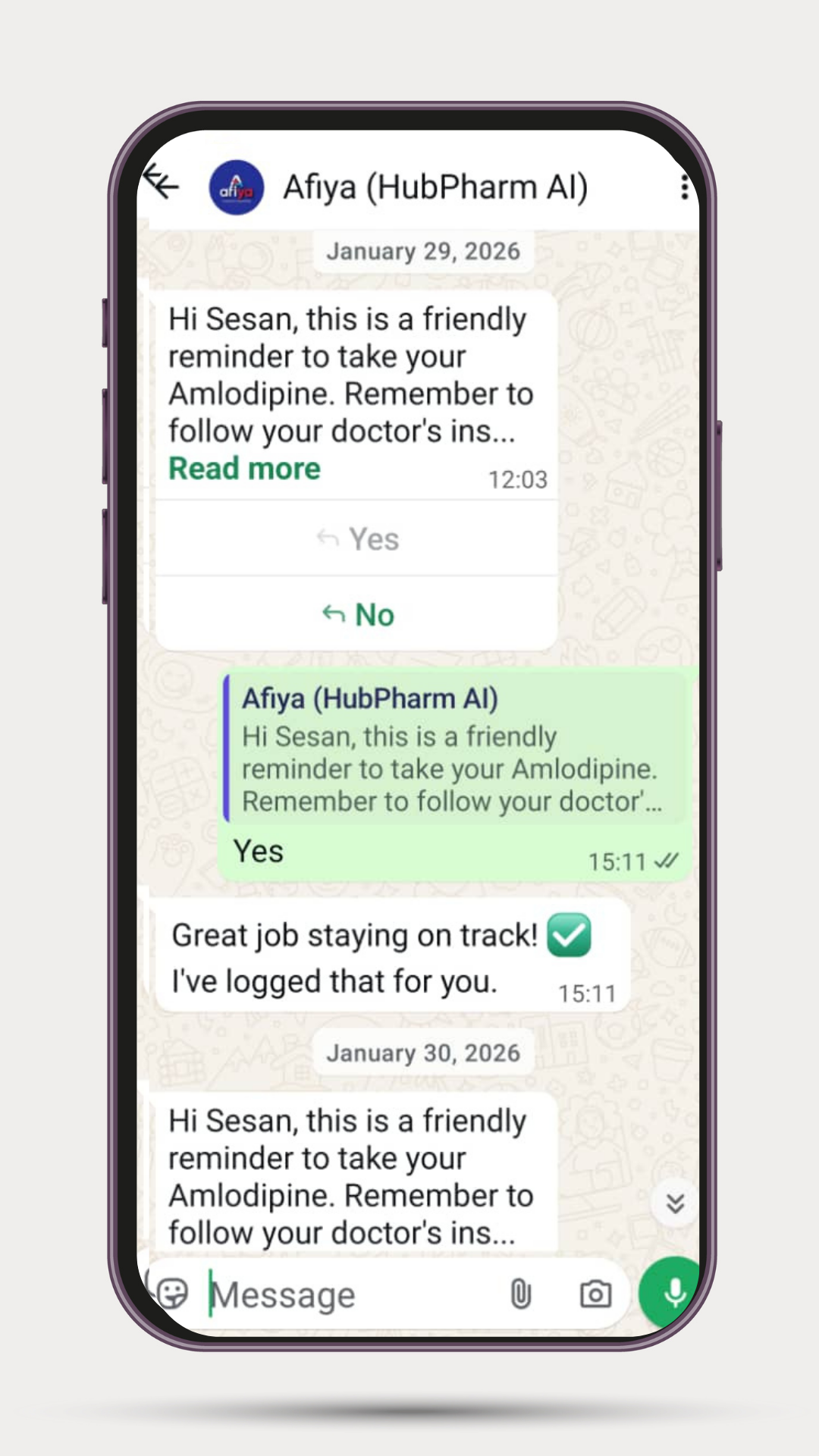
HubPharm Afiya AI Reminders for Medication Adherence and management built on Whatzapp
When patients cannot afford or access care, they stop treatment. Roche Among childhood cancer patients with malignant solid tumours, the abandonment rate is 51.2% at Nnamdi Azikiwe University Teaching Hospital Springer (BMC Cancer, 2024). springer The ABC-DO cohort study (Lancet Oncology, 2022) found that of breast cancer patients who initiated guideline-concordant chemotherapy, only 35% adequately completed their courses, while 20–38% abandoned treatment entirely — with Nigeria recording the highest abandonment gap among 5 sub-Saharan African countries studied. PubMed Central A systematic review across 15 Nigerian studies found that nearly half of patients who initiated chemotherapy did not complete recommended doses. DOAJ +2
Medical tourism represents both symptom and consequence of the infrastructure deficit. Nigeria’s health minister estimated in 2025 that Nigerians spend approximately $2 billion annually on healthcare abroad, PubMed CentralThe Sun Nigeria with cancer treatment accounting for an estimated 40% (~$800 million). The Guardian Nigeria India is the most common destination, receiving 94% of African oncologist referrals (JCO Global Oncology survey, 2024). PubMed Central A 2023 report estimated that approximately 500 Nigerians travel abroad monthly for medical treatment. TheCable Despite government efforts — including the NSIA-LUTH Cancer Centre and the ₦37.4 billion Federal oncology initiative PubMed Central — structural deficits continue to drive patients overseas.
Patient assistance programs are growing but reach few
Several international patient assistance programs operate in Nigeria, though their reach remains limited relative to need. The Max Foundation’s GIPAP/CMLPath to Care programme, supported by Novartis, provides imatinib (Gleevec) at no cost to eligible CML and GIST patients. Globally, it has served approximately 75,000 patients across 93 countries, with participating physicians confirmed in Nigeria. Programme participants achieve five-year survival rates of 89%, comparable to high-income country outcomes (Lancet eClinicalMedicine).
The Chemotherapy Access Partnership (CAP), launched in October 2019 through CHAI, Pfizer, American Cancer Society, and others, Clinton Health Access Initiative +2 negotiated approximately 50% price reductions on 16 essential chemotherapy drugs Punch across 7 teaching hospitals, Clinton Health Access InitiativeTC HEALTH later expanding to 24 tertiary hospitals. Over 7,000 patients have received affordable, quality-assured chemotherapy through this mechanism. Partners now include AstraZeneca, Sandoz, Janssen, Hetero, and Roche. Oncodaily In late 2025, Bristol Myers Squibb launched Nigeria’s first immunotherapy demonstration programme, donating nivolumab for colorectal cancer treatment at National Hospital Abuja Oncodaily — treating the first 4 patients with a target of 30 in the initial phase, entirely free.
Nigerian NGOs play a critical role. Project PINK BLUE, founded in 2013, has conducted over 5,000 free cancer screenings, Tribune Online trained 185 doctors and nurses in oncology, and trained 36 oncology pharmacists. IsoppPunch It launched Nigeria’s first cancer toll-free line (08000CANCER) and influenced the establishment of NICRAT and the Cancer Health Fund. Tribune Online Pink Oak Cancer Trust sponsors early-stage patients across multiple centres.
Oncology pharmacy is emerging but far from established
Nigeria has no well-developed specialty pharmacy sector for oncology, but nascent models are forming. HubPharm Africa is the country’s most prominent digital specialty pharmacy explicitly serving oncology patients, offering cancer drugs with home delivery (same-day/next-day in Lagos, nationwide elsewhere), AI-powered medication management via WhatsApp, and virtual pharmacist consultations. HubPharm Africa The NSIA-LUTH Cancer Centre lists a dedicated “Oncology Pharmacy” service and offers online drug refills with home delivery. Nlcc
A landmark 2024 national survey of 263 Nigerian pharmacists revealed that 73% received no oncology pharmacy training during their education, and only 28.8% were aware of board certification processes. American Association for Cancer ResearchPubMed The Oncology Pharmacy Practitioners Association of Nigeria (OPPAN), the profession’s premier body, Oppan is collaborating with the West African Postgraduate College of Pharmacists to develop a formal oncology pharmacy curriculum Isopp — no such specialization programme currently exists American Association for Cancer Research (Abolarin et al., Journal of Oncology Pharmacy Practice, 2025). A 2021 Fulbright-supported training Isopp found “huge variation” in facilities — some hospitals had clean rooms and biosafety cabinets, while others had pharmacists “mixing chemotherapy on a table with no protective equipment.” PunchCU Anschutz
Digital health platforms are addressing some gaps. Oncopadi, launched in 2017 as Africa’s foremost digital cancer clinic, UICCWiley Online Library has enrolled 25 of Nigeria’s approximately 80 oncologists Oncopadi and served over 1,000 patients All.Can across 30 healthcare institutions in 19 states. Slalom During COVID-19 lockdowns, Oncopadi dispatched medications through pharmacy partnerships, triaged patients remotely, and provided palliative counselling. AfricanpalliativecareAll.Can mPharma, a Ghana-based digital pharmacy operating Nigeria’s HealthPlus chain, TC HEALTH supports over 10,000 patients with specialty therapies including oncology drugs across its African network. LinkedIn
Conclusion: a crisis of systems, not resources alone
Nigeria’s cancer treatment landscape in 2025–2026 is defined by a series of compounding failures. Three out of four cancer patients arrive at hospitals with advanced disease. ecancer Fewer than 30 centres serve 220 million people. PubMed Central A single chemotherapy session can consume more than a year’s wages for the poorest households. Health insurance covers virtually nothing. And when drugs are available, one in seven may be counterfeit.
Yet the trajectory is not entirely bleak. The NSIA expansion programme, the Chemotherapy Access Partnership’s 50% price reductions, TC HEALTH the Cancer Health Fund’s ₦2 billion in disbursements, PubMed Central emerging digital platforms like Oncopadi and HubPharm, and Nigeria’s 2024 declaration of cancer as a notifiable disease Nicrat all represent meaningful structural changes. The key question is whether these initiatives can scale fast enough to match a cancer burden that GLOBOCAN projects will nearly double by 2040.
The data points gathered here — drawn from GLOBOCAN 2022, CONCORD-3, the ABC-DO cohort (Lancet Global Health), the IAEA imPACT review (2024), IAEA and over a dozen peer-reviewed studies in ecancer, BMC Cancer, JCO Global Oncology, Journal of Cancer Policy, and Pan-African Medical Journal — form a robust evidence base for understanding where Nigeria stands and what an effective response would require: earlier detection through decentralized screening, expanded insurance coverage that actually includes oncology, secured supply chains that eliminate counterfeits, and a health workforce that can meet the scale of the challenge. Without these, the 79,542 annual cancer deaths in Nigeria who will continue to represent not a failure of medicine, but a failure of access to it.