Testicular Cancer in Nigeria: Symptoms, Diagnosis and Treatment
Testicular cancer is a type of cancer that develops in one or both testicles. Although it is less common than some other cancers, it is important to recognise because it often affects younger men and can be highly treatable, even when it has spread.
The testicles, also called testes, are two small organs located inside the scrotum, the pouch of skin beneath the penis. They produce sperm and testosterone, a hormone that supports male sexual development and other body functions.
One of the most common warning signs of testicular cancer is a lump or swelling in a testicle. However, other conditions can cause similar changes. Therefore, any unusual lump, change in size or persistent discomfort should be assessed by a qualified healthcare professional.
This article explains testicular cancer symptoms, risk factors, diagnosis, treatment options and how HubPharm Africa may support patients with medicine-related questions in Nigeria.
What Is Testicular Cancer?
Testicular cancer develops when cells in a testicle begin to grow abnormally and uncontrollably.
Most cases begin in germ cells, which are the cells involved in sperm production. These cancers are generally divided into two main groups:
- Seminoma: A type of germ cell cancer that often grows more slowly and responds well to treatment.
- Non-seminoma: A group of germ cell cancers that may grow and spread more quickly. This group includes several different tumour types.
The distinction matters because the cancer type, stage and other clinical findings influence the treatment plan.
Although testicular cancer usually affects one testicle, it can occasionally affect both. A diagnosis does not automatically mean the cancer has spread or that treatment will be unsuccessful.
What Are the Symptoms of Testicular Cancer?
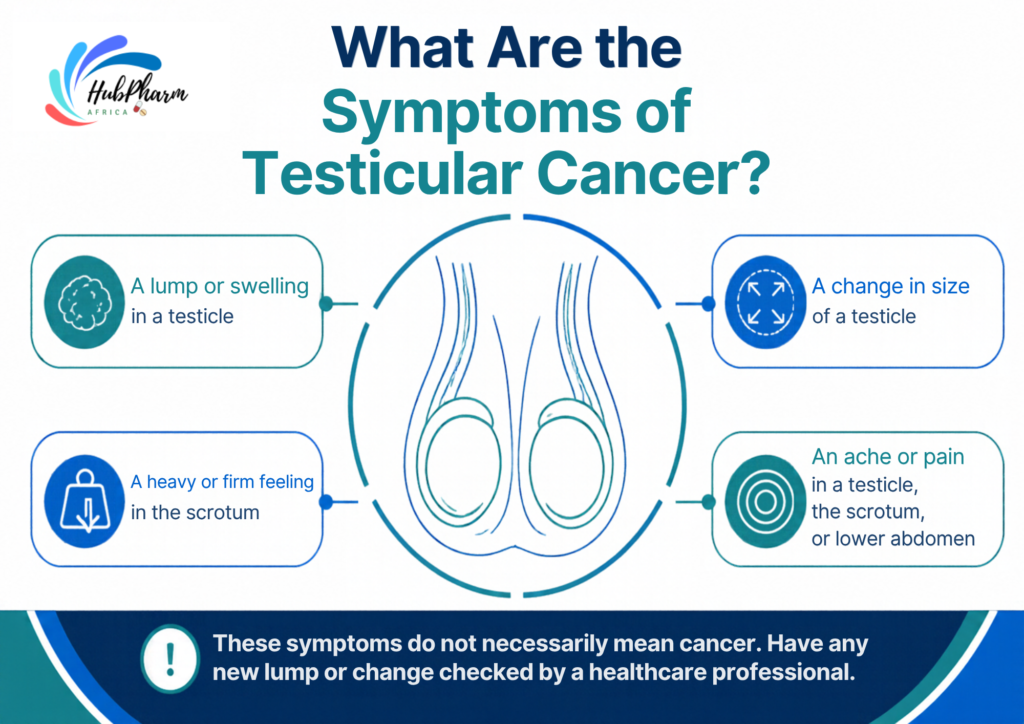
Testicular cancer does not always cause pain. In fact, a painless lump or swelling may be the first noticeable sign.
Possible symptoms include:
- A lump or swelling in one testicle.
- An increase in the size of a testicle.
- A feeling of heaviness in the scrotum.
- A testicle that feels unusually firm or hard.
- An ache or discomfort in a testicle or the scrotum.
- A dull ache in the lower abdomen or groin.
- A sudden build-up of fluid in the scrotum.
- Breast tenderness or enlargement in some cases.
- Persistent back pain, unexplained weight loss, cough or breathing difficulties in advanced disease.
These symptoms can occur with other conditions, such as infection, inflammation, fluid around the testicle or an injury. Nevertheless, a new lump or persistent change should not be ignored.
Seek emergency medical care for sudden, severe testicular pain. This can be a sign of testicular torsion, a condition in which the blood supply to the testicle becomes restricted. It requires urgent assessment and is not something to monitor at home.
For other unusual testicular changes, arrange a prompt medical assessment rather than waiting for the symptoms to disappear.
What Causes Testicular Cancer?
There is no single confirmed cause of testicular cancer. However, researchers have identified several factors associated with a higher risk.
1. Undescended testicle
An undescended testicle, medically known as cryptorchidism, occurs when one or both testicles do not move into the scrotum before birth. This condition is associated with an increased risk of testicular cancer, even if it is corrected surgically.
2. Family history
A man may have a higher risk if his father or brother has had testicular cancer. However, many people diagnosed with the disease have no family history.
3. Previous testicular cancer
Men who have previously had testicular cancer have an increased risk of developing cancer in the other testicle. Continued medical follow-up is therefore important.
4. Age
Testicular cancer is most frequently diagnosed in younger and middle-aged men, although it can occur at other ages.
5. Other developmental factors
Certain conditions affecting testicular development may be associated with a higher risk. A healthcare professional can help people with relevant medical histories understand whether they need additional monitoring.
Can testicular cancer be prevented?
There is no proven way to prevent every case of testicular cancer. Many affected men have no identifiable risk factors.
Being familiar with what is normal for your body can help you notice changes early. Regular awareness of testicular appearance and feel is useful, but it does not guarantee that cancer will be prevented or detected.
How Is Testicular Cancer Diagnosed?
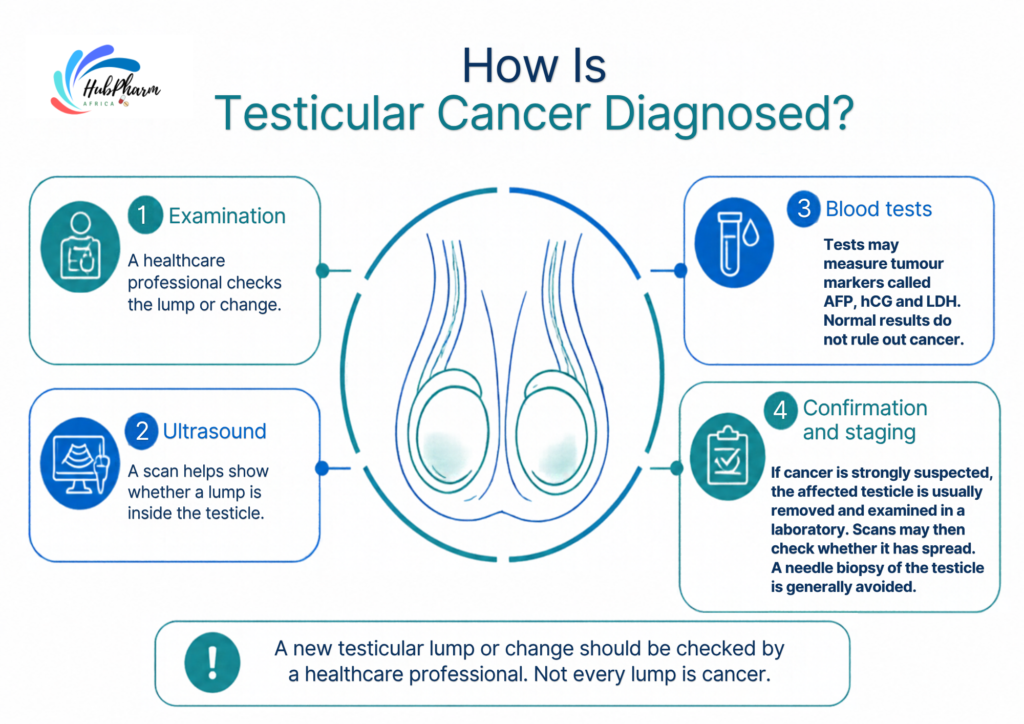
A healthcare professional may use several tests to investigate a lump, swelling or other unusual testicular change.
1. Medical history and physical examination
The clinician will ask about symptoms, how long they have been present and whether there is a family or personal history of testicular cancer.
A physical examination can help identify swelling, lumps, tenderness or other changes. The clinician may also examine the abdomen and nearby lymph nodes.
2. Testicular ultrasound
An ultrasound uses sound waves to produce images of the testicles and surrounding tissues.
It can help distinguish a solid lump from certain fluid-filled or other non-cancerous conditions. However, the result must be interpreted alongside the examination and other investigations.
3. Blood tests for tumour markers
Doctors may measure specific substances in the blood that can be elevated in some testicular cancers. These include:
- Alpha-fetoprotein (AFP).
- Beta-human chorionic gonadotropin (beta-hCG).
- Lactate dehydrogenase (LDH).
These markers help doctors assess the disease and plan treatment. However, normal results do not completely exclude testicular cancer, and raised results do not establish the diagnosis on their own.
4. Surgery and tissue examination
When testicular cancer is suspected, a specialist may recommend removing the affected testicle through an operation called a radical inguinal orchiectomy. The tissue is then examined under a microscope to determine whether cancer is present and identify the type.
A suspected testicular cancer should be managed by an experienced specialist. The usual diagnostic approach differs from that used for many other cancers, so patients should not arrange an ordinary lump biopsy without specialist guidance.
5. Imaging to determine the stage
Depending on the findings, doctors may recommend CT scans or other imaging to assess whether the cancer has spread to lymph nodes, the lungs or other parts of the body.
The results help determine the stage and guide further treatment.
What Are the Stages of Testicular Cancer?
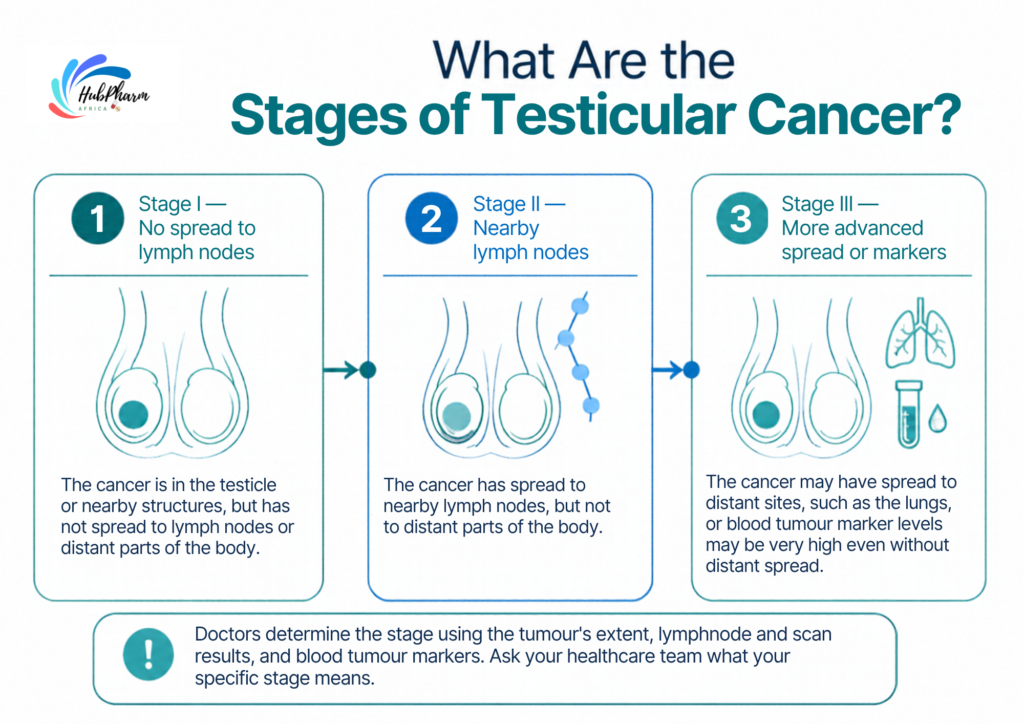
The stage describes how far the cancer has spread.
- Stage I: The cancer is limited to the testicle.
- Stage II: The cancer has spread to nearby lymph nodes in the abdomen.
- Stage III: The cancer has spread to more distant lymph nodes or organs, or other findings indicate more advanced disease.
Doctors also consider tumour markers, the cancer type and other clinical factors when assessing the outlook and selecting treatment.
Importantly, advanced testicular cancer can still respond very well to treatment. The stage helps guide care, but it does not tell the entire story by itself.
How Is Testicular Cancer Treated?
Treatment depends on the cancer type, stage, tumour markers, overall health and the patient’s preferences. The care team should explain the expected benefits, possible side effects and available alternatives.
1. Surgery
Surgery to remove the affected testicle is the main initial treatment for most testicular cancers. The procedure is called a radical inguinal orchiectomy.
For some patients, surgery may be the only treatment required initially. Others may need chemotherapy, radiotherapy or additional surgery, depending on the diagnosis and risk of recurrence.
Some patients may choose to discuss a testicular prosthesis with their surgeon.
2. Active surveillance
After surgery, certain patients with early-stage cancer may not need immediate additional treatment.
Instead, the care team may recommend active surveillance, which involves scheduled examinations, blood tests and imaging. Further treatment can be considered if signs of recurrence develop.
Surveillance is an organised medical plan, not an absence of care. Patients need to attend follow-up appointments as advised.
3. Chemotherapy
Chemotherapy uses medicines that destroy cancer cells or prevent them from multiplying. It may be recommended after surgery or when the cancer has spread.
A commonly used combination for appropriate testicular germ cell cancers is the BEP regimen, which contains:
- Bleomycin.
- Etoposide.
- Cisplatin.
Other chemotherapy combinations may be used depending on the cancer type, stage, previous treatment and clinical circumstances.
Chemotherapy can be highly effective for testicular cancer. However, it can also affect healthy cells, so patients require specialist supervision and monitoring.
4. Radiotherapy
Radiotherapy uses high-energy radiation to destroy cancer cells. It may be considered for selected patients, particularly those with certain types of seminoma.
It is not necessary for every patient. Doctors consider the expected benefits, possible long-term effects and other treatment options before recommending it.
5. Additional surgery
If cancer has spread to abdominal lymph nodes or other areas, further surgery may sometimes be appropriate.
The decision depends on the tumour type, response to chemotherapy, imaging results and the specialist team’s assessment.
6. Treatment for recurrent or resistant disease
If testicular cancer returns after initial treatment or does not respond adequately, specialists may consider other chemotherapy combinations, surgery or, in selected circumstances, high-dose chemotherapy with stem cell support.
These decisions require an experienced oncology team because treatment choices depend on the previous medicines used and the location and behaviour of the cancer.
Medicines Used to Treat Testicular Cancer
The medicines used for testicular cancer depend on the diagnosis and treatment plan. The following are examples of medicines used in established treatment regimens.
| Medicine | General role |
|---|---|
| Cisplatin | A chemotherapy medicine commonly used in testicular cancer treatment combinations. |
| Etoposide | A chemotherapy medicine often combined with cisplatin. |
| Bleomycin | A chemotherapy medicine used in selected regimens, including BEP. |
| Carboplatin | A platinum-based chemotherapy medicine used in certain clinical situations, including some seminoma treatment plans. |
| Ifosfamide | A chemotherapy medicine that may be included in selected treatment plans for recurrent disease. |
The BEP regimen combines bleomycin, etoposide and cisplatin. Other combinations may be selected according to the cancer type, stage and previous response to treatment.
Cancer medicines must only be given under appropriate specialist supervision. These medicines can cause serious side effects and require clinical monitoring. The names listed here are for educational purposes and are not a recommendation to start any treatment.
Their inclusion does not confirm current stock or availability through HubPharm Africa.
Possible Side Effects of Testicular Cancer Treatment
Side effects vary from person to person. They depend on the treatment, the medicines used and the individual’s health.
Possible effects include:
- Fatigue and reduced energy.
- Nausea or vomiting.
- Temporary hair loss with certain chemotherapy medicines.
- Increased risk of infection due to low blood cell counts.
- Changes in kidney function or hearing with certain medicines.
- Nerve-related symptoms, such as tingling or numbness.
- Changes in sperm production and fertility.
- Emotional stress, anxiety or concerns about body image and sexual health.
Patients should tell their healthcare team about new symptoms or side effects. Some complications require urgent assessment, particularly fever during chemotherapy or symptoms of a serious infection.
The care team can also discuss symptom management, emotional support and ways to protect long-term health.
Can Testicular Cancer Affect Fertility?
Yes. Testicular cancer and some of its treatments can affect fertility, although the impact varies.
Removing one testicle does not necessarily prevent a person from fathering children. The remaining testicle may continue producing sperm and testosterone, depending on its function and the individual’s health.
However, chemotherapy and radiotherapy can reduce sperm production, sometimes for an extended period or permanently. Some patients may also have fertility concerns before treatment begins.
If having biological children in the future is important, discuss fertility preservation with the care team before treatment. Sperm banking may be an option for suitable patients.
Patients can also ask about hormone levels, sexual health and whether fertility testing is appropriate.
Living After Testicular Cancer
Follow-up care is an important part of recovery. Even after successful treatment, doctors may recommend regular visits, blood tests and imaging to monitor for recurrence.
Patients can support their recovery by:
- Attending all scheduled follow-up appointments.
- Keeping a record of medicines and treatment-related side effects.
- Discussing changes in fertility, sexual health or hormone-related symptoms.
- Seeking emotional or psychological support when needed.
- Asking their care team about returning to work, physical activity and other everyday routines.
It is also important to report new lumps or unusual changes in either testicle promptly, including changes in the remaining testicle after surgery.
How HubPharm Africa Can Support Patients With Testicular Cancer
A cancer diagnosis can create questions about prescriptions, medicine safety, refill planning and treatment-related side effects.
HubPharm Africa is a digital pharmacy focused on helping patients access genuine medicines and receive pharmacy support. For patients managing testicular cancer, the team can help with medicine-related questions and prescription enquiries, subject to applicable requirements.
Support may include:
- Prescription guidance: Helping patients understand prescribed medicines and clarify medicine-related questions.
- Medication management: Supporting refill planning and reviewing questions about possible medicine interactions.
- Pharmacist support: Explaining medicine precautions and when to seek further medical advice.
- Medicine enquiries: Responding to enquiries about prescribed cancer medicines, subject to prescription requirements, regulatory rules and confirmed availability.
HubPharm does not replace an oncologist, urologist or hospital cancer team. Diagnosis, surgery, chemotherapy and other cancer treatments must remain under qualified medical supervision.
To ask a medicine-related question, contact a HubPharm Africa pharmacist on WhatsApp.
Getting Help in Nigeria
If you notice a lump, swelling or persistent change in a testicle, arrange a prompt assessment at a recognised hospital or with a qualified healthcare professional. A clinician can determine whether you need an ultrasound, blood tests or referral to a urologist.
Do not assume that a painless lump is harmless. Equally, do not assume that every lump is cancer, because several non-cancerous conditions can cause similar symptoms.
If testicular cancer is diagnosed, ask the specialist to explain the type, stage, treatment plan, possible side effects and follow-up schedule.
Where treatment costs or access to medicines are a concern, ask the hospital team about available care pathways and financial support. A pharmacist may also help clarify prescription-related questions.
Seek emergency care immediately for sudden, severe testicular pain, as this may indicate a condition requiring urgent treatment.
Frequently Asked Questions About Testicular Cancer
1. What is the first sign of testicular cancer?
A lump or swelling in one testicle is a common first sign. Some people also notice a change in size, heaviness or an ache. Testicular cancer may be painless, so an unusual lump should be assessed even if it does not hurt.
2. Is testicular cancer curable?
Many testicular cancers are highly treatable and can be cured, including some cases diagnosed after the cancer has spread. The likelihood of cure depends on the cancer type, stage and response to treatment.
3. Can testicular cancer affect both testicles?
It usually affects one testicle, but both can be affected. People who have had testicular cancer should follow their specialist’s advice about monitoring the other testicle.
4. Does testicular cancer always cause pain?
No. A lump or swelling may be painless. Therefore, the absence of pain does not rule out cancer. Any new or unusual testicular change should be checked by a healthcare professional.
5. Can a person have children after testicular cancer treatment?
Yes, many people can have children after treatment. However, surgery, chemotherapy and radiotherapy may affect fertility. Discuss fertility preservation, including sperm banking where appropriate, before treatment begins.
6. What medicines are used to treat testicular cancer?
Common chemotherapy medicines include cisplatin, etoposide and bleomycin. They may be combined in a regimen such as BEP. The appropriate treatment depends on the cancer type and stage and must be selected by an oncology team.
7. Can testicular cancer return after treatment?
Yes, recurrence is possible. This is why follow-up appointments and recommended tests are important, even when treatment has been successful. Contact the care team if new symptoms develop between appointments.
8. Can HubPharm Africa help with testicular cancer medicines?
HubPharm can assist with prescription-related enquiries and pharmacist support. Specific medicines are subject to prescription requirements, regulatory rules and confirmed availability. Patients should contact the pharmacy directly about a particular prescribed medicine.
Conclusion
Testicular cancer can affect men at different ages, but it is particularly important to recognise symptoms in younger men. A lump, swelling or unusual change in a testicle should be assessed promptly, even when there is no pain.
Diagnosis may involve examination, ultrasound, blood tests and specialist assessment. Treatment often includes surgery and may also involve chemotherapy, radiotherapy or carefully planned surveillance.
Many testicular cancers respond very well to treatment. Early medical assessment, appropriate specialist care and regular follow-up can help patients understand their options and manage their recovery.
Need help with a prescribed cancer medicine? Speak with a HubPharm Africa pharmacist on WhatsApp.
Medical Disclaimer
This article is for general educational purposes only. It does not replace medical advice, diagnosis or treatment. A qualified healthcare professional should assess testicular lumps, swelling or pain. Cancer medicines must only be used under appropriate specialist supervision.
References
- National Cancer Institute (NCI). Testicular Cancer: Overview.
- National Cancer Institute (NCI). Testicular Cancer Symptoms.
- National Cancer Institute (NCI). Testicular Cancer: Diagnosis and Prognosis.
- National Cancer Institute (NCI). Testicular Cancer Treatment.
- National Cancer Institute (NCI). Testicular Cancer Treatment: Health Professional Version.
- National Health Service (NHS). Symptoms of Testicular Cancer.
- National Health Service (NHS). Treatment for Testicular Cancer.
- MedlinePlus, U.S. National Library of Medicine. Testicular Cancer.
Recommended Internal Links for WordPress
Add internal links where the destination pages are live and verified:
- Cancer medication page: Link from the section on medicines used to treat testicular cancer.
- Prostate cancer article: Link from the discussion of men’s cancer awareness and specialist care.
- Ovarian cancer article: Link where the article discusses cancer diagnosis and treatment.
- HubPharm pharmacist support: Link from the HubPharm support section and final call to action.