Alopecia and Hair Loss: Causes and Treatment
Hair loss is common and can happen for many different reasons. The medical term for hair loss is alopecia. Some types are temporary, while others can cause ongoing or permanent hair loss.
Finding the underlying cause is important because the appropriate treatment depends on the type of hair loss.
What Is Alopecia?
Alopecia simply means hair loss. It can affect the scalp or other areas of the body.
It is normal to lose some hair every day. Noticeable thinning, bald patches or a receding hairline, however, may indicate a hair-loss condition.
Hair loss can develop gradually or appear suddenly, depending on its cause.
What Causes Hair Loss?
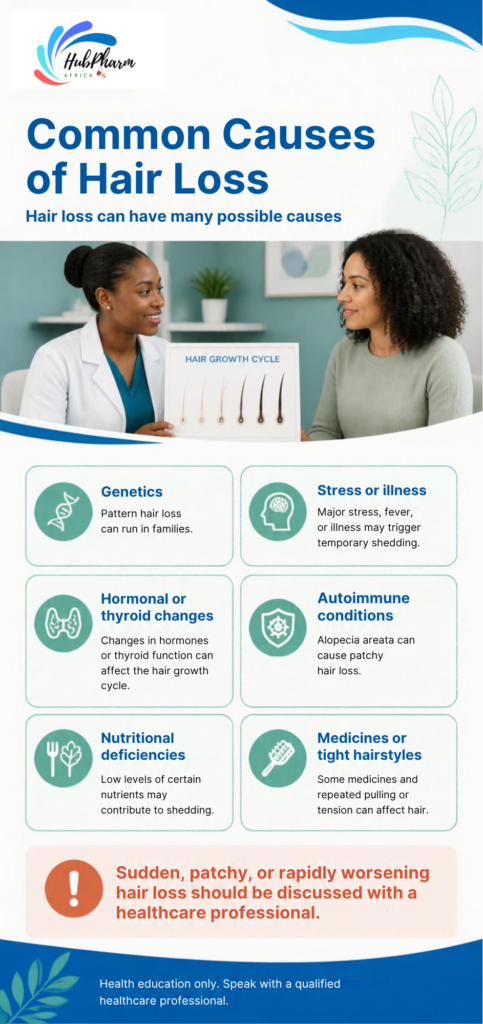
There are many possible causes of alopecia.
Hereditary Hair Loss
Genetics are one of the most common causes of hair loss. Hereditary or pattern hair loss can cause gradual thinning, a receding hairline or thinning around the crown.
Alopecia Areata
Alopecia areata is an autoimmune condition that can cause sudden, often patchy hair loss. It can affect the scalp, eyebrows, eyelashes and other areas of the body.
Some people experience regrowth, while others require treatment from a dermatologist.
Stress and Illness
Significant physical or emotional stress can sometimes trigger increased hair shedding. Hair loss may also occur after illness, high fever, surgery or certain medical treatments.
Hormonal Changes
Hormonal changes can contribute to hair loss. These may occur with certain medical conditions and other major hormonal changes.
Nutritional Problems
Inadequate levels of certain nutrients can contribute to hair loss. Iron deficiency, for example, may be associated with hair shedding.
However, taking supplements without knowing whether you have a deficiency is not always helpful.
Hairstyles That Pull the Hair
Repeated tension from tightly pulled hairstyles can cause traction alopecia.
If the tension continues for a long time, permanent hair loss can occur.
Scalp Conditions and Infections
Some scalp conditions and infections can cause hair loss. Identifying and treating the underlying condition is therefore important.
Types of Alopecia and Hair Loss
Pattern Hair Loss
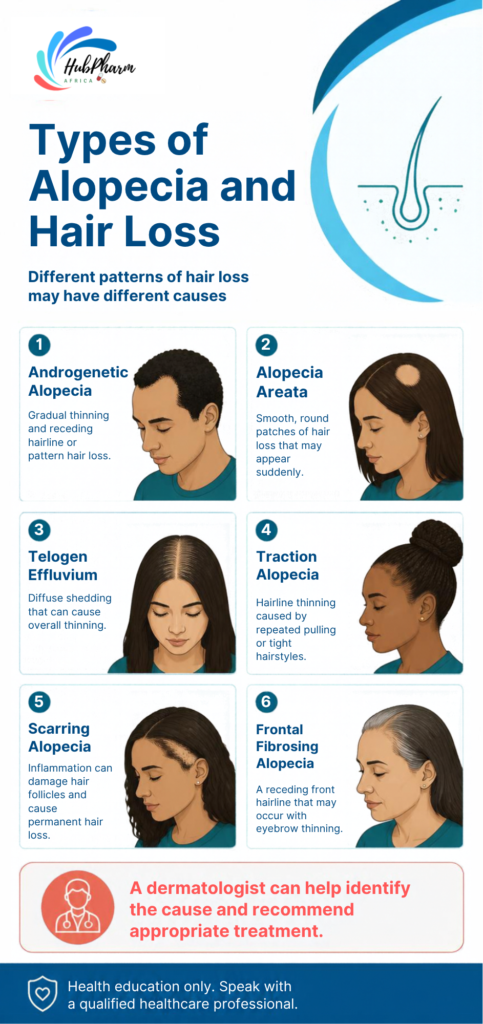
Pattern hair loss usually develops gradually and can cause thinning around the hairline, crown or across the scalp.
Alopecia Areata
Alopecia areata typically produces smooth, patchy areas of hair loss and can sometimes affect other parts of the body.
Traction Alopecia
This occurs when repeated pulling or tension damages the hair follicles.
Temporary Hair Shedding
Some people experience increased shedding after illness, significant stress or other physical changes. Hair may gradually return to its normal growth cycle once the underlying trigger resolves.
How Is Alopecia Diagnosed?
The first step in treating hair loss is identifying why it is happening.
A healthcare professional may ask about:
- When the hair loss started
- Whether it appeared suddenly or gradually
- Whether you have bald patches
- Whether other parts of the body are affected
- Your medical history
- Medicines and supplements you use
- Recent illnesses or major stress
- Your diet
- Your usual hairstyles and hair-care practices
- Family history of hair loss
The scalp and hair may also be examined. Depending on the suspected cause, blood tests or other investigations may be necessary.
Treatment for Alopecia and Hair Loss
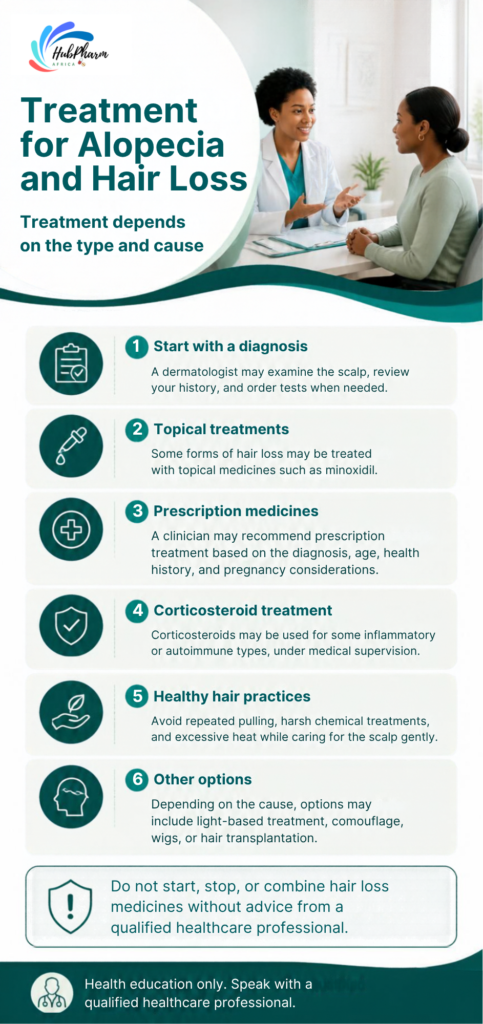
There is no single treatment that works for every type of alopecia.
Treatment depends on the cause, the type of hair loss, how long it has been present and the person’s overall health.
Possible approaches include:
- Treating an underlying medical condition
- Correcting an identified nutritional deficiency
- Changing damaging hair-care practices
- Medical treatment prescribed for the specific type of alopecia
- Treatments designed to stimulate or maintain hair growth
- Hair replacement options in selected cases
Some people may experience regrowth without treatment, while others require longer-term management.
Common Medicines Used for Hair Loss
Several medicines are used by healthcare professionals for particular forms of hair loss.
Minoxidil
Minoxidil is a treatment used for certain types of hair loss. It can help stimulate or maintain hair growth in appropriate patients.
Finasteride
Finasteride is a prescription medicine used for certain forms of male pattern hair loss. It works by reducing the production of dihydrotestosterone (DHT), a hormone involved in the shrinking of susceptible hair follicles.
Dutasteride
Dutasteride also affects the pathway responsible for producing DHT. It may be used by healthcare professionals in selected situations involving hair loss.
Biotin
Biotin, also known as vitamin B7, is involved in normal metabolism and is commonly included in supplements marketed for hair, skin and nails.
However, biotin supplementation is not a universal treatment for hair loss. It is particularly important not to assume that a biotin deficiency is responsible for hair loss without appropriate assessment.
An Important Point About Hair-Loss Medicines
These treatments are not interchangeable and are not appropriate for every person or every type of alopecia.
The cause of hair loss should be established before choosing a treatment. A healthcare professional can also consider potential contraindications, interactions and side effects.
Hair-Loss Products and Support at HubPharm
HubPharm’s Lifestyle Health programme specifically identifies minoxidil, finasteride, dutasteride and Biotin Complexamong the treatments associated with its alopecia and hair-loss service.
HubPharm also has hair, skin and beauty supplements in its catalogue, including biotin-containing products.
Because hair loss can have many different causes, the most appropriate treatment depends on the individual. Prescription treatments in particular should be assessed by an appropriate healthcare professional.
Can Hair Supplements Help?
Hair supplements are widely marketed for hair growth, but they are not a universal solution for hair loss.
Taking excessive amounts of certain nutrients can cause problems, and supplements are unlikely to correct hair loss caused by conditions unrelated to nutritional deficiency.
If you suspect a nutritional deficiency, a healthcare professional can determine whether testing or supplementation is appropriate.
Hair Care Tips for People Experiencing Hair Loss
Avoid Excessive Tension
If your hairstyle repeatedly pulls on your scalp, reducing the tension can help prevent additional damage.
Be Gentle With Your Hair
Avoid unnecessary pulling and excessive practices that damage the hair shaft.
Don’t Ignore Sudden Changes
Sudden or patchy hair loss can have a different cause from gradual hereditary thinning. An assessment can help determine what is happening.
When Should You See a Healthcare Professional?
Consider getting professional advice if:
- Hair loss is sudden
- You develop bald patches
- Hair loss is rapidly progressing
- Your scalp is painful, inflamed or unusually itchy
- You are losing hair from other areas of your body
- Hair loss occurs after starting a new medicine
- You are concerned about the amount of hair you’re losing
The sooner the underlying cause is identified, the sooner an appropriate treatment plan can be considered.
How HubPharm Supports Hair-Loss Care
Hair loss can be frustrating, particularly when you don’t know why it is happening.
HubPharm’s Lifestyle Health programme provides pharmacist-led support for conditions including alopecia and hair loss. Its care model connects patients with pharmacists and other healthcare professionals when additional clinical support is needed.
Concerned about unexplained hair loss? Speak with a qualified healthcare professional before starting treatment on your own.
Frequently Asked Questions
Is it normal to lose hair every day?
Yes. Some daily hair shedding is part of the normal hair-growth cycle. Noticeable thinning or bald patches may indicate hair loss.
Can stress cause hair loss?
Yes. Significant physical or emotional stress can trigger increased hair shedding in some people.
Can tight hairstyles cause alopecia?
Yes. Repeated tension from tight hairstyles can cause traction alopecia and may eventually damage hair follicles.
Can alopecia be treated?
Some forms of alopecia can be treated or managed successfully. The appropriate approach depends on the underlying cause and type of hair loss.
What medicines are used for hair loss?
Treatments used for certain types of hair loss include minoxidil, finasteride and dutasteride. The appropriate treatment depends on the diagnosis and individual circumstances.
Does minoxidil work for everyone?
No. Minoxidil can help certain types of hair loss, but it does not treat every cause of alopecia.
Can hair grow back after alopecia?
It depends on the cause. Some types of hair loss are temporary and can regrow, while others require treatment or may result in permanent hair loss.
Should I take biotin for hair loss?
Not necessarily. Biotin supplementation is most useful when there is an actual deficiency or a healthcare professional recommends it. It is not a universal treatment for hair loss.
The Bottom Line
Alopecia and hair loss can have many different causes, so finding the cause is the first step toward appropriate treatment.
Hereditary hair loss, alopecia areata, hormonal changes, illness, nutritional problems, scalp conditions and repeated hair tension can all contribute to hair loss.
Treatments may include changes to hair-care practices, treatment of an underlying condition, medicines such as minoxidil, finasteride or dutasteride, or other approaches depending on the diagnosis.
If your hair loss is sudden, patchy, rapidly progressing or concerning you, seek professional medical advice rather than assuming that a particular hair-growth product will solve the problem.
Medical note: This article is for general health education and does not replace individual medical advice, diagnosis or treatment.
References
- American Academy of Dermatology — Hair Loss: Overview.
- American Academy of Dermatology — Causes of Hair Loss.
- American Academy of Dermatology — Hair Loss: Diagnosis and Treatment.
- American Academy of Dermatology — Alopecia Areata.
- HubPharm Africa — Lifestyle Health Programme.
- HubPharm Africa — Biotin 1000mcg product information.
- HubPharm Africa — Coordinated Care Team.