Depression in Nigeria: Symptoms, Treatment and Medicines

Depression is a medical condition that can affect mood, sleep, concentration, relationships, work and everyday activities. It can happen to anyone, and it is treatable. However, many people still struggle to recognise depression or delay seeking professional care.
The World Health Organization describes depression as a common mental disorder involving persistent low mood or loss of interest and pleasure. Effective psychological treatments and medicines are available, depending on the severity of the condition and the individual.
In Nigeria, research has also shown that depression can be managed effectively within primary healthcare when appropriate assessment, psychological support, medication when indicated and referral pathways are available. A large Lagos trial involving adults with clinically significant depression found that structured stepped care produced substantial improvements over 12 months.
What is depression?
Depression is more than having a bad day.
A depressive episode can involve a persistent low mood or a loss of interest or pleasure in activities. Other symptoms may include tiredness, difficulty concentrating, changes in sleep, changes in appetite, feelings of low self-worth and difficulty functioning normally.
Symptoms generally persist for at least two weeks when depression is diagnosed as a depressive episode, although the exact assessment depends on the individual and the clinical setting.
Depression can be mild, moderate or severe. It can also occur alongside other physical or mental health conditions.
Common symptoms of depression
Depression does not look exactly the same in everyone.
Common symptoms include:
- Persistent sadness or low mood
- Losing interest in things you normally enjoy
- Feeling unusually tired or lacking energy
- Difficulty concentrating or making decisions
- Sleeping too much or too little
- Changes in appetite
- Feeling worthless or excessively guilty
- Withdrawing from friends or family
- Finding work, school or everyday responsibilities increasingly difficult
Having one of these symptoms does not automatically mean someone has depression. A healthcare professional considers the overall pattern, duration and effect on daily life.
Why depression in Nigeria can be difficult to recognise
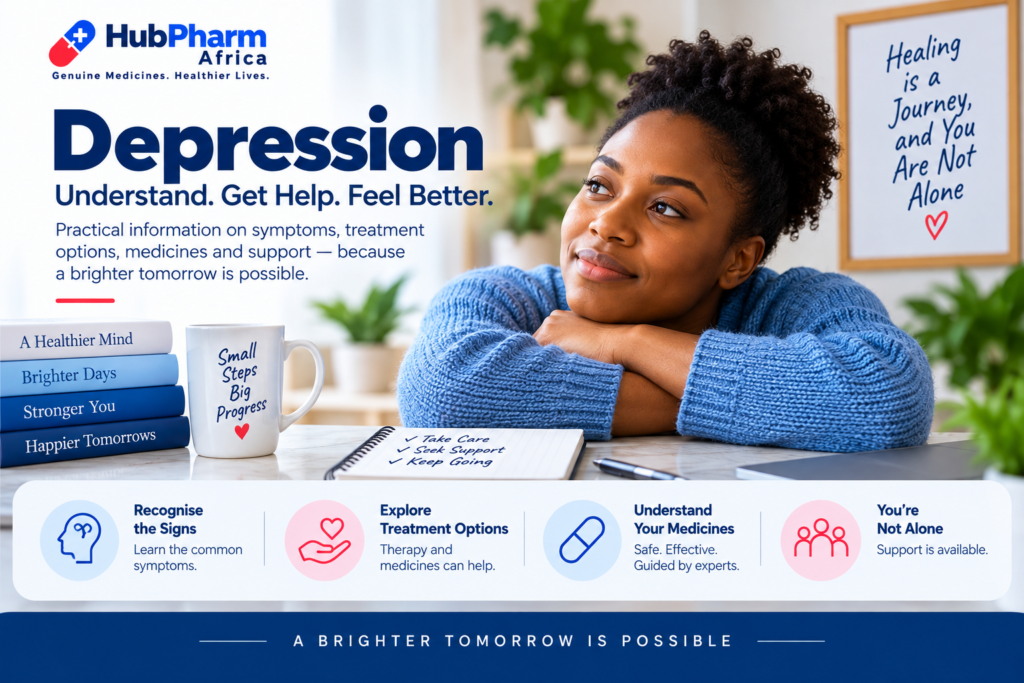
Depression can be mistaken for ordinary stress, tiredness or a temporary reaction to difficult circumstances.
In addition, stigma can make people reluctant to discuss mental health symptoms or seek professional care. WHO identifies stigma, limited investment and shortages of trained health workers among barriers to effective mental healthcare globally.
Nigeria has made progress in strengthening its mental-health system. The Federal Ministry of Health and Social Welfare has highlighted implementation of the National Mental Health Act 2021 and the revised National Mental Health Policy 2023, alongside efforts to improve access to mental-health services.
Research from Lagos also demonstrates that depression care does not always have to begin in a specialist psychiatric hospital. Properly structured primary-care programmes can include screening, psychological interventions, antidepressant treatment when appropriate and referral to specialists when necessary.
How is depression diagnosed?
There is no single blood test that confirms depression.
A doctor or other qualified mental-health professional usually asks about:
- Your symptoms
- How long they have been present
- Sleep and appetite
- Concentration and daily functioning
- Physical health
- Other medicines you take
- Previous mental-health problems
- Major changes or stressful experiences
- Other conditions that could cause similar symptoms
Questionnaires such as the PHQ-9 may also be used to assess symptoms and monitor changes over time.
Importantly, a screening questionnaire is not the same as a complete diagnosis.
Treatment for depression
Treatment depends on the severity of depression, the person’s circumstances and their preferences.
Psychological treatment
Talking therapies are an important part of depression care.
Evidence-based psychological treatments include:
- Cognitive behavioural therapy
- Behavioural activation
- Interpersonal psychotherapy
- Problem-solving therapy
WHO identifies psychological treatments as important treatments for depression. For moderate or severe depression, psychological treatment may be combined with antidepressant medicine when appropriate.
Nigeria-based research has also demonstrated the value of psychological interventions within primary care. A Lagos study of a stepped-care programme found meaningful improvement among patients receiving structured depression care.
Antidepressant medicines
Antidepressants are medicines used to treat certain depressive disorders.
They are not appropriate for every person with low mood. WHO states that antidepressants are generally not needed for mild depression and that treatment decisions should consider severity, possible adverse effects, treatment availability and individual preferences.
Several groups of antidepressants are used in clinical practice, including:
- Selective serotonin reuptake inhibitors (SSRIs)
- Serotonin-norepinephrine reuptake inhibitors (SNRIs)
- Tricyclic antidepressants (TCAs)
- Other antidepressant medicines selected for particular patients
The choice depends on the diagnosis, other health conditions, previous treatment, potential side effects and other individual factors.
For this reason, an antidepressant prescribed for one person should not simply be assumed to be appropriate for someone else.
What should you know about antidepressants?
Antidepressants do not work like an ordinary painkiller that provides immediate relief.
Improvement can take time, and treatment usually involves follow-up to assess whether symptoms are improving and whether unwanted effects are occurring.
WHO recommends regular monitoring of adults receiving antidepressants and says that people who have benefited from initial treatment for moderate-to-severe depression should generally be considered for continued treatment for at least six months after remission.
The exact duration varies between people.
Do not change treatment without professional advice
If someone has been prescribed an antidepressant, they should discuss changes with their prescriber rather than independently changing or stopping treatment.
Stopping some antidepressants abruptly can cause withdrawal symptoms, while stopping treatment prematurely can also be associated with a return of depressive symptoms.
A pharmacist can also help explain the prescribed medicine, expected effects, possible side effects and questions to take back to the prescriber.
Depression is not the same as bipolar disorder
This distinction matters.
Some people with bipolar disorder experience periods of depression. However, bipolar disorder requires a different treatment approach from unipolar depression.
Antidepressant treatment therefore should not be assumed to be appropriate simply because someone is experiencing depressive symptoms. WHO specifically distinguishes the treatment of bipolar disorder from treatment of depressive disorder.
If there is a history of unusually elevated or irritable mood, markedly increased activity or energy, or other symptoms suggestive of mania or hypomania, this should be discussed with a qualified healthcare professional.
Can lifestyle changes help?
Lifestyle measures can support treatment, although they should not be presented as a replacement for professional care when depression requires treatment.
Helpful habits can include:
- Maintaining a regular sleep routine
- Staying connected with supportive people
- Continuing appropriate everyday activities
- Getting regular physical activity
- Eating regular, balanced meals
- Reducing alcohol
- Avoiding illicit drugs
- Following the treatment plan recommended by your healthcare professional
WHO also recommends maintaining social connections, regular activity and healthy routines as part of self-care for depression.
When should you seek professional help?
Consider speaking with a healthcare professional when symptoms persist, interfere with everyday life or make it difficult to function normally.
You should also seek assessment if:
- Low mood continues for several weeks
- You lose interest in activities you previously enjoyed
- Sleep or appetite changes significantly
- Concentration becomes difficult
- Work, school or relationships are being affected
- Symptoms are becoming progressively worse
- You have previously been treated for depression and symptoms are returning
If someone is in immediate danger or cannot stay safe, seek urgent in-person medical help and involve a trusted adult or responsible person nearby.
Getting help with prescribed depression medicines in Nigeria
Mental-health treatment is not only about receiving a prescription. Patients may also need help understanding their medicine, remembering follow-ups and maintaining continuity of treatment.
At HubPharm Africa, the mental-health medicines service is designed around prescription support and pharmacist guidance.
Our pharmacists can help patients understand their prescribed medicine, answer medication-related questions and discuss appropriate refill arrangements where applicable.
If your doctor or psychiatrist has prescribed a medicine that is not listed on our website, you can also ask our pharmacists about the prescription and the appropriate supply options.
Need help understanding a prescribed mental-health medicine?
Ask a HubPharm Pharmacist →
Frequently Asked Questions
Is depression a real medical condition?
Yes. Depression is a recognised mental health disorder. It is different from ordinary short-term sadness or changes in mood and can affect functioning in many areas of life.
Do all people with depression need antidepressants?
No. Treatment depends on the severity of depression and the individual. Psychological treatments are important, while antidepressants may be considered in moderate or severe depression and in other circumstances determined by a qualified healthcare professional.
How long do antidepressants take to work?
The response varies between individuals. Antidepressants generally do not produce their full effect immediately, which is why follow-up is important.
Can depression come back?
Yes. Some people experience more than one depressive episode. Continued professional follow-up can help identify returning symptoms and guide treatment.
Can a pharmacist help with antidepressants?
Yes. Pharmacists can explain how a prescribed medicine is intended to be used, discuss potential side effects and help identify medication-related questions that should be taken back to the prescriber.
Can depression be treated in Nigeria?
Yes. Research in Nigeria has demonstrated that structured depression care can be delivered in primary-care settings, including psychological interventions, medication when appropriate and referral to specialists.
The bottom line
Depression is treatable, but the right treatment depends on the person.
For some people, psychological treatment may be enough. Others may need antidepressant treatment, while some benefit from a combination of approaches. Regular follow-up matters because treatment may need to be adjusted over time.
Most importantly, depression should not be dismissed as simply “being unhappy.” If symptoms persist or begin to interfere with everyday life, professional assessment is an important next step.
Medical note
This article is for general health education and does not replace assessment or treatment from a qualified healthcare professional. Prescription medicines for depression should be used only as directed by the appropriate healthcare professional.
References
- World Health Organization. Depressive disorder (depression). 2026.
- World Health Organization. Depression: Health Topic.
- World Health Organization. Antidepressant medication in comparison with psychological treatment for moderate-severe depressive disorder. 2023 update.
- World Health Organization. Duration of antidepressant treatment. 2023 update.
- NICE. Depression in adults: treatment and management (NG222).
- Agyapong et al./MeHPriC researchers. Stepped care intervention for depression in primary care in Lagos, Nigeria.
- Nigeria Federal Ministry of Health and Social Welfare. Mental-health policy and access initiatives.