Diabetes Devices & Monitoring Supplies
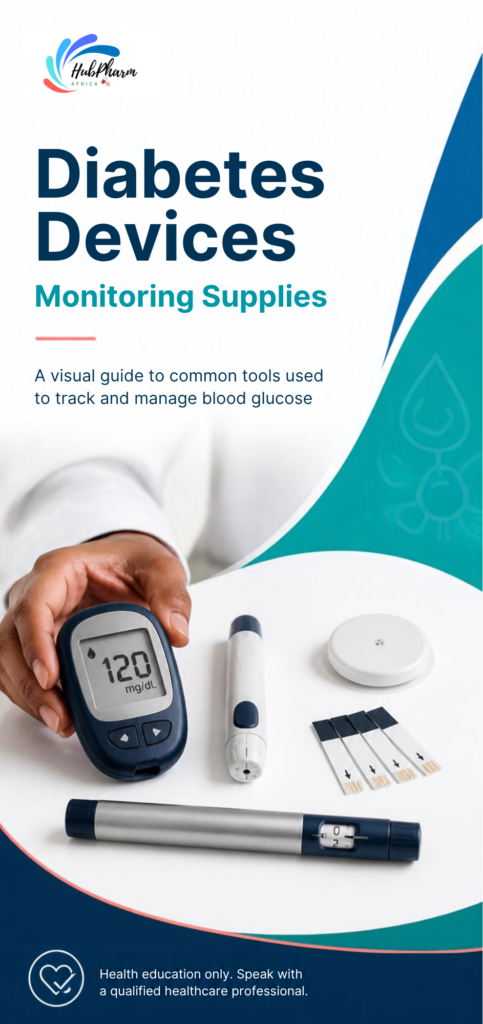
Managing diabetes involves more than taking medicines. For many people, monitoring blood glucose is an important part of understanding how food, physical activity and treatment affect their blood sugar.
Today, people with diabetes can choose from several types of technology, including traditional blood glucose meters and continuous glucose monitoring (CGM) systems. The appropriate device depends on the person’s type of diabetes, treatment, needs, preferences and ability to use the device correctly.
This guide explains the main diabetes monitoring devices, how they work and what to consider when choosing one.
What Are Diabetes Monitoring Devices?
Diabetes monitoring devices are tools used to measure, record or help interpret blood glucose levels.
The main options include:
- Blood glucose meters
- Test strips
- Lancets
- Continuous glucose monitors (CGMs)
- CGM sensors and related supplies
- Connected diabetes-management apps and software
Diabetes technology can also include insulin-delivery devices such as insulin pens and pumps. However, these are different from glucose-monitoring devices because their primary purpose is delivering insulin rather than measuring glucose.
The American Diabetes Association recommends that diabetes devices be selected according to individual needs, circumstances, preferences and skill level.
Blood Glucose Meters

A blood glucose meter, also called a glucometer, measures glucose from a small blood sample.
The usual process involves placing a drop of blood on a test strip inserted into the meter. The device then displays a glucose reading.
Blood glucose meters remain an important option for diabetes management, particularly for people who need or prefer finger-stick testing.
What do you need to use a glucose meter?
A traditional monitoring setup usually requires:
- Blood glucose meter
- Compatible test strips
- Lancets
- Lancing device
- A method for recording or reviewing results
Some modern meters can store readings or connect with smartphone applications, making it easier to identify patterns over time.
What Are Diabetes Test Strips?
Test strips are small disposable strips designed for use with a specific blood glucose meter.
The strip interacts with the blood sample and allows the meter to calculate the glucose concentration.
One important point is that test strips are generally meter-specific. A strip designed for one meter may not work with another.
Always check that the strips match your meter before purchasing them.
Why does storage matter?
Test strips should be stored according to the manufacturer’s instructions. Using expired, damaged or improperly stored strips can affect the reliability of readings.
The ADA recommends using unexpired test strips obtained from a pharmacy or licensed distributor and storing them correctly.
What Are Lancets?
A lancet is a small sterile device used to obtain the blood sample needed for a finger-stick glucose test.
Lancets are normally used with a lancing device.
Good hygiene is important when performing blood glucose testing. Follow the instructions provided with your device and use lancets appropriately.
If you experience persistent pain, skin problems or difficulty obtaining a blood sample, speak with a healthcare professional or pharmacist about your technique and equipment.
Continuous Glucose Monitors (CGMs)
A continuous glucose monitor (CGM) is a wearable medical device that measures glucose levels continuously or at frequent intervals.
Unlike a traditional meter, which requires a finger-stick blood sample, a CGM uses a sensor placed under the skin to measure glucose in the interstitial fluid. The information is transmitted to a compatible reader, receiver or smartphone.
Many CGMs provide:
- Current glucose readings
- Glucose trends
- Graphs showing changes over time
- Alerts for certain high or low glucose levels
- Information that can help identify patterns
The ADA’s 2026 Standards of Care recommends CGM for many people with diabetes when it can support diabetes management, with the choice based on individual circumstances and preferences.
Who Can Use a CGM?

CGMs can be particularly useful for people who:
- Have Type 1 diabetes
- Have Type 2 diabetes and use insulin
- Experience frequent changes in blood glucose
- Have difficulty recognising low blood glucose
- Need more information about glucose patterns
The appropriate device should be determined with consideration of the person’s treatment and circumstances.
CGMs are not necessarily required for every person with diabetes.
CGM vs Blood Glucose Meter
Both technologies can be useful, but they work differently.
| Feature | Blood glucose meter | CGM |
|---|---|---|
| Measurement | Finger-stick blood sample | Interstitial fluid |
| Reading pattern | Individual measurements | Frequent/continuous readings |
| Finger-stick | Required | Usually not for every reading |
| Trends | Limited | Shows trends over time |
| Alerts | Usually unavailable | Many systems offer alerts |
| Supplies | Meter, strips and lancets | Sensor and related supplies |
The best option depends on the person’s treatment, needs, preferences and access to appropriate training and supplies.
Do You Still Need a Glucose Meter If You Use a CGM?
A CGM does not necessarily eliminate the need for a blood glucose meter.
The ADA recommends that people using CGM also have access to blood glucose monitoring. A meter can be useful when a CGM reading appears inconsistent with symptoms, when there are problems with the sensor or signal, or when the CGM is unavailable.
The CDC also notes that blood glucose testing may still be needed to check CGM accuracy in certain situations.
Your healthcare team can explain when you should confirm a CGM reading with a blood glucose meter.
How Often Should You Check Your Blood Sugar?
There is no single schedule that applies to everyone.
The appropriate frequency depends on factors such as:
- Type of diabetes
- Diabetes medicines
- Insulin use
- Risk of hypoglycaemia
- Glucose control
- Physical activity
- Illness
- Individual treatment goals
For people using insulin and blood glucose monitoring, the ADA lists situations such as before meals, after meals, around exercise, when low blood glucose is suspected and before certain critical activities as circumstances in which monitoring may be appropriate.
Your doctor or diabetes care team should provide your personal monitoring schedule.
Why Is Blood Glucose Monitoring Important?
Blood glucose monitoring can help you and your healthcare team understand how your body responds to:
- Food
- Physical activity
- Insulin
- Other diabetes medicines
- Stress
- Illness
- Changes in routine
Looking at patterns over time can provide information that a single glucose reading cannot.
The CDC explains that monitoring can help people identify factors affecting their glucose and help healthcare professionals make decisions about diabetes care.
Understanding Your Glucose Readings
A glucose reading is not useful in isolation.
The meaning of a result depends on factors such as:
- When the measurement was taken
- Whether you had eaten
- Your prescribed treatment
- Your individual glucose targets
- Your health circumstances
For example, a reading before a meal cannot necessarily be interpreted in the same way as a reading after eating.
Your healthcare professional should establish your individual glucose targets.
Avoid changing your medicine or insulin dose simply because of one unexpected reading unless your treatment plan specifically provides instructions for doing so.
Choosing the Right Diabetes Monitoring Device
There is no single diabetes monitoring device that is ideal for everyone.
When selecting a device, consider:
1. Your diabetes treatment
Someone using insulin may have different monitoring needs from someone managing Type 2 diabetes without insulin.
2. Ease of use
A device should be practical for the person who will use it.
3. Cost and availability
The ongoing cost of strips, lancets, sensors and other supplies can matter as much as the initial cost of the device.
4. Accuracy
Choose devices from reputable manufacturers and use them according to their instructions.
5. Data management
Some devices store readings or connect with apps, which can make it easier to review trends with your healthcare team.
6. Training and support
The ADA recommends appropriate education and training when diabetes technology is prescribed.
Common Mistakes When Monitoring Blood Glucose
Even a good device may provide misleading information if it is used incorrectly.
Common problems include:
- Using expired test strips
- Using strips that do not match the meter
- Poor storage of strips
- Incorrect testing technique
- Failing to follow device instructions
- Ignoring repeated unusual readings
- Changing medication without professional guidance
- Failing to maintain access to backup monitoring equipment when using CGM
If your readings repeatedly do not match how you feel, speak with your healthcare professional and check whether your equipment and technique are appropriate.
Diabetes Monitoring During Exercise
Physical activity can change blood glucose levels.
People using insulin or medicines that can cause hypoglycaemia may need to monitor glucose around physical activity according to their individual diabetes plan. The ADA specifically identifies monitoring before, during and after exercise as appropriate in some insulin-treated people.
Ask your diabetes care team how exercise should fit into your monitoring and medication plan.
Diabetes Monitoring During Illness
Illness can affect blood glucose even when your eating habits have changed.
People with diabetes should have a personalised sick-day plan from their healthcare team. Depending on the type of diabetes and treatment, this may involve more frequent glucose monitoring and additional checks.
If you are unwell and your blood glucose is unusually high or you develop concerning symptoms, seek medical advice promptly.
When Should You Contact Your Healthcare Team?
Contact your healthcare professional if:
- Your readings are repeatedly outside your target range.
- Your device repeatedly gives unexpected results.
- You are experiencing frequent low blood glucose.
- You have persistent high blood glucose.
- You are unsure how to use your meter or CGM.
- You are having difficulty obtaining compatible supplies.
- Your symptoms do not match your glucose readings.
Seek urgent medical attention for severe symptoms associated with very high or very low blood glucose, particularly if you have confusion, loss of consciousness, severe weakness, vomiting or difficulty breathing.
Diabetes Monitoring Supplies Available Through HubPharm
Reliable access to diabetes monitoring supplies is an important part of long-term diabetes management.
Depending on availability and prescription or device requirements, HubPharm can support patients looking for diabetes-related products such as:
- Blood glucose meters
- Compatible test strips
- Lancets
- CGM-related supplies
- Other diabetes-management products
When choosing supplies, it is important to select products compatible with your existing device.
Talk to a HubPharm pharmacist about diabetes monitoring supplies →
A HubPharm pharmacist can also help answer medication-related questions and guide you on when a concern should be referred to your doctor or diabetes care team.
Diabetes Devices Are Only One Part of Diabetes Care
Technology can make diabetes management easier, but a device cannot replace professional care.
Effective diabetes management may combine:
- Appropriate medication
- Blood glucose monitoring
- Healthy eating
- Physical activity
- Diabetes education
- Regular medical reviews
- Screening for diabetes complications
The ADA describes diabetes technology as one component of broader diabetes care that also includes education, follow-up and appropriate treatment.
Frequently Asked Questions
What is the best device for monitoring diabetes?
There is no single best device for everyone. The choice should consider the person’s diabetes type, treatment, preferences, circumstances, skills and access to supplies.
Is a CGM better than a glucose meter?
They provide different types of information. A CGM can provide frequent readings and glucose trends, while a blood glucose meter provides an individual blood glucose measurement. The appropriate option depends on the person’s circumstances.
Can I use a CGM without a glucose meter?
People using CGM should still have access to blood glucose monitoring. A meter can be useful when CGM readings may be inaccurate or unavailable.
How often should I check my blood sugar?
It depends on your diabetes type, medication and individual treatment plan. People using insulin may need monitoring at several points around meals, exercise or suspected hypoglycaemia.
Do test strips expire?
Yes. Check the expiration date and storage instructions provided by the manufacturer. The ADA recommends using unexpired strips that have been properly stored.
Can I share my glucose meter with someone else?
Blood glucose monitoring equipment should be used according to the manufacturer’s infection-control instructions. Personal testing supplies such as lancets should not be shared.
The Bottom Line
Diabetes monitoring devices can help people understand and manage their blood glucose.
Blood glucose meters provide individual readings from a blood sample, while CGMs provide frequent glucose information and can show trends over time. Both have important roles in diabetes care.
The right device depends on your diabetes, treatment, lifestyle, preferences and ability to use the technology. Having the correct device is only the first step; proper training, compatible supplies and regular communication with your healthcare team are also important.
If you need help choosing or accessing diabetes monitoring supplies, speak with a qualified HubPharm pharmacist.
Medical note: This article is for health education and does not replace diagnosis or individual medical advice. Follow your healthcare professional’s instructions for glucose monitoring and diabetes treatment.
References
- American Diabetes Association Professional Practice Committee. 7. Diabetes Technology: Standards of Care in Diabetes—2026. Diabetes Care. 2026;49(Suppl 1):S150–S165.
- American Diabetes Association Professional Practice Committee. 6. Glycemic Goals, Hypoglycemia, and Hyperglycemic Crises: Standards of Care in Diabetes—2026.
- Centers for Disease Control and Prevention (CDC). Monitoring Your Blood Sugar.
- Centers for Disease Control and Prevention (CDC). Continuous Glucose Monitors.
- American Diabetes Association Professional Practice Committee. 9. Pharmacologic Approaches to Glycemic Treatment: Standards of Care in Diabetes—2026.