Female Sexual Wellness: Treatment & Care
Female sexual wellness is an important part of overall health. Changes in hormones, stress, medications, pregnancy, breastfeeding, menopause and some medical conditions can affect comfort, sexual function and quality of life.
Concerns such as vaginal dryness, irritation or pain during sexual activity are common and can often be addressed once the underlying cause is identified. ACOG
What Is Female Sexual Wellness?
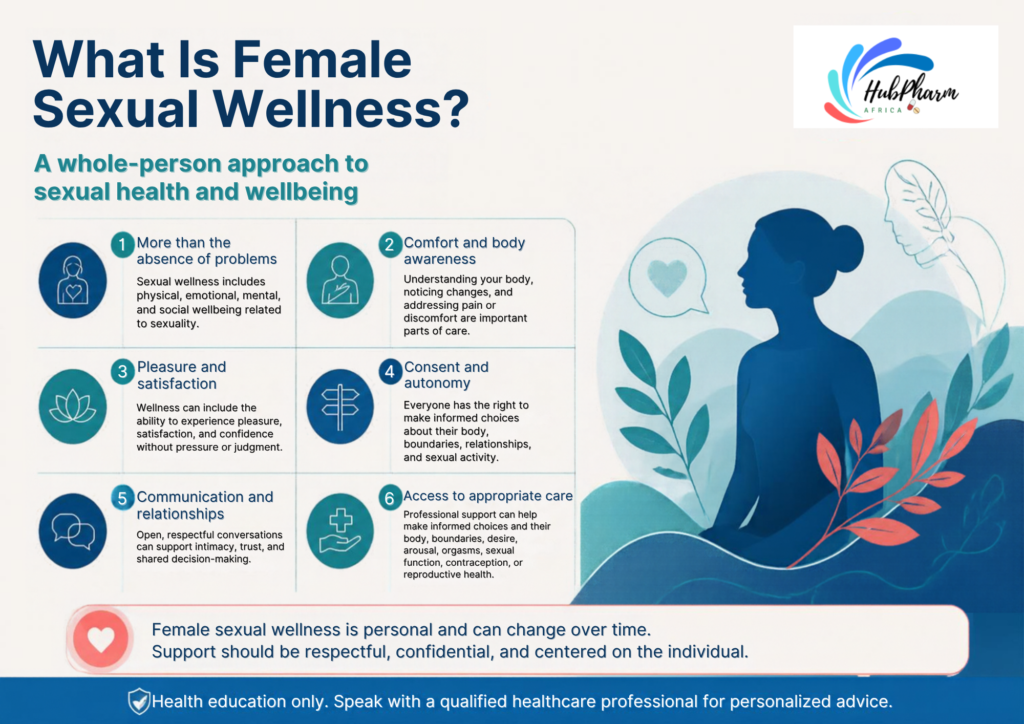
Female sexual wellness includes physical, emotional and reproductive health factors that can influence comfort and sexual wellbeing.
A person’s experience can be affected by:
- Hormonal changes
- Stress and emotional wellbeing
- Medications
- Pregnancy and breastfeeding
- Menopause and perimenopause
- Vaginal or urinary conditions
- Relationship factors
- Other health conditions
There is no single definition of normal sexual function. What matters is whether symptoms are causing discomfort, distress or a change from what is normal for the individual.
Common Female Sexual Health Concerns
Vaginal Dryness
Vaginal dryness can occur at different stages of life. It is particularly common around menopause, when declining estrogen can make vaginal tissue thinner, drier and less elastic. It can also occur after childbirth and during breastfeeding. ACOG
Dryness may cause:
- Irritation
- Burning
- Itching
- Discomfort during sexual activity
- Reduced natural lubrication
Some medications and medical conditions can also contribute to vaginal dryness. ACOG
Pain During Sex
Pain during sexual activity can have several causes.
Vaginal dryness is one possibility, but pain may also be associated with infections, pelvic-floor problems, hormonal changes, inflammation or other medical conditions.
Persistent or unexplained pain should be assessed by a healthcare professional rather than simply treated with a lubricant.
Changes During Menopause
During perimenopause and menopause, declining estrogen can affect the vagina and urinary tract.
Some people experience what healthcare professionals call genitourinary syndrome of menopause (GSM). Symptoms can include vaginal dryness, burning, itching, painful sex and urinary symptoms. ACOG
These symptoms can affect quality of life and sexual wellbeing, but treatment options are available.
What Can Help With Vaginal Dryness?
Vaginal Moisturizers
Vaginal moisturizers can help provide ongoing relief from dryness.
Unlike hormone treatments, they do not restore vaginal tissue or increase estrogen levels. Their main role is to provide moisture and improve comfort. ACOG
Lubricants
Lubricants reduce friction and may make sexual activity more comfortable when vaginal dryness is present.
ACOG recommends water-based or silicone-based lubricants when condoms are being used. Oil-based lubricants can damage some condoms and may also cause irritation. ACOG
Local Vaginal Estrogen
For some people experiencing menopause-related vaginal symptoms, a healthcare professional may recommend low-dose vaginal estrogen.
It is available in forms such as creams, tablets or vaginal rings and delivers estrogen directly to vaginal tissue. ACOG
Whether it is appropriate depends on the person’s medical history and symptoms.
DHEA
Dehydroepiandrosterone (DHEA) is another treatment option that may be considered for certain postmenopausal symptoms, particularly painful sex related to vaginal tissue changes. ACOG
Treatment should be discussed with an appropriate healthcare professional.
Female Sexual Wellness and Hormones
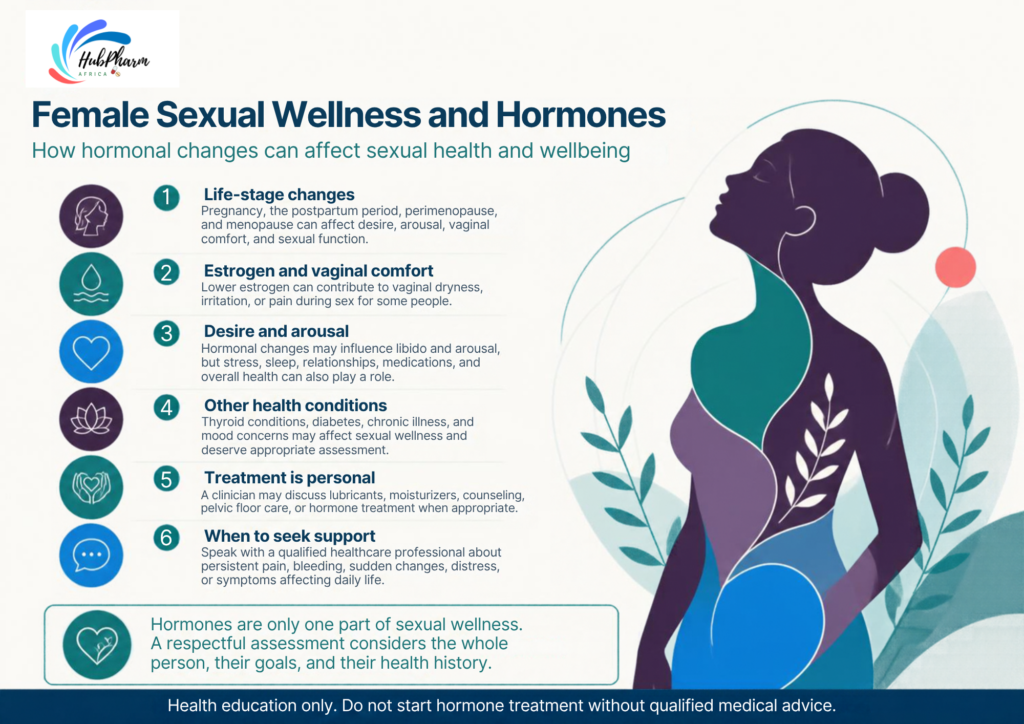
Estrogen plays an important role in maintaining vaginal tissue.
As estrogen levels decrease around menopause, the vaginal lining can become thinner and less elastic. This can contribute to dryness and discomfort. ACOG
Hormonal changes are not the only explanation for sexual-health concerns, however. Stress, medications, relationship factors and other medical conditions can also contribute.
When Should You Seek Professional Help?
Speak with a healthcare professional if you experience:
- Persistent vaginal dryness
- Recurrent pain
- Unexplained bleeding
- Burning or itching
- Unusual vaginal discharge or odor
- Recurrent urinary symptoms
- A sudden change in sexual function
- Symptoms that continue despite basic measures
Bleeding after sex or unexpected bleeding around menopause should receive medical assessment rather than being assumed to be caused by dryness. ACOG
Female Sexual Wellness at HubPharm
HubPharm includes Female Sexual Wellness among its Lifestyle Health services.
The appropriate approach depends on the specific concern. Someone experiencing dryness, painful sex, hormonal symptoms or another sexual-health problem may need a different type of care.
A pharmacist or other qualified healthcare professional can help identify whether the symptoms may be suitable for routine self-care or whether medical assessment is needed.
Frequently Asked Questions
Is vaginal dryness only a problem after menopause?
No. Vaginal dryness can also occur after childbirth, during breastfeeding and because of certain medications or medical conditions. ACOG
Can lubricants help with painful sex?
Lubricants can reduce friction and may make sexual activity more comfortable when dryness contributes to pain. Persistent pain should still be assessed to identify the underlying cause. ACOG
What causes vaginal dryness?
Hormonal changes are a common cause, particularly around menopause, but medications, breastfeeding and some medical conditions can also contribute. ACOG
Can menopause affect sexual wellness?
Yes. Reduced estrogen during menopause can contribute to vaginal dryness, irritation and painful sex. These symptoms can affect sexual wellbeing and quality of life. ACOG
Is vaginal estrogen the same as systemic hormone therapy?
No. Local vaginal estrogen delivers a low dose directly to vaginal tissue, while systemic hormone therapy delivers hormones through the bloodstream. The appropriate treatment depends on the person’s symptoms and medical history. ACOG
When should I see a healthcare professional?
Seek professional advice for persistent pain, unexplained bleeding, recurrent urinary symptoms, unusual discharge, significant irritation or any sudden change that concerns you.
The Bottom Line
Female sexual wellness can change throughout life. Hormonal changes, menopause, pregnancy, breastfeeding, medications, stress and medical conditions can all influence comfort and sexual health.
Vaginal moisturizers and lubricants can help with some forms of dryness, while healthcare professionals may recommend additional treatments when symptoms are related to hormonal changes or another medical condition.
Medical note: This article is for general health education and does not replace individual medical advice, diagnosis or treatment.
References
- American College of Obstetricians and Gynecologists (ACOG). Vulvovaginal Health. ACOG
- ACOG. Experiencing Vaginal Dryness? Here’s What You Need to Know. ACOG
- ACOG. The Menopause Years. ACOG
- ACOG. Hormone Therapy for Menopause. ACOG
- ACOG. Your Sexual Health. ACOG
- ACOG. Treatment of Urogenital Symptoms in Individuals With a History of Estrogen-dependent Breast Cancer.