Heart Failure Management
Heart failure is a serious medical condition that affects how well the heart fills with blood or pumps blood around the body. Although the name can sound frightening, it does not mean that the heart has stopped working. With the right diagnosis, treatment and ongoing care, many people can manage their symptoms and improve their quality of life.
This guide explains the common symptoms of heart failure, how doctors diagnose it, the treatments available and how HubPharm supports patients managing cardiovascular conditions.
What Is Heart Failure?
Heart failure occurs when the heart cannot pump blood effectively enough to meet the body’s needs, or when it cannot fill properly between beats.
As a result, fluid may build up in the lungs or other parts of the body. Blood flow to organs can also become less effective, causing tiredness and reduced ability to carry out everyday activities.
Heart failure can develop gradually over time or worsen suddenly. It may result from several underlying conditions, including high blood pressure, coronary artery disease, previous heart attacks and diseases of the heart muscle or valves.
Types of Heart Failure
Doctors classify heart failure in different ways. Understanding the type helps them choose an appropriate treatment plan.
Heart failure with reduced ejection fraction
This occurs when the heart’s main pumping chamber cannot contract effectively enough to pump out the expected amount of blood.
It is often called HFrEF. Treatment commonly includes a combination of medicines that improve outcomes and help reduce hospital admissions.
Heart failure with preserved ejection fraction
This type, known as HFpEF, occurs when the heart can pump out a relatively normal proportion of the blood inside it but has difficulty relaxing or filling properly.
The heart may become stiff, making it harder to fill with blood between beats. Treatment focuses on managing symptoms, associated conditions and medicines shown to benefit the relevant patient group.
Heart failure with mildly reduced ejection fraction
In this type, the pumping function falls between the reduced and preserved categories. The treatment plan depends on the heart’s measured function, symptoms and other clinical factors.
Important: Ejection fraction is only one part of the assessment. Doctors also consider symptoms, medical history, examination findings and other test results.
What Causes Heart Failure?
Heart failure often develops because another condition has damaged or placed long-term strain on the heart.
Common causes and risk factors include:
High blood pressure
When blood pressure stays high, the heart must work harder to circulate blood. Over time, this extra workload can cause changes in the heart muscle and contribute to heart failure.
Coronary artery disease
Coronary artery disease occurs when the blood vessels supplying the heart become narrowed. Reduced blood flow can weaken the heart muscle, while a heart attack can cause lasting damage.
Diabetes
Diabetes increases the risk of cardiovascular disease. High blood sugar, especially when poorly controlled over time, can contribute to damage affecting the heart and blood vessels.
Heart valve disease
Heart valves help blood move through the heart in the correct direction. If a valve does not open or close properly, the heart may need to work harder.
Heart rhythm disorders
An abnormal heartbeat can sometimes reduce the heart’s pumping efficiency. Certain persistent or severe rhythm disorders may contribute to heart failure.
Other causes
Other contributing conditions include heart muscle diseases, some infections that affect the heart, thyroid disorders, kidney disease and certain treatments that can damage the heart muscle.
Identifying the cause is important because treating the underlying problem can form a key part of heart failure management.
Heart Failure Symptoms You Should Know
The symptoms of heart failure can develop gradually or worsen over a short period.
Recognising changes early helps patients seek appropriate care.
Common heart failure symptoms include:
-
Shortness of breath: You may become breathless during everyday activities or when lying flat.
-
Swollen feet and ankles: Fluid can collect in the legs and other tissues.
-
Persistent tiredness: Everyday tasks may become more difficult because the body receives less effective blood circulation.
-
Sudden weight changes: Fluid retention can cause a rapid increase in weight.
-
Persistent coughing: Fluid accumulation in the lungs may cause coughing or wheezing.
-
Reduced appetite: Some people experience nausea, abdominal discomfort or feeling full quickly.
-
A rapid heartbeat: The heart may beat faster to compensate for reduced pumping efficiency.
-
Difficulty concentrating: Some people experience confusion or changes in alertness, particularly when their condition worsens.
These symptoms can also occur in other conditions, so they do not prove that someone has heart failure. A medical assessment is needed.
When Is Heart Failure an Emergency?
Seek emergency medical help if someone experiences:
-
Severe difficulty breathing
-
Collapse or loss of consciousness
-
Blue, grey or unusually pale lips or skin
-
Severe chest pain or other signs of a possible heart attack
Rapidly worsening breathlessness, new difficulty breathing while lying down or a sudden increase in swelling also needs urgent medical assessment.
Do not wait for a routine appointment if symptoms are severe.
How Is Heart Failure Diagnosed?
Doctors use a combination of clinical assessment and tests to diagnose heart failure.
1. Medical history and examination
The doctor will ask about symptoms, existing health conditions, family history and current medicines. They may also examine the heart and lungs and look for signs of fluid retention.
2. Blood tests
A blood test measuring NT-proBNP or BNP can help assess whether heart failure may be present. Doctors may also check kidney function, electrolytes, blood count, thyroid function and other relevant markers.
No single blood test should be interpreted without considering the wider clinical picture.
3. Echocardiogram
An echocardiogram uses ultrasound to produce images of the heart.
It helps doctors assess how well the heart pumps, how it relaxes, the heart valves and other structural features. It is a key investigation when heart failure is suspected.
4. Electrocardiogram
An electrocardiogram (ECG) records the heart’s electrical activity. It can identify rhythm problems and other abnormalities that may contribute to heart failure.
5. Chest imaging and additional tests
A chest X-ray may help identify fluid in the lungs or other possible causes of symptoms. Depending on the findings, doctors may recommend further cardiac imaging or investigations for underlying disease.
Early diagnosis helps the healthcare team decide which treatment options are appropriate.
Heart Failure Treatment
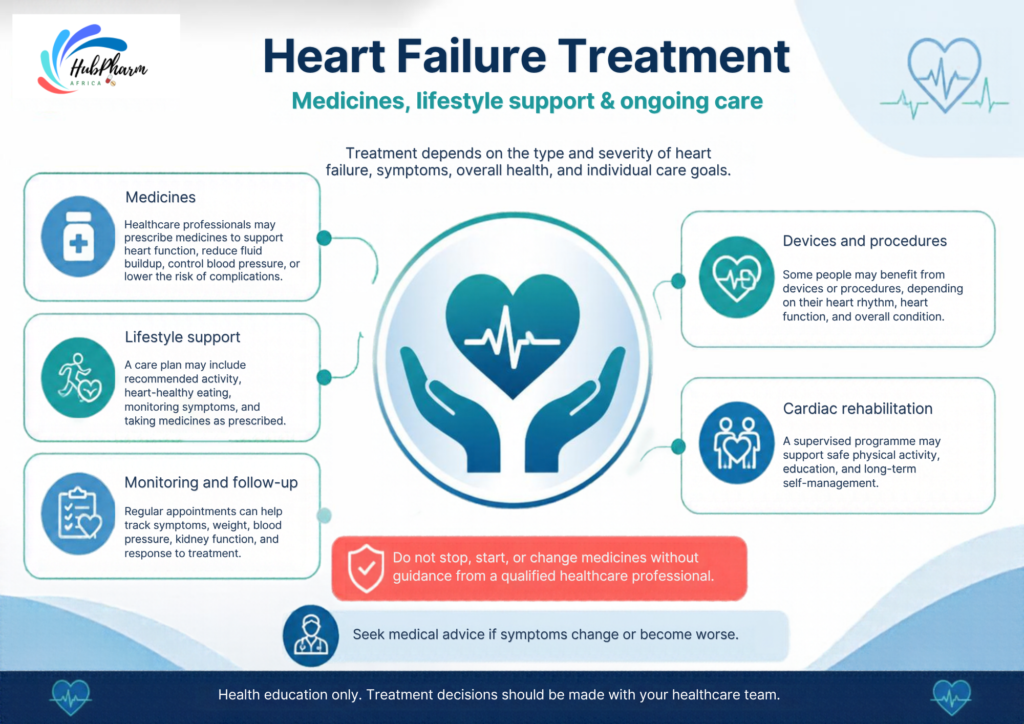
Heart failure treatment aims to improve symptoms, reduce hospital admissions, slow disease progression and support quality of life.
The treatment plan depends on the type of heart failure, the severity of symptoms, kidney function, blood pressure and other medical conditions.
Treatment may include medicines, lifestyle support, rehabilitation and, in selected cases, medical devices or procedures.
1. Medicines for Heart Failure
Several groups of medicines are used in heart failure care. They have different roles, and the best combination depends on the patient’s diagnosis and clinical assessment.
For heart failure with reduced ejection fraction, NICE’s updated guidance recommends treatment built around four major medicine groups when appropriate:
-
ACE inhibitors or other suitable medicines affecting the renin-angiotensin system
-
Beta-blockers
-
Mineralocorticoid receptor antagonists
-
SGLT2 inhibitors
For selected patients, an angiotensin receptor-neprilysin inhibitor (ARNI) may be recommended as part of an adjusted treatment plan.
Carvedilol
Carvedilol is a beta-blocker used in selected patients with heart failure. It affects the heart’s response to certain stress hormones and can form part of long-term treatment.
Furosemide
Furosemide is a diuretic, sometimes called a water tablet. It helps the body remove excess salt and water, which can relieve symptoms caused by fluid retention.
Diuretics help manage congestion, but they do not replace other medicines that may improve long-term outcomes.
Spironolactone
Spironolactone is a mineralocorticoid receptor antagonist (MRA). It is used in selected patients with heart failure and requires appropriate monitoring because it can affect potassium levels and kidney function.
Entresto (sacubitril/valsartan)
Entresto combines sacubitril and valsartan. It belongs to the ARNI class and may be prescribed for selected patients with heart failure with reduced ejection fraction.
It is not suitable for everyone, and its use requires professional assessment and medication review.
Eplerenone
Eplerenone is another MRA that may be used in selected patients with heart failure. Like spironolactone, it can affect potassium levels and kidney function, so clinical monitoring is important.
Ivabradine
Ivabradine affects the heart rate through a specific mechanism. It may be considered for certain patients with heart failure with reduced ejection fraction who meet clinical criteria.
These medicines are not interchangeable. Their suitability depends on the type of heart failure and individual clinical factors. Do not start, stop or change heart medicines without advice from a qualified healthcare professional.
2. Managing Fluid Retention
Fluid retention can cause swelling in the legs, abdominal discomfort and breathlessness.
Healthcare professionals may use diuretics to relieve congestion and review treatment when symptoms change. The dose and monitoring plan depend on the person’s condition, kidney function and other medicines.
Patients should follow their own care plan rather than changing medicines or fluid intake independently.
3. Devices and Procedures
Some people need more than medicines.
Depending on the diagnosis, a specialist may consider:
-
Implantable cardioverter-defibrillator (ICD): A device that can detect and treat certain dangerous heart rhythms.
-
Cardiac resynchronisation therapy (CRT): A specialised pacing treatment that helps coordinate the contraction of the heart’s chambers in selected patients.
-
Heart valve procedures: These may help when significant valve disease contributes to heart failure.
-
Coronary procedures: Selected patients may benefit from treatment of underlying coronary artery disease.
These options require specialist assessment. Not everyone with heart failure needs a device or procedure.
Lifestyle Changes That Support Heart Failure Care
Lifestyle support is an important part of heart failure management. However, it should complement—not replace—medical treatment.
Follow an appropriate eating plan
A balanced eating pattern can support cardiovascular health. Many patients are advised to pay attention to salt intake, especially when fluid retention is a concern.
The right approach depends on the individual’s condition and care plan.
Follow your fluid advice
Some patients need guidance about daily fluid intake. Others may not need a strict fluid limit.
Ask your healthcare team what is appropriate for you. Do not significantly restrict fluids or increase fluid intake based on general online advice.
Monitor symptoms and changes
Your healthcare team may recommend tracking symptoms, swelling, blood pressure, heart rate or body weight. Sudden changes can be an early sign that heart failure is worsening.
Follow the monitoring plan provided by your care team and report concerning changes promptly.
Stay active within your care plan
Appropriate physical activity and cardiac rehabilitation can help some people improve their functional ability and quality of life.
The level of activity should reflect the person’s symptoms and clinical assessment. A healthcare professional can help determine what is safe and suitable.
Avoid tobacco and address alcohol use
Avoiding tobacco supports heart and blood-vessel health. People with heart failure should also discuss alcohol with their healthcare team because its effects depend on the underlying cause and severity of their condition.
Attend follow-up appointments
Regular reviews help clinicians assess symptoms, check medicines, monitor kidney function and electrolytes, and adjust treatment when needed.
NICE recommends ongoing clinical review, with more frequent monitoring when symptoms worsen or medicines change.
Can Heart Failure Be Cured?
Heart failure is usually a long-term condition, but treatment can improve symptoms and help many people maintain a meaningful quality of life.
Some people experience substantial improvement in their heart function or symptoms. However, improvement does not necessarily mean the underlying problem has disappeared.
Continue follow-up and prescribed treatment even when you feel better. Only your healthcare team can assess whether your treatment plan needs to change.
What Happens If Heart Failure Is Not Managed?
Without appropriate treatment, heart failure may worsen and lead to:
-
Increasing breathlessness
-
Fluid accumulation in the lungs or other tissues
-
Reduced ability to carry out everyday activities
-
Kidney complications
-
Repeated hospital admissions
-
Dangerous heart rhythm problems
The risk varies between individuals. Early diagnosis, appropriate treatment and regular follow-up can help reduce complications.
HubPharm Heart Failure Care
Managing heart failure often involves several medicines, regular clinical reviews and coordination between healthcare professionals. Understanding each prescribed medicine is an important part of long-term care.
HubPharm Africa’s cardiovascular-care service supports patients managing heart failure and other long-term cardiovascular conditions.
Medicines featured in HubPharm’s heart failure care category include:
-
Carvedilol
-
Furosemide
-
Spironolactone
-
Entresto (sacubitril/valsartan)
-
Eplerenone
-
Ivabradine
Each medicine has a different role. Some help manage fluid retention, while others are used in selected patients to support heart function or improve clinical outcomes.
The list is educational and does not mean that every medicine is appropriate for every patient. Availability and suitability should be confirmed with the pharmacy and the patient’s healthcare team.
How HubPharm Supports Patients
HubPharm’s pharmacy team can help patients understand their prescribed cardiovascular medicines and identify questions that need professional review.
Support may include:
-
Explaining the purpose of prescribed medicines.
-
Helping patients understand medication labels and their clinician’s instructions.
-
Reviewing potential medicine interactions within the scope of pharmacy practice.
-
Reinforcing the importance of follow-up appointments and recommended monitoring.
-
Helping patients identify when worsening symptoms require prompt medical assessment.
Some heart failure medicines need monitoring of kidney function, potassium or blood pressure. Patients should attend the reviews recommended by their healthcare team.
Need Support With Your Heart Failure Medicines?
If you or a family member has been diagnosed with heart failure, discuss your prescribed treatment with a qualified healthcare professional.
HubPharm’s pharmacy team can provide appropriate guidance about prescribed cardiovascular medicines and support your ongoing care.
Do not start, stop or change heart failure medicines without advice from your prescribing clinician or pharmacist. If symptoms suddenly worsen, seek urgent medical assessment.
Frequently Asked Questions About Heart Failure
What are the first symptoms of heart failure?
Early symptoms may include breathlessness during everyday activities, unusual tiredness, swollen ankles or feet, and difficulty breathing when lying down. These symptoms have other possible causes, so medical assessment is important.
Can heart failure occur in young people?
Yes. Although heart failure is more common in older adults, it can affect younger people because of inherited heart conditions, heart muscle disease, infections, congenital conditions or other medical problems.
Is heart failure the same as a heart attack?
No. A heart attack occurs when blood flow to part of the heart muscle is blocked. Heart failure occurs when the heart cannot fill or pump blood effectively enough. A heart attack can cause damage that later leads to heart failure.
Which medicines are used to treat heart failure?
Treatment may include beta-blockers, ACE inhibitors or related medicines, MRAs, SGLT2 inhibitors and diuretics. Some patients may also receive an ARNI or other specialist treatment. The appropriate combination depends on the type of heart failure and the individual’s clinical circumstances.
Can heart failure improve with treatment?
Yes. Treatment can improve symptoms, reduce hospital admissions and, in some patients, improve heart function. Ongoing follow-up remains important even when symptoms improve.
Should everyone with heart failure restrict fluids?
No. Fluid advice depends on the person’s condition and treatment plan. Follow the advice given by your healthcare team rather than applying a strict fluid limit yourself.
Why do people with heart failure take diuretics?
Diuretics help the body remove excess salt and water. They can relieve symptoms such as swelling and breathlessness caused by fluid retention. They are one part of a broader treatment plan.
When should someone with heart failure seek urgent care?
Severe breathing difficulty, collapse, loss of consciousness or symptoms suggesting a heart attack require emergency medical help. Rapidly worsening breathlessness, new difficulty breathing while lying down or sudden swelling also need urgent assessment.nhs.uk
The Bottom Line
Heart failure is a serious condition, but the right treatment and ongoing support can help many people manage symptoms and improve their quality of life.
Recognising heart failure symptoms early, identifying the underlying cause, following an appropriate treatment plan and attending regular reviews are all important parts of care.
If you notice persistent breathlessness, swelling, unusual fatigue or sudden changes in your condition, seek medical assessment rather than assuming the symptoms are simply due to ageing or lack of fitness.
Medical Disclaimer
This article is for general health education and does not replace an individual assessment by a doctor, pharmacist or other qualified healthcare professional. Heart failure treatment must be tailored to the person’s diagnosis, heart function, kidney function, other conditions and clinical risks.
References
-
NICE. Chronic heart failure in adults: diagnosis and management (NG106). Last updated September 3, 2025.
-
American Heart Association. Heart Failure Explained.
-
American Heart Association. Heart Failure Signs and Symptoms.
-
American Heart Association. Treatment Options for Heart Failure.
-
NHS. Heart Failure.