Hepatitis A in Nigeria: Symptoms, Prevention and Treatment

Hepatitis A is a viral infection that affects the liver. It can cause symptoms ranging from mild illness to severe inflammation that requires hospital care. Fortunately, most people recover fully, and the infection does not usually cause long-term liver damage.
In Nigeria, access to safe drinking water, proper sanitation and good food hygiene plays an important role in preventing hepatitis A. The infection spreads mainly when people consume food or water contaminated with the hepatitis A virus (HAV). However, close contact with an infected person can also spread the virus.
Unlike hepatitis B and hepatitis C, hepatitis A does not become a chronic infection. Nevertheless, it can cause serious complications in some people, particularly older adults and those with existing liver disease.
This guide explains the causes, symptoms, diagnosis, treatment and prevention of hepatitis A. It also discusses how HubPharm Africa can support patients with reliable health information and guidance on when to seek professional care.
What Is Hepatitis A?
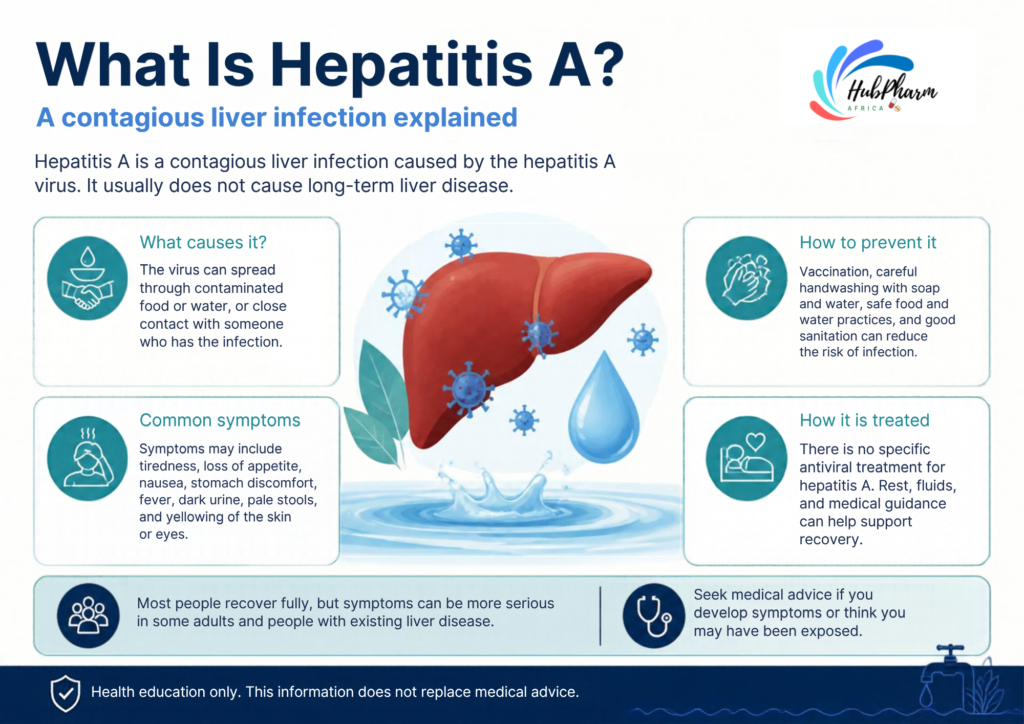
Hepatitis A is an infectious disease caused by the hepatitis A virus. The infection causes inflammation of the liver, an organ that helps process nutrients, remove waste products and support many essential body functions.
When the virus enters the body, it can affect how the liver works. Some people experience only mild symptoms, while others develop noticeable illness, including jaundice.
According to the World Health Organization (WHO), hepatitis A is strongly associated with unsafe water, poor sanitation and inadequate hygiene.
The infection is usually temporary. After recovery, the body develops protection against future hepatitis A infection. However, this protection does not prevent infection with other types of viral hepatitis.
Hepatitis A versus hepatitis B and C
Although all three infections affect the liver, they behave differently.
- Hepatitis A: Usually causes an acute, short-term infection. It does not become chronic and can be prevented with vaccination.
- Hepatitis B: Can cause either acute or chronic infection. Chronic hepatitis B can require long-term monitoring and treatment.
- Hepatitis C: Can become chronic but can usually be cured with appropriate antiviral treatment.
Understanding these differences matters because the tests, treatments and long-term follow-up are not the same. A healthcare professional can determine which infection is present through appropriate assessment and laboratory testing.
How Is Hepatitis A Transmitted?
Hepatitis A spreads mainly through the faecal–oral route. This means the virus passes from the stool of an infected person into another person’s mouth, usually through contaminated food, water or hands.
Common routes of transmission include the following.
1. Contaminated drinking water
Water can become contaminated when sewage enters water supplies or when drinking water is not adequately treated.
This risk makes safe water storage, reliable treatment systems and proper sanitation important public health measures.
2. Contaminated food
Food may carry the virus if someone prepares it with unwashed hands or if it comes into contact with contaminated water.
Raw or inadequately washed produce can also pose a risk when contaminated during handling or preparation.
3. Poor hand hygiene
People can unknowingly transfer the virus from their hands to food, kitchen utensils or surfaces.
For this reason, washing hands with soap and clean water after using the toilet and before preparing or eating food is an important preventive measure.
4. Close contact with an infected person
The virus can spread within households and other close-contact settings, particularly when hand hygiene and sanitation are inadequate.
Certain sexual contact can also transmit hepatitis A. However, ordinary casual contact, such as sitting near someone, does not generally spread the infection.
The CDC’s hepatitis A prevention guidance provides further information about how the virus spreads.
Symptoms of Hepatitis A
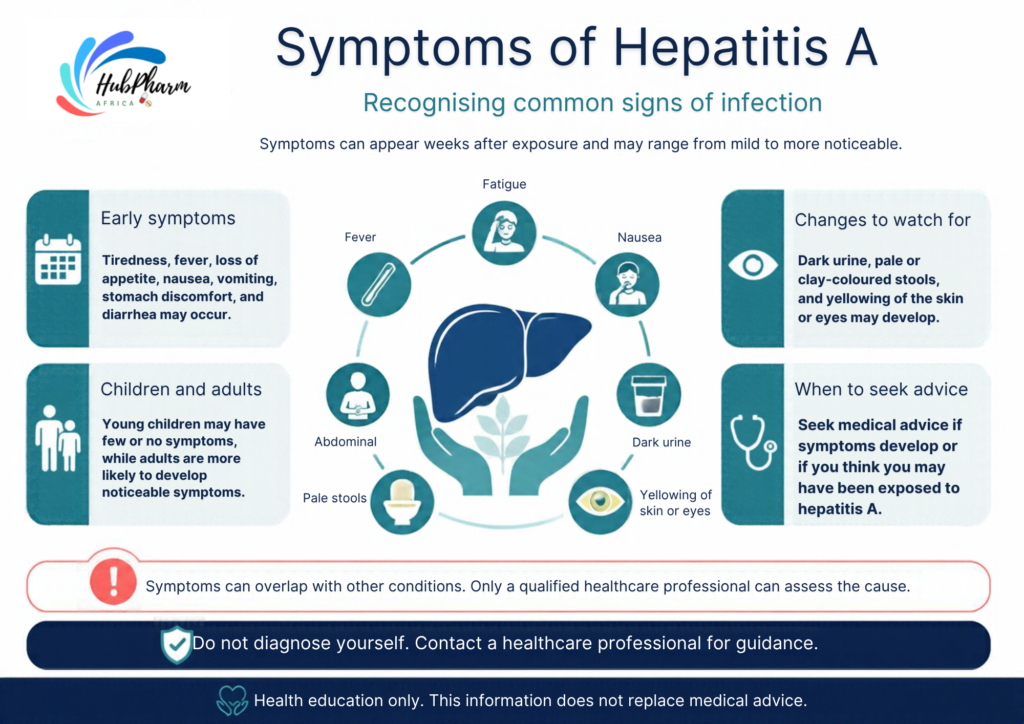
Hepatitis A symptoms typically appear around two to four weeks after infection, although the timing can vary. Some infected people, particularly young children, may have no obvious symptoms.
When symptoms occur, they can include:
- Tiredness and unusual weakness.
- Fever.
- Loss of appetite.
- Nausea or vomiting.
- Discomfort or pain in the abdomen.
- Diarrhoea.
- Dark-coloured urine.
- Pale or clay-coloured stools.
- Joint pain.
- Yellowing of the skin or whites of the eyes, known as jaundice.
Symptoms may develop gradually or appear more suddenly. In adults, jaundice is more common than in young children.
Early symptoms you should not ignore
Early symptoms may resemble those of malaria, foodborne illness or other infections. For example, fever, fatigue and loss of appetite do not confirm hepatitis A.
However, dark urine, pale stools or yellowing of the eyes should prompt medical assessment, especially when accompanied by nausea or abdominal discomfort.
Do not assume that these symptoms are caused by malaria or treat them without an appropriate assessment. A healthcare professional can investigate the possible causes and recommend the necessary tests.
Can hepatitis A occur without symptoms?
Yes. Some people, especially young children, have no noticeable symptoms. However, they may still spread the virus.
Therefore, the absence of symptoms does not always rule out infection. If you have had a known exposure or an outbreak has been reported in your community, seek professional advice about whether testing or other preventive measures are appropriate.
Who Is at Risk of Hepatitis A?
Anyone who has not previously developed immunity can become infected. However, certain circumstances increase the likelihood of exposure.
People at greater risk include:
- People living in areas with unsafe drinking water or inadequate sanitation.
- Household members of someone with hepatitis A.
- People who consume food or water contaminated with the virus.
- Travellers visiting areas where hepatitis A is common who lack immunity.
- People with certain types of close personal exposure to an infected person.
People with existing liver disease may face a greater risk of severe illness if they develop hepatitis A.
For this reason, anyone with known liver disease should discuss hepatitis A prevention with a qualified healthcare professional.
How Is Hepatitis A Diagnosed?
Symptoms alone cannot reliably distinguish hepatitis A from other causes of liver inflammation. A healthcare professional may review your symptoms, possible exposure, medical history and examination findings before requesting blood tests.
1. Blood tests
A blood test for immunoglobulin M antibodies against hepatitis A virus (anti-HAV IgM) can help identify a recent or current infection.
Other blood tests may assess liver function and the extent of inflammation. The exact tests depend on the patient’s symptoms and clinical condition.
2. Additional assessment
If the symptoms are severe or the diagnosis is uncertain, a clinician may request further investigations to assess liver function and exclude other conditions.
The CDC’s clinical overview of hepatitis A explains how healthcare professionals diagnose the infection.
Why early diagnosis matters
Early assessment helps identify people who need closer monitoring or hospital care. It can also help reduce further transmission through appropriate hygiene advice and public health measures.
If you develop jaundice, dark urine or other symptoms suggestive of hepatitis, arrange a medical assessment rather than relying on symptoms alone.
Hepatitis A Treatment: What Helps You Recover?
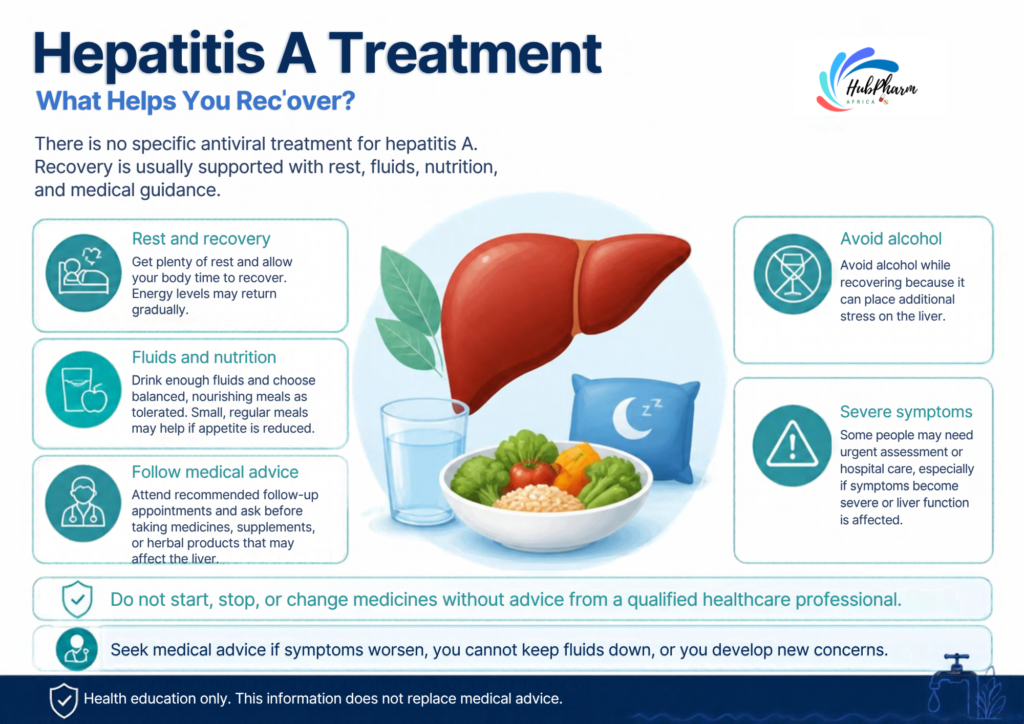
There is currently no specific antiviral medicine that routinely cures hepatitis A. Instead, treatment focuses on supporting the body while the immune system clears the infection.
Most people recover fully with appropriate supportive care. However, recovery may take several weeks, and some people experience symptoms for longer.
1. Rest and recovery
Fatigue can continue during the illness. Getting sufficient rest and gradually returning to normal activities as your condition improves can support recovery.
Avoid pushing yourself to resume strenuous activities when you still feel unwell.
2. Adequate fluids
Vomiting and diarrhoea can cause dehydration. Maintaining adequate fluid intake is important, particularly when you have difficulty eating or drinking normally.
If you cannot keep fluids down, produce very little urine or experience worsening weakness, seek medical attention promptly.
3. Balanced nutrition
Try to maintain adequate nutrition as your appetite returns. Smaller meals may be easier to tolerate when nausea is present.
If symptoms make eating difficult or you have an existing medical condition that affects your diet, ask a healthcare professional for individual advice.
4. Review of medicines and supplements
Some medicines, herbal preparations and supplements can affect the liver. Therefore, tell your healthcare professional about everything you take, including products purchased without a prescription.
Do not start, stop or combine medicines based on assumptions about what is safe for the liver. A doctor or pharmacist can help review your medicines and identify potential concerns.
The CDC’s clinical care guidance for hepatitis A explains the role of supportive care and the need for clinical assessment when symptoms are severe.
5. Hospital care when necessary
Most people do not need hospital admission. However, severe hepatitis A can occasionally lead to acute liver failure.
Hospital care may be necessary when a person develops severe dehydration, persistent vomiting or signs of serious liver dysfunction.
Can Hepatitis A Be Cured?
Yes. Most people recover completely from hepatitis A without developing chronic liver disease.
However, recovery is not always immediate. Some people experience prolonged or recurring symptoms over several months.
It is important to distinguish recovery from the infection itself from recovery of energy and appetite, which may take longer.
Unlike hepatitis C, hepatitis A does not require a course of curative antiviral tablets. Supportive care, monitoring and prevention of complications are the main approaches.
Even after recovery, people should continue practising good hygiene and safe food handling to protect others.
Hepatitis A Prevention in Nigeria
Preventing exposure is one of the most effective ways to reduce hepatitis A infections.
1. Drink safe water
Use water from a reliable, safe source. Where water safety is uncertain, follow recognised guidance for treating drinking water and store it in clean, covered containers.
Avoid assuming that water is safe simply because it looks clear.
2. Wash hands properly
Wash your hands with soap and clean water:
- After using the toilet.
- After helping someone use the toilet.
- Before preparing food.
- Before eating.
- After handling items that may be contaminated.
Hand hygiene is particularly important in households, schools, food businesses and healthcare settings.
3. Handle food safely
Wash fruits and vegetables with safe water. Keep raw and cooked foods separate, clean kitchen surfaces and utensils, and cook food thoroughly when appropriate.
People who are unwell with suspected hepatitis A should seek medical advice about precautions to prevent spreading the infection, particularly if they prepare food for others.
4. Consider hepatitis A vaccination
A safe and effective hepatitis A vaccine is available in many countries. Vaccination can help prevent infection, but recommendations depend on age, health status, exposure risk and local guidance.
Speak with a qualified healthcare professional about whether vaccination is appropriate for you or your family.
If someone has had close contact with a person diagnosed with hepatitis A, seek medical advice promptly. Certain preventive measures may be most effective when provided within two weeks of exposure.
5. Protect people at higher risk
People with existing liver disease should discuss vaccination and other preventive measures with their healthcare team.
Families should also pay attention to safe water, food hygiene and handwashing, especially when caring for someone who is unwell.
For additional guidance, consult the WHO hepatitis A fact sheet.
When Should You Seek Medical Attention?
Seek prompt medical assessment if you develop yellowing of the eyes or skin, dark urine, pale stools or persistent abdominal discomfort.
Get urgent medical care if you experience any of the following:
- Severe or worsening abdominal pain.
- Persistent vomiting that prevents you from keeping fluids down.
- Marked weakness or signs of dehydration.
- New confusion, unusual drowsiness or difficulty staying awake.
- Rapid deterioration in your general condition.
These symptoms can indicate a serious illness and should not be managed through online advice alone.
Children, older adults and people with existing liver disease may need closer monitoring. When in doubt, contact a qualified healthcare professional.
HubPharm Africa: Hepatitis A Prevention and Patient Support
HubPharm Africa is committed to helping people access reliable health information, understand prevention and seek appropriate professional support when they have concerns about their health.
For people concerned about hepatitis A, our support focuses on prevention education, medicine-related questions and guidance on when to seek clinical assessment.
How HubPharm can support you
1. Prevention and health education
Understanding how hepatitis A spreads can help families make safer decisions about drinking water, food preparation, handwashing and vaccination discussions.
2. Pharmacist support
HubPharm’s pharmacy team can help answer general medicine-related questions, explain precautions and guide patients on when they should contact a doctor for assessment.
3. Medicine review
If you have suspected or confirmed hepatitis A, tell your healthcare professional about medicines, supplements and herbal preparations you use. A pharmacist can help identify questions that need clinical review and explain why some products may require caution when the liver is affected.
4. Digital health support through Afiya
HubPharm’s AI Health Companion, Afiya, provides digital health information through WhatsApp. It can help users understand general health topics and recognise when professional support may be needed. Afiya does not replace a medical examination, laboratory testing or emergency care.
5. Support with prescribed medicines
If a healthcare professional prescribes treatment for another condition while you are recovering from hepatitis A, HubPharm can help with medicine-related questions and appropriate pharmacy support. Any medicine supply or service depends on clinical requirements and confirmed availability.
An important note about hepatitis A treatment
There is no specific antiviral medicine routinely used to cure hepatitis A. Therefore, patients should be cautious about products or services claiming to offer a guaranteed pharmaceutical cure.
The safest approach is proper medical assessment, supportive care, monitoring when necessary and prevention of further transmission.
Need help with a medicine-related question? Contact HubPharm’s pharmacist team for guidance. If you have jaundice, severe symptoms or signs of dehydration, seek medical care promptly rather than waiting for an online response.
Frequently Asked Questions About Hepatitis A
1. What causes hepatitis A?
Hepatitis A is caused by the hepatitis A virus. It usually spreads when a person consumes contaminated food or water or has close contact with an infected person.
2. Is hepatitis A common in Nigeria?
Hepatitis A transmission is associated with unsafe water, inadequate sanitation and poor hygiene. However, infection rates vary by location and population. Reliable local surveillance data are needed to establish the prevalence in a particular Nigerian community.
3. What are the first symptoms of hepatitis A?
Early symptoms may include fatigue, fever, nausea, loss of appetite and abdominal discomfort. Dark urine, pale stools and jaundice may develop later, although symptoms differ from person to person.
4. Can hepatitis A be treated with antibiotics?
No. Antibiotics do not treat hepatitis A because it is caused by a virus. Care usually focuses on rest, hydration, nutrition and monitoring for complications.
5. Does hepatitis A cause permanent liver damage?
Most people recover completely. However, severe complications, including acute liver failure, can occur rarely, particularly in older adults and people with existing liver disease.
6. Can hepatitis A become chronic?
No. Hepatitis A does not cause chronic infection. Some people may experience prolonged or recurring symptoms during recovery, but this is different from chronic hepatitis B or C.
7. Is there a vaccine for hepatitis A?
Yes. A vaccine is available to prevent hepatitis A. Ask a qualified healthcare professional whether vaccination is appropriate based on your age, medical history and possible exposure.
8. How long does hepatitis A take to resolve?
Many people recover within several weeks, although some take longer. Symptoms can persist or recur over several months in a minority of cases.
9. Can someone spread hepatitis A without symptoms?
Yes. An infected person may spread the virus even when symptoms are absent. This is one reason hygiene and appropriate public health measures matter.
10. What should I do if someone in my household has hepatitis A?
Encourage the affected person to follow medical advice and practise careful hand hygiene. Use safe water, handle food safely and contact a healthcare professional promptly to discuss whether household members need testing or preventive measures.
Conclusion
Hepatitis A is a preventable viral infection that affects the liver. Although most people recover fully, the illness can sometimes become severe and require hospital care.
Fortunately, safe drinking water, proper sanitation, careful food handling, handwashing and vaccination where appropriate can reduce the risk of infection.
If you develop symptoms such as jaundice, dark urine or persistent abdominal discomfort, seek medical assessment. Early evaluation can help identify the cause and ensure that you receive the right care.
HubPharm Africa supports health education and pharmacist guidance to help people make informed decisions about prevention and medicine safety. However, suspected hepatitis A requires appropriate clinical assessment, and severe symptoms need urgent medical attention.
Medical disclaimer
This article is for general educational purposes only. It does not replace a medical consultation, laboratory testing or individual treatment advice. If you suspect hepatitis A or have symptoms of liver disease, consult a qualified healthcare professional.
References
- World Health Organization (WHO). Hepatitis A.
- Centers for Disease Control and Prevention (CDC). Hepatitis A Prevention and Control.
- Centers for Disease Control and Prevention (CDC). Clinical Overview of Hepatitis A.
- Centers for Disease Control and Prevention (CDC). Clinical Care of Hepatitis A.
- Centers for Disease Control and Prevention (CDC). Hepatitis A Basics.