Menopause in Nigeria: Symptoms and Treatment

Menopause is often treated as something women should simply endure.
Hot flushes are dismissed as normal ageing. Sleep problems are blamed on stress. Vaginal dryness becomes something nobody wants to discuss. Changes in mood, concentration, libido and energy may be accepted without anyone asking whether treatment could help.
Yet menopause is a normal biological transition, not a disease. At the same time, its symptoms can be significant enough to affect sleep, relationships, work and quality of life.
In Nigeria, research shows that menopausal symptoms are common, although their frequency and severity vary between populations. A community study in Ibadan found that 84.5% of women reported at least one menopausal symptom during the four weeks studied.
This guide explains what menopause actually means, the symptoms to recognise, when you need medical assessment, the medicines that can help, and what women in Nigeria should know before starting treatment.
What menopause actually is
Menopause is the point when a woman has gone 12 consecutive months without a menstrual period and there is no other medical explanation.
The years leading up to it are called perimenopause or the menopausal transition.
During this period, ovarian hormone production becomes less predictable. Oestrogen levels fluctuate and eventually decline, while ovulation becomes less frequent.
Consequently, periods may become irregular before stopping completely.
The transition does not happen in exactly the same way for every woman.
Some women experience frequent hot flushes and night sweats. Others mainly notice changes in sleep, mood, periods, sexual health or vaginal symptoms.
Menopause in Nigeria is often under-discussed
Menopause has not always been treated as something worth discussing with a healthcare professional.
A study of women in Enugu found that although many experienced menopausal symptoms, relatively few regarded them as a medical problem. Only about one-third of the women studied reported seeking hospital care for their symptoms.
That matters because symptoms that are accepted as something a woman simply has to endure may never be assessed.
More recent Nigerian research is also examining menopause through women’s lived experiences, including how culture, healthcare access and social circumstances affect recognition and care.
The symptoms of menopause
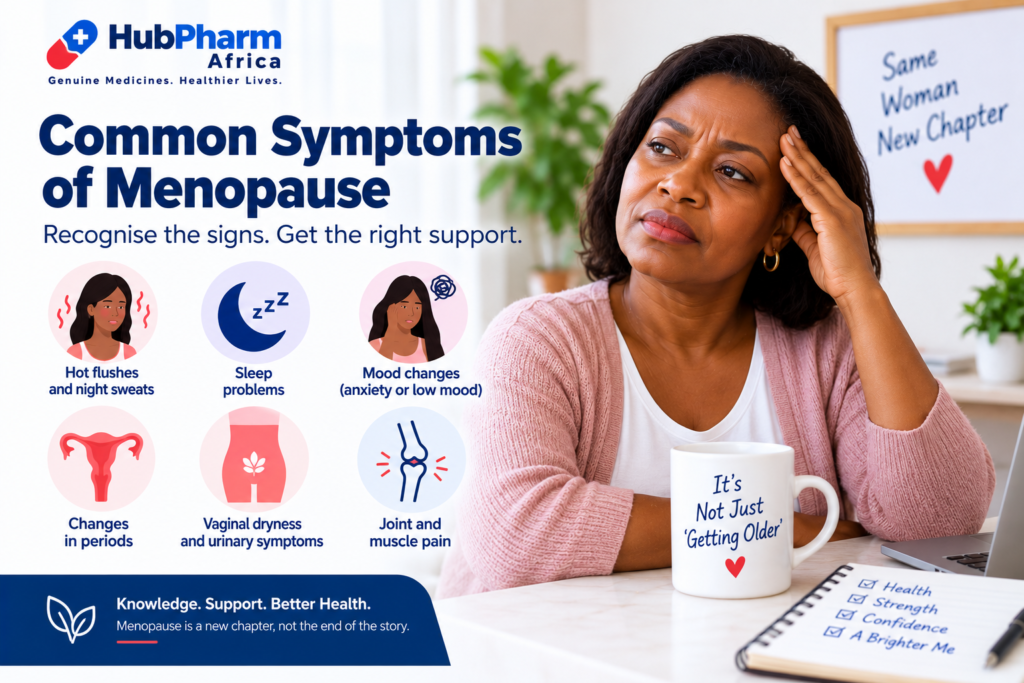
Menopause can affect several parts of the body at the same time.
Hot flushes and night sweats
A hot flush can arrive suddenly, producing a feeling of intense heat, sweating and sometimes a racing heartbeat.
At night, these episodes can disturb sleep.
Hot flushes and night sweats are among the symptoms commonly reported by Nigerian women.
Changes in periods
During perimenopause, periods may become:
- Less predictable
- Heavier or lighter
- More frequent or less frequent
- Longer or shorter
Eventually, menstruation stops.
However, new or unusually heavy bleeding should not automatically be blamed on menopause. It may require investigation for other causes.
Sleep problems
Some women struggle to fall asleep, while others wake repeatedly during the night.
Night sweats can contribute, but anxiety, mood changes and other health conditions can also affect sleep.
Mood and concentration
Menopause may be accompanied by:
- Irritability
- Anxiety
- Low mood
- Difficulty concentrating
- Forgetfulness
- Reduced confidence
These symptoms deserve attention rather than being dismissed as simply “getting older.”
Vaginal dryness and urinary symptoms
Declining oestrogen can affect the tissues of the vagina and urinary tract.
Women may experience:
- Vaginal dryness
- Burning or irritation
- Pain during sex
- Reduced sexual comfort
- Urinary urgency
- Recurrent urinary symptoms
These symptoms can be particularly difficult to discuss, but they are treatable.
Not every symptom is caused by menopause
This is an important distinction.
Menopause can explain many symptoms, but it should not become an explanation for everything that happens after 40 or 50.
For example, persistent tiredness could have several causes. Heavy bleeding may cause iron deficiency. Changes in weight, palpitations or anxiety could also occur with thyroid disease.
Therefore, a proper medical history matters.
Do you need a hormone test?

Usually, not if you are 45 or older and have typical menopausal symptoms with changes in your periods.
NICE advises against routinely using laboratory tests to identify menopause in women aged 45 and over when the clinical picture is typical.
FSH testing may be considered in some younger women or when the diagnosis is uncertain.
This is important because hormone levels fluctuate substantially during perimenopause.
A single test can therefore create confusion rather than clarity.
When menopause happens before 45
Menopause occurring between ages 40 and 44 is generally described as early menopause.
Menopause before age 40 is called premature ovarian insufficiency (POI).
These situations deserve medical assessment because the consequences of prolonged low oestrogen can include effects on bone and cardiovascular health.
NICE specifically includes premature ovarian insufficiency within its menopause guidance.
Treatment for menopause in Nigeria
You do not have to treat menopause if your symptoms are mild and you do not want treatment.
However, if symptoms are affecting your quality of life, there are several options.
| Treatment | What it can help |
|---|---|
| Menopausal hormone therapy (MHT/HRT) | Hot flushes, night sweats and other menopause symptoms |
| Vaginal oestrogen | Vaginal and urinary symptoms |
| Non-hormonal medicines | Selected vasomotor and other symptoms |
| CBT | Mood, sleep and some menopause-related symptoms |
| Lifestyle measures | Sleep, general health and symptom management |
The best choice depends on your symptoms, age, medical history, reproductive organs and personal preferences.
Menopausal hormone therapy: what women should know
Hormone therapy replaces some of the hormones that decline during menopause.
It can be highly effective for troublesome vasomotor symptoms such as hot flushes and night sweats.
The International Menopause Society’s 2026 recommendations cover hormone therapy alongside cardiovascular health, bone health, genitourinary symptoms, sexual wellbeing and other aspects of midlife health.
However, hormone therapy is not one medicine.
Oestrogen alone
Women who have had their uterus removed may, in some circumstances, use oestrogen without a progestogen.
Oestrogen plus a progestogen
Women who still have a uterus generally need a progestogen alongside systemic oestrogen to protect the womb lining.
The exact treatment depends on whether the woman is still having periods, has had a hysterectomy and other individual factors.
Vaginal oestrogen
For predominantly vaginal or urinary symptoms, low-dose vaginal oestrogen can be considered.
This is different from systemic hormone therapy because the medicine is used locally.
NICE specifically recommends considering vaginal oestrogen for genitourinary symptoms associated with menopause.
HRT is not suitable for everyone
This is where medical assessment matters.
Your doctor needs to know about your medical history before prescribing hormone therapy.
That includes previous:
- Breast or other hormone-sensitive cancers
- Blood clots
- Stroke or cardiovascular disease
- Liver disease
- Unexplained vaginal bleeding
The decision should be individualised rather than based on what worked for a friend or relative.
What about progesterone?
Progesterone or another progestogen has an important role when systemic oestrogen is prescribed to a woman who still has a uterus.
Its purpose is not simply to “balance hormones.”
Rather, it helps protect the womb lining from excessive stimulation by oestrogen.
That is why taking oestrogen and progesterone together can be necessary for some women.
The exact formulation and schedule should come from the prescribing clinician.
Non-hormonal options
Hormone therapy is not the only way to manage menopause.
Some women cannot take hormones, while others simply prefer not to.
Depending on the symptoms, options can include certain prescription medicines and menopause-specific cognitive behavioural therapy.
NICE recommends considering menopause-specific CBT as an option for some women with vasomotor symptoms, sleep problems and depressive symptoms associated with menopause.
Lifestyle changes still matter
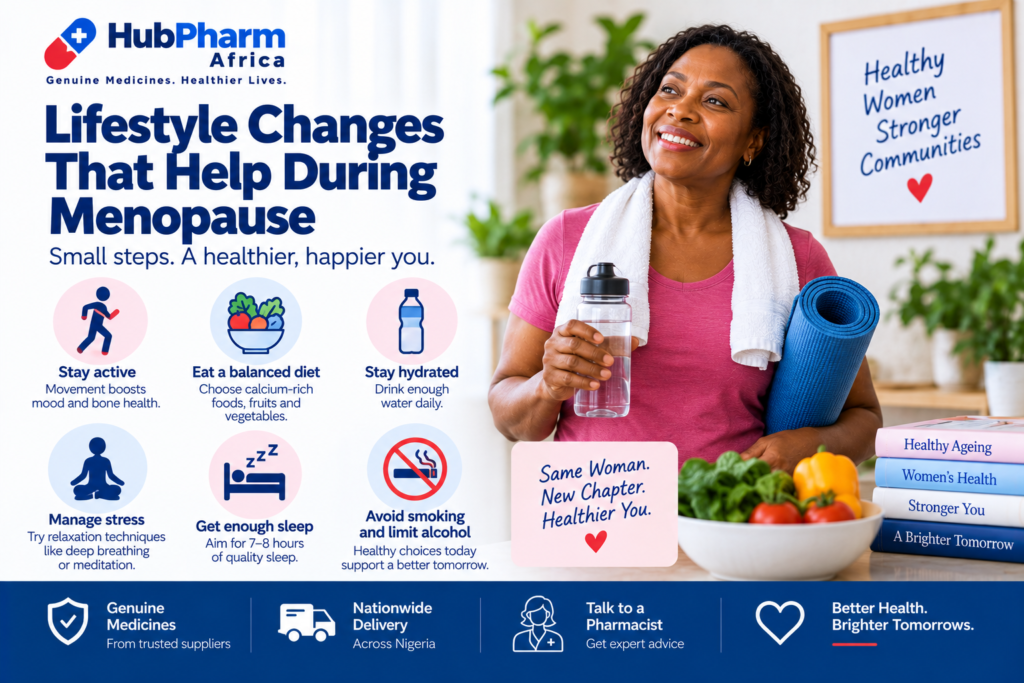
Medicine is only part of menopause care.
Regular physical activity can support cardiovascular and bone health.
A balanced diet provides the nutrients needed for healthy ageing.
Good sleep habits can also help, although severe insomnia may need specific treatment.
Smoking and excessive alcohol can worsen some health risks associated with ageing and menopause.
Most importantly, menopause is a good time to review blood pressure, blood sugar, cholesterol, weight, physical activity and bone health with your healthcare professional.
What about calcium and vitamin D?
Bone health becomes increasingly important after menopause because lower oestrogen levels contribute to bone loss.
That does not mean every woman should automatically start high-dose calcium or vitamin D supplements.
Your dietary intake, risk factors, existing health conditions and medication history should guide the decision.
Menopause and sex
Changes in sexual wellbeing are common but often ignored.
Reduced libido may occur alongside vaginal dryness, pain during sex, sleep problems, mood changes or relationship difficulties.
A woman should not have to accept painful sex as an unavoidable part of ageing.
Vaginal oestrogen and other treatments may help when genitourinary symptoms are responsible.
If libido changes without vaginal symptoms, the cause may be more complicated and deserves a proper conversation with a healthcare professional.
Menopause and fertility
Menopause means natural fertility has ended.
However, perimenopause is different.
Ovulation can still occur during the menopausal transition, even when periods have become irregular.
Therefore, pregnancy remains possible until menopause has been established.
Women who do not want pregnancy should discuss appropriate contraception with their healthcare provider.
When should you see a doctor?
Make an appointment if:
- Your symptoms are affecting work or sleep
- Hot flushes are difficult to manage
- You have persistent vaginal or urinary symptoms
- Sex has become painful
- You have significant mood changes
- You are experiencing menopause before 45
- You have concerns about bone health
- You want to discuss hormone therapy
Do not ignore bleeding after menopause
Bleeding after you have gone 12 months without a period needs medical assessment.
Do not assume that it is simply “old blood” or another normal part of menopause.
The cause may be harmless, but it needs to be checked.
These medicines are available at HubPharm Africa
The medicines discussed in this article are available through HubPharm Africa. If your doctor prescribes any of the following, you can order them online or pay us a visit at our pharmacy .
Progestogen (Medroxyprogesterone or Norethisterone) for endometrial protection Order now
Calcium Supplement for bone health Order now
Vitamin D3 for bone and immune support Order now
Magnesium for sleep, mood and muscle tension Order now
Bring your prescription or contact us via WhatsApp with any questions about medicines. If a product is not listed, we can source verified medicines through licensed channels.
NICE updated its recommendations in 2026 concerning unscheduled vaginal bleeding in people taking systemic HRT.
Getting menopause medicines in Nigeria
Menopause treatment can last for months or years, depending on the symptoms and treatment plan.
Consequently, reliable access to prescribed medicines matters.
At HubPharm Africa, we source verified medicines through licensed channels and deliver across Nigeria. In addition,we coordinate refills so treatment does not lapse and put a pharmacist on the phone when you would rather ask a question privately.
Furthermore, when Nigerian pharmacies do not routinely stock a product, we tell you honestly whether we can source it and what the lead time looks like, rather than letting you hope.
[Talk to a HubPharm pharmacist →]
Common questions about menopause
What age does menopause usually start?
There is considerable individual variation. Menopause is diagnosed after 12 consecutive months without a menstrual period, provided there is no other explanation.
Can menopause be treated?
Yes. Treatment is not mandatory, but troublesome symptoms can be managed with hormonal and non-hormonal options.
Is HRT safe?
HRT has benefits and risks that vary according to the individual, the type of treatment, age, timing, route and medical history. Discuss your personal risks and benefits with a healthcare professional.
Do I need an FSH test?
Not usually if you are 45 or older with typical symptoms and menstrual changes. Testing may be useful in selected younger women or when the diagnosis is uncertain.
Does menopause cause vaginal dryness?
It can. Reduced oestrogen can cause vaginal and urinary symptoms, and treatments are available.
Can I take progesterone for menopause?
Progesterone or another progestogen may be prescribed alongside systemic oestrogen when needed to protect the womb lining. It should not be started simply because someone recommends it.
Can menopause cause joint pain?
Joint and muscle discomfort is frequently reported in Nigerian studies of menopausal women.
Should I just endure my symptoms?
No. Menopause is natural, but severe or disruptive symptoms deserve attention. Treatment can be discussed according to your health history and preferences.
The bottom line
Menopause is not an illness, but that does not mean you have to suffer through difficult symptoms without help.
Hot flushes, night sweats, poor sleep, vaginal dryness, mood changes and sexual symptoms can all affect quality of life.
At the same time, menopause is an opportunity to pay closer attention to long-term health, including cardiovascular risk, bone health, physical activity and mental wellbeing.
The goal is not to stop ageing. It is to make the transition healthier and more manageable.
At HubPharm Africa, we can help you understand your prescribed medicines, access genuine products and speak with a pharmacist when you have questions.
[Talk to a HubPharm pharmacist →]
Medically reviewed by Pharm. Sesan Kareem, B.Pharm, MPA, MBA.
This article is for general information and does not replace assessment by your doctor. Hormonal treatments should not be started, changed or stopped without appropriate medical advice.
References
- NICE. Menopause: identification and management (NG23). Updated 2026.
- International Menopause Society. IMS Recommendations and Key Messages on Women’s Midlife Health and Menopause. 2026.
- Obayi AN, et al. Association between Menopausal Symptoms and Demographic Variables among Perimenopausal and Postmenopausal Women. Journal of Mid-life Health, 2026.
- Ojengbede OA, et al. Experience of menopausal symptoms by women in an urban community in Ibadan, Nigeria.
- Frequency of symptoms and health seeking behaviours of menopausal women in an out-patient clinic in Port Harcourt, Nigeria.
- Patterns of menopausal symptoms and adaptive ability in a rural population in South-east Nigeria.
- Contextualising Menopause in Nigeria: A Qualitative Analysis From the MARiE Project. 2026.