OCD, PTSD & Sleep Disorders in Nigeria

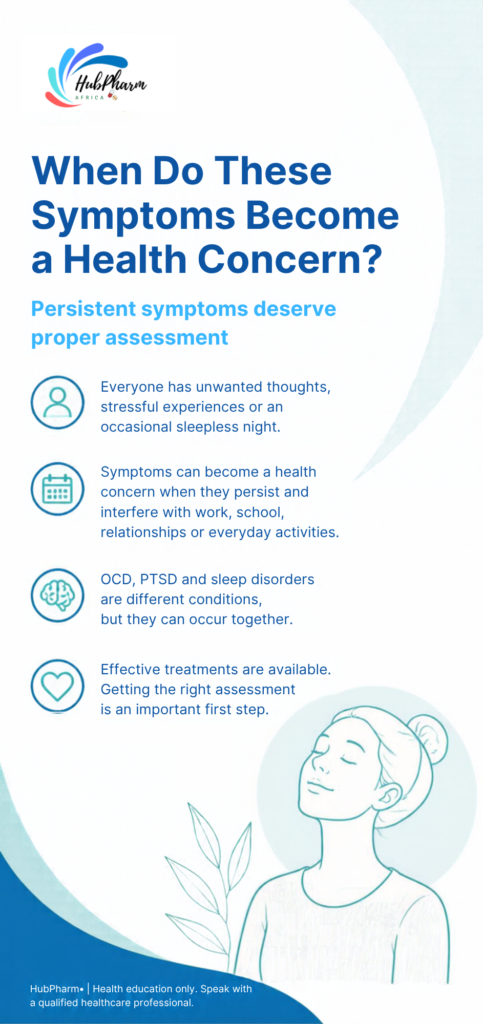
Everyone has unwanted thoughts, stressful experiences or an occasional sleepless night.
However, persistent symptoms can become a health concern when they interfere with work, school, relationships or everyday activities.
OCD, PTSD and sleep disorders are different conditions, although they can occur together. For example, obsessive thoughts may make it difficult to sleep. Similarly, traumatic experiences can lead to nightmares and disturbed sleep.
The good news is that effective treatments are available. Getting the right assessment is an important first step.
OCD in Nigeria: What Is Obsessive-Compulsive Disorder?
Obsessive-compulsive disorder, commonly called OCD, is a mental health condition involving recurring obsessions, compulsions or both.
An obsession is an unwanted and repeated thought, image or urge that causes distress.
A compulsion is a repetitive behaviour or mental activity that someone feels driven to perform. Often, the action is an attempt to reduce anxiety or prevent something feared from happening.
For example, someone may repeatedly check a door because they are afraid that something bad could happen if they do not check it.
OCD is therefore more than simply being neat, organised or particular about cleanliness. The condition can become disruptive when the thoughts and behaviours are difficult to control and interfere with daily life. WHO notes that appropriate treatment can improve quality of life and daily functioning.
Common Symptoms of OCD
OCD can affect people in different ways.
Common symptoms include:
- Repeated fears about contamination
- Excessive washing or cleaning
- Repeated checking
- Intrusive unwanted thoughts
- Repeated counting
- Excessive reassurance seeking
- Arranging objects in a particular way
- Repetitive mental rituals
- Fear that something terrible will happen without a particular action
Having an unwanted thought does not automatically mean someone has OCD.
Instead, OCD involves persistent symptoms that cause significant distress or interfere with normal activities.
How Is OCD Diagnosed?

There is no single blood test that confirms OCD.
Instead, a qualified healthcare professional assesses the person’s symptoms and their effect on daily life.
The assessment may consider:
- The type of thoughts or urges
- Repetitive behaviours
- How frequently symptoms occur
- How much time they consume
- The level of distress they cause
- Their effect on work, school and relationships
- Other mental health symptoms
- Previous treatment
A proper assessment also helps distinguish OCD from other conditions that may cause repetitive thoughts or behaviours.
For this reason, an online checklist should not replace professional assessment.
Treatment for OCD

OCD can be treated, and treatment can involve psychological therapy, medication or a combination of both.
Cognitive behavioural therapy (CBT) is an important psychological treatment. A specific form called exposure and response prevention (ERP) helps people gradually face situations that trigger obsessive thoughts while learning not to perform the usual compulsive response.
Medication may also be recommended for some people.
In particular, selective serotonin reuptake inhibitors (SSRIs) are among the medicines used to treat OCD. WHO identifies SSRIs as effective treatment options for OCD.
The appropriate treatment depends on the person’s symptoms, age, other health conditions and previous response to treatment.
Medicines Used for OCD
Medication is an important part of treatment for some people with OCD. However, these medicines should be used under the direction of a qualified healthcare professional.
SSRIs
Selective serotonin reuptake inhibitors, or SSRIs, are commonly used medicines for OCD.
Examples include:
- Fluoxetine
- Fluvoxamine
- Paroxetine
- Sertraline
- Citalopram
Different people can respond differently to these medicines. A healthcare professional therefore needs to consider the individual’s symptoms, other medicines and health history before choosing treatment. NICE lists several SSRIs as treatment options for adults with OCD.
Clomipramine
Clomipramine is another antidepressant that can be used for OCD. It belongs to a different class from SSRIs and may be considered in particular treatment situations. WHO includes clomipramine among medicines used for obsessive-compulsive disorders.
Important medicine advice
Do not start, stop or change an OCD medicine without professional advice.
Some medicines can cause side effects or interact with other medicines. In addition, stopping certain antidepressants suddenly can cause withdrawal symptoms.
If you have a prescription or questions about an OCD medicine, speak with a qualified pharmacist or doctor. HubPharm pharmacists can help you understand your prescribed medicine, how to take it as directed, possible medicine-related concerns and when to seek further medical advice.
[Talk to a HubPharm Pharmacist →]
PTSD in Nigeria
What Is PTSD?
Post-traumatic stress disorder, or PTSD, can develop after someone experiences or witnesses a potentially traumatic event.
Examples can include:
- Serious accidents
- Violence
- War or conflict
- Natural disasters
- Sexual violence
- Serious injury
- The sudden death of someone close
Not everyone who experiences trauma develops PTSD.
Some people recover with time and support, while others continue to experience symptoms that affect everyday life.
Symptoms of PTSD

PTSD can affect thoughts, emotions, behaviour and sleep.
Re-experiencing
A person may experience unwanted memories, nightmares or distress when something reminds them of the traumatic event.
Avoidance
They may avoid people, places, conversations or situations associated with what happened.
Increased alertness
Some people become unusually watchful, tense or easily startled.
Changes in mood and thinking
PTSD can also affect emotions, relationships and the way someone views themselves or the world.
Because symptoms can vary, professional assessment is important.
Can PTSD Be Treated?
Yes.
Psychological treatments are an important part of PTSD care. WHO identifies trauma-focused CBT and eye movement desensitization and reprocessing (EMDR) among evidence-based psychological interventions for PTSD.
Medication may also be considered in some situations.
The best treatment depends on the individual’s symptoms and circumstances.
Sleep Disorders in Nigeria

When Does Poor Sleep Become a Problem?
Everyone experiences an occasional bad night.
Persistent sleep problems, however, can affect concentration, mood, learning, work and everyday functioning.
Insomnia is one of the most common sleep problems. It can involve difficulty falling asleep, waking repeatedly during the night or waking earlier than intended.
Some people also wake up feeling that they have not had enough restorative sleep.
What Causes Sleep Problems?
Sleep problems can have many causes.
These include:
- Stress
- Anxiety
- Depression
- PTSD
- Irregular sleep schedules
- Certain medicines
- Caffeine
- Physical health conditions
- Other sleep disorders
Therefore, repeatedly treating poor sleep without identifying the underlying cause may not solve the problem.
The Connection Between Sleep and Mental Health
Sleep and mental health are closely connected.
For example, intrusive thoughts associated with OCD can make falling asleep difficult.
Similarly, PTSD may cause nightmares or increased alertness during the night.
Poor sleep can then make concentration and emotional regulation more difficult during the day.
For this reason, persistent sleep problems deserve proper assessment, particularly when they occur alongside OCD, PTSD, anxiety or depression.
Can OCD, PTSD and Sleep Problems Occur Together?
Yes.
These conditions are different, but symptoms can overlap.
Someone with OCD may spend considerable time dealing with intrusive thoughts and compulsions. As a result, their sleep may suffer.
Meanwhile, someone with PTSD may experience nightmares or remain highly alert at night.
Persistent insomnia can also make emotional symptoms harder to manage.
Consequently, healthcare professionals should consider the person’s overall symptoms rather than focusing on sleep, anxiety or repetitive behaviours in isolation.
When Should You Seek Professional Help?
Consider speaking with a healthcare professional when symptoms:
- Continue for several weeks
- Interfere with work or school
- Affect relationships
- Make everyday activities difficult
- Cause significant distress
- Keep getting worse
- Regularly interfere with sleep
You do not have to wait until symptoms become severe.
Early assessment can help determine whether the symptoms are related to OCD, PTSD, insomnia or another condition.
How HubPharm Can Support Your Medicine Journey
Managing a mental health condition can involve regular appointments, prescription medicines and questions about treatment.
At HubPharm Africa, pharmacists can provide medicine-related support and help patients better understand their prescribed treatment.
If you already have a prescription and need help understanding your medicine, speak with a HubPharm pharmacist about:
- How your prescribed medicine should be taken
- Possible side effects
- Medicine interactions
- Questions about missed doses
- Medicine-related concerns that should be discussed with your doctor
[Speak with a HubPharm Pharmacist →]
For mental-health medicines, always follow the prescription and advice provided by your healthcare professional.
Frequently Asked Questions
Is OCD simply being very clean?
No. OCD can involve contamination fears and cleaning, but it can also involve intrusive thoughts, checking, counting, reassurance seeking and other compulsive behaviours.
Can PTSD affect sleep?
Yes. PTSD can involve nightmares and increased alertness, which can interfere with sleep.
Can OCD affect work or school?
Yes. Obsessions and compulsions can consume considerable time and make concentration and everyday responsibilities more difficult.
Is insomnia always caused by stress?
No. Stress is only one possible cause. Anxiety, depression, PTSD, medicines, physical health conditions and other sleep disorders can also contribute.
Can OCD be treated with medicine?
Yes. Medicines such as SSRIs can be used as part of OCD treatment. Psychological therapy is also an important treatment option.
Should I stop my OCD medicine when I feel better?
Do not stop or change a prescribed medicine without speaking with your doctor or pharmacist. Some antidepressants can cause withdrawal symptoms when stopped suddenly.
The Bottom Line
OCD, PTSD and sleep disorders can affect everyday life, relationships, work and overall wellbeing.
OCD can involve persistent intrusive thoughts and compulsive behaviours. PTSD can develop after trauma and affect thoughts, emotions and sleep. Persistent insomnia can also make concentration and emotional wellbeing more difficult.
Fortunately, effective treatments are available.
If you are experiencing persistent symptoms, seek professional assessment rather than trying to diagnose yourself.
If you have already been prescribed treatment, regular follow-up can help your healthcare team monitor your progress and address medicine-related concerns.
Need help understanding a prescribed mental-health medicine? Speak with a HubPharm pharmacist for professional medicine guidance.
Medical disclaimer: This article is for health education and does not replace diagnosis or treatment from a qualified healthcare professional.
References
- World Health Organization (WHO). Post-traumatic stress disorder (PTSD). Updated September 11, 2026.
- National Institute for Health and Care Excellence (NICE). Obsessive-compulsive disorder and body dysmorphic disorder: treatment. NICE Guideline CG31. The guideline covers CBT with exposure and response prevention (ERP), SSRIs and clomipramine for OCD.
- World Health Organization (WHO). Guidelines for the Management of Conditions Specifically Related to Stress.This includes evidence and recommendations concerning psychological interventions for PTSD.
- National Institute for Health and Care Excellence (NICE). Cognitive behavioural therapy for insomnia (CBT-I).NICE guidance and evidence describe CBT-I as a first-line approach for long-term insomnia.
- World Health Organization (WHO). Mental Health Gap Action Programme (mhGAP) Intervention Guide. This provides evidence-informed guidance for assessment and management of mental health conditions in non-specialist healthcare settings.