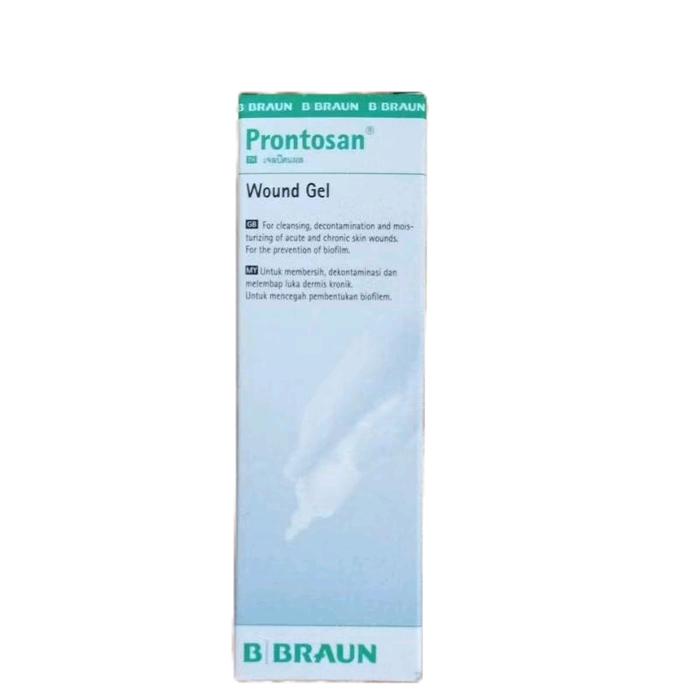
Prontosan Wound Gel
₦40,000.00
Buy Prontosan Wound Gel Online – Antimicrobial Cleansing Gel for Chronic and Hard-to-Heal Wounds
Buy Prontosan Wound Gel online from HubPharm Africa, a PCN licensed specialty pharmacy. Prontosan Wound Gel combines polihexanide (PHMB) 0.1% with the surfactant betaine 0.1% in a hydroxyethylcellulose gel. It is used to cleanse, decontaminate and moisten acute and chronic wounds, and to loosen and remove the biofilm and coatings that keep wounds from healing.
Most stalled wounds are stalled for a reason: a layer of biofilm and devitalised tissue sits on the wound bed, shielding bacteria from the immune system and from antibiotics. The betaine surfactant in Prontosan undermines and lifts that layer, while polihexanide binds to bacterial cell membranes and reduces the microbial load. Because the gel stays in place, it keeps working between dressing changes and holds the wound bed moist, which is the environment healing actually needs.
Prontosan is widely used in diabetic foot ulcers, venous and pressure ulcers, surgical wounds, burns and traumatic wounds, and works alongside your existing dressing regimen rather than replacing it. HubPharm pharmacists will help you match the gel to your dressing plan and, where wound care is part of a chronic condition, enrol you in coordinated follow-up. Same-day delivery within Lagos, 48 hours nationwide, and international shipping available.
Key Features
- Removes and Prevents Biofilm: The betaine surfactant penetrates, loosens and lifts biofilm and wound coatings so that the wound bed can respond to treatment.
- Polihexanide Antimicrobial Action: PHMB 0.1% reduces bacterial burden with excellent tissue tolerance and no reported resistance development, unlike topical antibiotics.
- Moist Wound Healing: The gel formulation stays on the wound bed, maintains moisture balance and softens dry necrotic tissue between dressing changes.
- Broad Wound Range: Suitable for chronic ulcers, diabetic foot wounds, pressure sores, burns, post-surgical and traumatic wounds, including deep and undermined wounds.
- Pharmacist-Guided Wound Care: HubPharm pharmacists advise on frequency of application, compatible dressings and when a wound needs escalation to a clinician.
FAQ
What is Prontosan Wound Gel used for?
It is used to clean, decontaminate and moisten acute, chronic, contaminated and hard-to-heal wounds, including leg ulcers, diabetic foot ulcers, pressure ulcers, burns, surgical and traumatic wounds, and to remove biofilm and wound coatings.
Is Prontosan an antibiotic?
No. It is an antiseptic wound irrigation and cleansing product. Polihexanide acts physically on bacterial cell membranes rather than through a metabolic target, so bacteria do not develop resistance to it in the way they do to antibiotics. It does not replace systemic antibiotics in a clinically infected wound.
What is biofilm and why does it matter?
Biofilm is a protective matrix that bacteria build on the wound surface. It shields them from the immune system, from antiseptics and from antibiotics, and it holds the wound in a chronic inflammatory state. Disrupting it mechanically and chemically is one of the most reliable ways to restart healing in a stalled wound.
How do I apply Prontosan Wound Gel?
Clean and irrigate the wound first, ideally with Prontosan Wound Irrigation Solution. Apply the gel in a layer of two to three millimetres over the entire wound bed, including undermined areas, then cover with your chosen secondary dressing. Leave in contact for at least ten to fifteen minutes at each dressing change to allow the surfactant to work.
How often should it be applied?
At every dressing change, typically daily to every three days depending on the wound, exudate level and the dressing used. Your clinician or HubPharm pharmacist will set the interval.
Can Prontosan Gel be used under a dressing?
Yes. It is designed to be used with a secondary dressing such as a foam, alginate, hydrofibre or non-adherent contact layer. Do not use with dressings that need a dry wound bed.
Is Prontosan painful to use?
It is generally well tolerated and non-stinging. A brief mild sensation on application is possible in very inflamed wounds. Persistent pain, spreading redness, fever or a sudden change in odour or exudate suggests infection and needs clinical review.
Where should Prontosan not be used?
Avoid contact with hyaline cartilage, the central nervous system and meninges, and the middle and inner ear. Do not use in the eye. It should not be used in patients with known hypersensitivity to polihexanide. It should not be combined with anionic surfactants such as ordinary soaps or with ointments containing them, since these inactivate polihexanide.
Can it be used in diabetic foot ulcers?
Yes, and this is one of its most valuable uses. Diabetic foot wounds are frequently biofilm-laden and poorly perfused. Prontosan is used as part of a wider plan that must also address offloading, glycaemic control, vascular assessment and debridement.
Can it be used on burns?
Yes, it is used on partial thickness burns and donor sites as part of clinical wound management. Significant burns should always be assessed by a clinician first.
Can it be used in pregnancy or in children?
There is no evidence of harm from topical use, but use in pregnancy, in breastfeeding and in infants should be discussed with a clinician first, particularly for large wound surfaces.
How long can I use it after opening?
Follow the period stated on the pack. As a general rule the tube should be used within eight weeks of first opening. Do not touch the nozzle to the wound, and close the cap immediately after use.
How does the gel differ from Prontosan Wound Irrigation Solution?
The solution is a liquid used to irrigate, soak and flush the wound during cleansing. The gel has the same active combination but stays on the wound bed between dressing changes, giving prolonged contact. Many wound plans use the solution to cleanse and the gel to maintain.
Can I buy Prontosan Wound Gel online in Nigeria?
Yes. HubPharm Africa is a PCN licensed pharmacy (LAG20247B39C9) and supplies Prontosan Wound Gel with pharmacist guidance. We deliver same-day within Lagos, within 48 hours nationwide, and ship internationally.
How should Prontosan Wound Gel be stored?
Store between 1°C and 30°C. Do not freeze. Keep the tube closed, away from direct sunlight, and out of the reach of children. Do not use after the expiry date printed on the tube.
Description
Prontosan Wound Gel – Full Product Information
Composition: Purified water, polihexanide (polyhexamethylene biguanide, PHMB) 0.1%, betaine surfactant 0.1%, glycerol and hydroxyethylcellulose as gelling agent.
Presentation: Sterile hydrogel in a tube for topical wound application. Commonly supplied in 30ml and 250ml presentations.
Intended use: Cleansing, decontamination and moistening of acute, chronic, contaminated and hard-to-heal wounds; removal and prevention of biofilm and wound coatings; softening and removal of dry crusts and necrotic tissue as part of a wound management plan.
Classification: Medical device for professional and supervised home wound care.
How Prontosan Wound Gel Works
The product works through two complementary mechanisms. Betaine is an amphoteric surfactant that lowers the surface tension at the wound interface, penetrating and undermining biofilm, wound coatings and debris so that they can be lifted away rather than scrubbed off. Polihexanide is a cationic biguanide that binds to the negatively charged phospholipids of bacterial cell membranes, disrupting membrane integrity and killing the organism. Human cell membranes have a different lipid composition and a protective cholesterol content, which is why polihexanide has a favourable tissue tolerance profile at these concentrations. Because the mechanism is physicochemical rather than metabolic, bacterial resistance has not been reported. The gel base maintains a moist wound environment and prolongs contact time between dressing changes.
Directions for Use
Irrigate and cleanse the wound, ideally with Prontosan Wound Irrigation Solution. Apply the gel evenly at a thickness of approximately two to three millimetres across the wound bed, filling undermined areas and cavities where present. Allow a contact time of at least ten to fifteen minutes. Cover with an appropriate secondary dressing. Repeat at each dressing change, typically daily to every three days depending on wound status and exudate. Do not touch the tube nozzle to the wound surface.
Storage and Handling
Store between 1°C and 30°C, protected from direct sunlight. Do not freeze. Close the cap immediately after each use. Once opened, use within the period stated on the pack, generally eight weeks. Do not use if the tube is damaged or the seal is broken on receipt. Keep out of the sight and reach of children. Do not use after the expiry date printed on the tube.
Safety Information
Do not use in patients with known hypersensitivity to polihexanide. Do not apply to hyaline cartilage, the central nervous system or meninges, or the middle and inner ear. Not for ophthalmic use. Avoid concurrent use of anionic surfactants, including ordinary soaps and ointments containing them, which inactivate polihexanide. Use during pregnancy, lactation and in infants should follow clinical advice, particularly over large wound areas. Prontosan cleanses and decontaminates but does not treat established systemic or deep tissue infection: spreading erythema, increasing pain, fever, purulence or a sudden change in exudate requires prompt clinical assessment and may require systemic antibiotics. Wound care in diabetes must be accompanied by offloading, vascular assessment and glycaemic control.
Pharmacist Support
Every HubPharm order is reviewed by a licensed pharmacist before dispatch. You can reach our pharmacy team on WhatsApp at +234 705 050 5001, or through Afiya, our AI health companion, 24 hours a day in over 50 languages.
This information is provided for general education and does not replace the advice of a qualified healthcare professional. Always read the manufacturer’s instructions supplied with the product.

Reviews
There are no reviews yet.