Thyroid Disorders: Symptoms, Types and Treatment
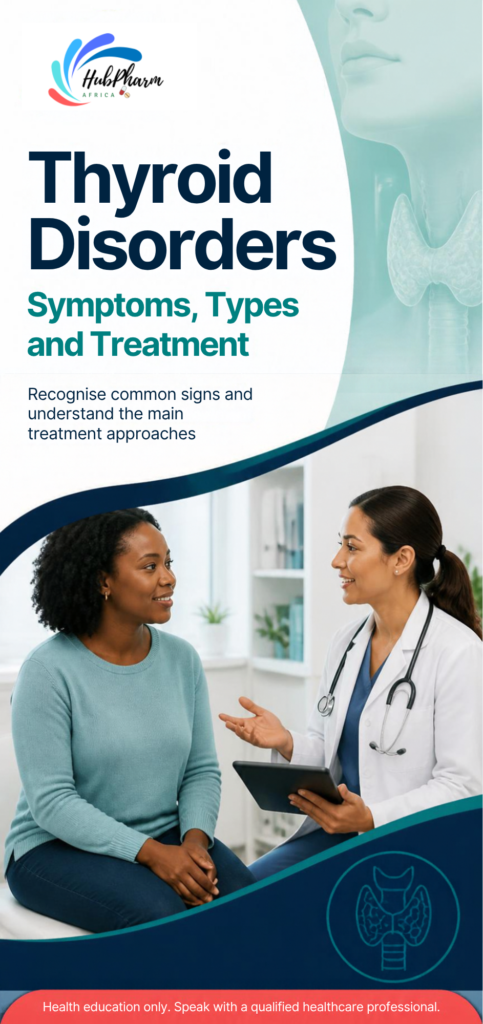
The thyroid is a small, butterfly-shaped gland at the front of the neck, but its hormones influence almost every organ in the body. Thyroid hormones help regulate how the body uses energy and affect functions such as heart rate, digestion and body temperature.
When the thyroid produces too little or too much hormone, it can cause a range of symptoms. The two main functional thyroid disorders are hypothyroidism, when thyroid hormone levels are too low, and hyperthyroidism, when they are too high.
Other thyroid problems include goitre, thyroid nodules, thyroiditis and thyroid cancer. Because many thyroid symptoms overlap with other conditions, proper testing is important before treatment begins.
What Are Thyroid Disorders?
Thyroid disorders occur when the thyroid gland does not function normally.
The thyroid produces two important hormones, thyroxine (T4) and triiodothyronine (T3). Their production is regulated partly by thyroid-stimulating hormone (TSH), which is produced by the pituitary gland.
Thyroid problems can involve:
- Too little thyroid hormone
- Too much thyroid hormone
- Inflammation of the thyroid
- Enlargement of the thyroid gland
- Thyroid nodules
- Thyroid cancer
The appropriate treatment depends on the specific condition and its cause.
Hypothyroidism: An Underactive Thyroid

Hypothyroidism occurs when the thyroid does not produce enough thyroid hormones.
When thyroid hormone levels are low, many of the body’s functions slow down.
One of the most common causes is Hashimoto’s disease, an autoimmune condition in which the immune system attacks the thyroid. Other causes include thyroid surgery, radiation treatment, thyroiditis and certain medicines.
Symptoms of hypothyroidism
Symptoms may include:
- Tiredness
- Feeling unusually cold
- Weight gain
- Dry skin
- Dry or thinning hair
- Constipation
- Slower heart rate
- Depression
- Heavy or irregular menstrual periods
- Fertility problems
Hypothyroidism often develops gradually, so symptoms may not be obvious at first. Also, symptoms such as tiredness and weight changes can have many causes and do not automatically mean someone has a thyroid disorder.
Hyperthyroidism: An Overactive Thyroid
Hyperthyroidism occurs when the thyroid produces more thyroid hormones than the body needs.
Excess thyroid hormone can cause many body functions to speed up.
Graves’ disease is the most common cause of hyperthyroidism. Other causes include overactive thyroid nodules and thyroiditis.
Symptoms of hyperthyroidism
Possible symptoms include:
- Unexplained weight loss
- Increased appetite
- Rapid or irregular heartbeat
- Nervousness or irritability
- Difficulty sleeping
- Shaking hands
- Muscle weakness
- Increased sweating
- Difficulty tolerating heat
- Frequent bowel movements
- Enlargement of the thyroid, known as a goitre
Untreated hyperthyroidism can contribute to serious complications, including abnormal heart rhythms, cardiovascular problems, bone loss and fertility problems.
What Is a Goitre?
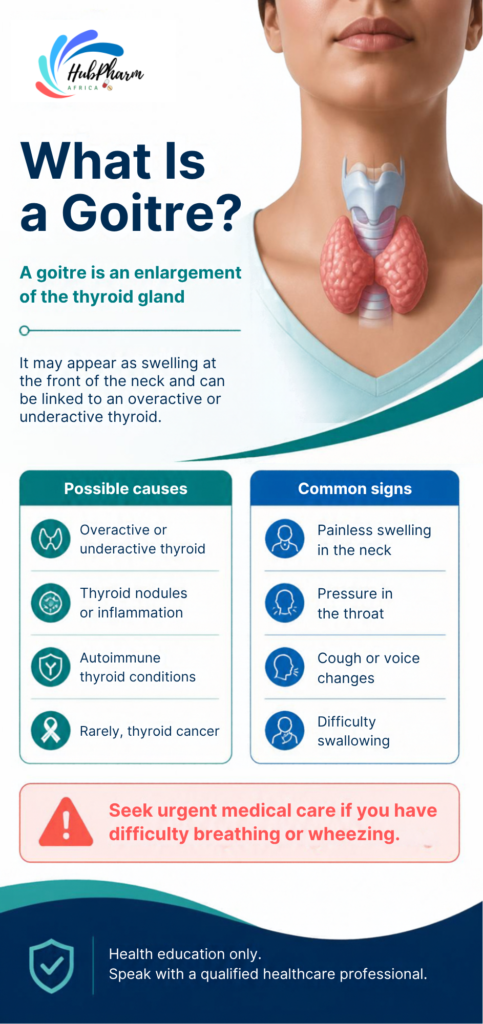
A goitre is an enlargement of the thyroid gland.
A goitre does not necessarily mean that the thyroid is producing too much or too little hormone. A person can have an enlarged thyroid while thyroid function remains normal.
Depending on its size and cause, a goitre may cause:
- Visible swelling in the neck
- Difficulty swallowing
- Difficulty breathing
A neck swelling should be assessed by a healthcare professional rather than treated with iodine or other supplements without proper diagnosis.
What Causes Thyroid Disorders?
Thyroid disorders have many possible causes.
Autoimmune conditions
Autoimmune diseases are an important cause of thyroid problems.
Hashimoto’s disease commonly causes hypothyroidism, while Graves’ disease is the most common cause of hyperthyroidism.
Thyroiditis
Thyroiditis means inflammation of the thyroid.
Some types can temporarily cause excess thyroid hormone in the bloodstream and may later result in hypothyroidism. Postpartum thyroiditis is one example.
Thyroid nodules
Thyroid nodules are lumps within the thyroid. Most are not cancerous, although some can produce excess thyroid hormone or require further investigation.
Previous treatment
Thyroid surgery and radioactive iodine treatment can affect thyroid function. People who have had these treatments may subsequently develop hypothyroidism and require thyroid hormone replacement.
How Are Thyroid Disorders Diagnosed?
Symptoms alone cannot reliably diagnose a thyroid disorder.
Healthcare professionals usually begin with blood tests. Common tests include:
- TSH
- T4
- T3, when appropriate
- Thyroid antibody tests in selected situations
A high TSH level commonly suggests hypothyroidism, while a low TSH can indicate hyperthyroidism. Additional tests help determine the cause and clarify the diagnosis.
Depending on the problem, a healthcare professional may also recommend imaging such as an ultrasound or other thyroid investigations.
Treating Hypothyroidism
The main treatment for hypothyroidism is thyroid hormone replacement.
The most commonly used medicine is levothyroxine, a synthetic form of the thyroid hormone thyroxine.
The dose is individualised. Blood tests are used after treatment begins and after dose changes to determine whether the dose needs adjustment. Once a stable dose has been established, thyroid function is usually monitored periodically.
It is important to take thyroid medicine exactly as prescribed.
Taking too much thyroid hormone can cause excessive thyroid hormone levels and potentially serious problems, including abnormal heart rhythms and bone loss.
Do not increase, reduce or stop levothyroxine without speaking with your healthcare professional.
Treating Hyperthyroidism
Treatment for hyperthyroidism depends on its cause, severity and the person’s circumstances.
Possible treatments include:
- Antithyroid medicines
- Radioactive iodine
- Surgery
- Medicines that help control certain symptoms
Antithyroid medicines reduce thyroid hormone production. Carbimazole is used as an antithyroid medicine in many treatment settings, while propylthiouracil (PTU) may be used in specific circumstances.
Radioactive iodine and surgery may be considered for some people with persistent or recurrent hyperthyroidism.
There is no single treatment that is appropriate for every person.
Thyroid Medicines Available Through HubPharm
Thyroid treatment needs to be matched to the diagnosis.
For hypothyroidism, HubPharm’s thyroid medicine category includes levothyroxine, which replaces the thyroid hormone that the body is not producing adequately.
For hyperthyroidism, medicines such as carbimazole and propylthiouracil may be prescribed in appropriate cases.
These medicines are not interchangeable. The correct medicine, dose and duration depend on the patient’s diagnosis, laboratory results and clinical circumstances.
Do not self-medicate with thyroid medicines based on symptoms alone.
Important Safety Information About Antithyroid Medicines
Antithyroid medicines can have important side effects.
For example, carbimazole can rarely cause a significant reduction in white blood cells. Patients taking it should seek medical advice promptly if they develop symptoms such as a sore throat, mouth ulcers or fever.
Propylthiouracil also requires appropriate medical supervision because it can cause serious adverse effects, including liver problems.
These medicines should therefore be used under the supervision of a qualified healthcare professional.
Thyroid Disorders During Pregnancy
Thyroid disorders require particular attention during pregnancy.
Both untreated hypothyroidism and uncontrolled hyperthyroidism can affect pregnancy, so people with known thyroid disease who are pregnant or planning pregnancy should discuss their condition with their healthcare professional.
Medication choices may also change during pregnancy.
For example, propylthiouracil may be used in particular circumstances during early pregnancy, while treatment decisions should be made by the woman’s healthcare team.
Do not stop thyroid medicine because you become pregnant without speaking with your doctor.
Can Diet Cure a Thyroid Disorder?
There is no general diet that can replace appropriate treatment for an established thyroid disorder.
Iodine is necessary for thyroid hormone production, but taking large amounts of iodine is not automatically beneficial. In some people with autoimmune thyroid disease, excessive iodine intake can actually worsen thyroid problems.
Avoid taking iodine supplements or high-dose thyroid supplements without professional advice.
A balanced diet and appropriate medical treatment are more important than following unproven “thyroid detox” programmes.
When Should You See a Doctor?
Speak with a healthcare professional if you experience persistent symptoms such as:
- Unexplained changes in weight
- Persistent tiredness
- Changes in heart rate
- Increased sensitivity to heat or cold
- Persistent constipation or frequent bowel movements
- Changes in menstrual patterns
- A swelling or lump in the neck
- Difficulty swallowing
- Difficulty breathing
Because these symptoms can have many causes, thyroid testing may be appropriate rather than assuming the problem is a thyroid disorder.
Can Thyroid Disorders Be Managed?
Yes.
Many thyroid disorders can be effectively managed with appropriate diagnosis, treatment and monitoring.
People with hypothyroidism may need long-term thyroid hormone replacement, while people with hyperthyroidism may require antithyroid medicine, radioactive iodine or surgery depending on the cause and circumstances.
Regular follow-up is important because treatment may need adjustment over time.
How HubPharm Can Help With Thyroid Care
Managing a thyroid disorder often involves taking medication consistently and understanding when follow-up testing is needed.
At HubPharm Africa, our pharmacists can support patients with medication-related questions and help them understand how their prescribed thyroid medicines fit into their treatment plan.
We can also help patients access relevant thyroid medicines, subject to prescription requirements and availability.
Speak with a HubPharm pharmacist →
If you have symptoms that may indicate a thyroid problem but have not been diagnosed, a pharmacist can also help you understand when you should seek medical assessment.
Frequently Asked Questions
What are the two main thyroid disorders?
The two main functional thyroid disorders are hypothyroidism, when the thyroid does not produce enough hormone, and hyperthyroidism, when it produces too much.
What is the most common medicine for an underactive thyroid?
Levothyroxine is the standard thyroid hormone replacement medicine used to treat hypothyroidism.
What medicines are used for an overactive thyroid?
Antithyroid medicines such as carbimazole and propylthiouracil may be used, depending on the person’s condition. Other treatments can include radioactive iodine or surgery.
Can thyroid problems cause weight changes?
Yes. Hypothyroidism can be associated with weight gain, while hyperthyroidism can cause weight loss despite an increased appetite. However, weight changes alone cannot diagnose a thyroid disorder.
Can thyroid disorders be cured?
Some thyroid disorders can resolve, while others require long-term management. The outcome depends on the specific condition and its cause.
Should I take iodine if I have a thyroid problem?
Not without professional advice. Excessive iodine can worsen some thyroid conditions.
The Bottom Line
Thyroid disorders can affect many parts of the body, but they are often manageable with the right diagnosis and treatment.
Hypothyroidism occurs when the thyroid produces too little hormone, while hyperthyroidism occurs when it produces too much. Symptoms can overlap with many other health conditions, so proper testing is important.
Treatment may include levothyroxine for hypothyroidism or antithyroid medicines such as carbimazole or propylthiouracil for appropriate cases of hyperthyroidism. Other treatments may be required depending on the underlying cause.
If you have persistent symptoms or notice a swelling in your neck, speak with a healthcare professional rather than starting thyroid medicine on your own.
Medical note: This article is for health education and does not replace diagnosis or individual medical advice. Thyroid medicines should be used only as directed by a qualified healthcare professional.
References
- National Institute of Diabetes and Digestive and Kidney Diseases (NIDDK). Thyroid Tests.
- NIDDK. Hypothyroidism (Underactive Thyroid).
- NIDDK. Hyperthyroidism (Overactive Thyroid).
- World Health Organization. Standard Treatment Guidelines — Thyroid Disorders.
- WHO / National Formulary guidance. Endocrine System — Antithyroid Medicines.