ADHD Lifestyle and Medication Guide

ADHD Lifestyle and Medication: Sleep, Nutrition and Life in Nigeria
Good ADHD lifestyle and medication habits go together. In part three of this series, we followed Faizah, whose son Soliu has ADHD, and the checklist taped to her front door that finally made their mornings work. This final article turns to the other half of the picture: the body, the home environment, medical care, and what all of this looks like specifically in Nigeria.
This is the fourth and final article in HubPharm Africa’s ADHD series. Our first piece, ADHD Explained, covered what ADHD is. Our second, the guide to ADHD medication in Nigeria, walked through treatment options. Part three covered daily structure, emotions and relationships. Here, we look at sleep, nutrition, supplements, and the realities of diagnosis and treatment in Nigeria.
Sleep, Exercise and Nutrition
Falling asleep can be surprisingly hard with ADHD. The same brain chemistry that makes focus difficult during the day can make it difficult to switch off at night. A consistent bedtime, dimmed lights, no screens in the hour before sleep, and a fixed wind-down routine, the same three or four steps every night, all support better sleep, because predictability itself is calming to an ADHD brain.
Physical activity is one of the better-evidenced non-medical tools for ADHD. Regular exercise is linked to measurable improvements in attention and reduced hyperactivity, likely through its effect on the same brain chemicals targeted by medication. It does not need a gym membership. Football in the compound, skipping rope, a brisk walk before work all count, and consistency matters more than intensity.
There is no ADHD diet that cures the condition, but stable blood sugar supports stable attention. A protein-rich breakfast, eggs, beans, akara, holds attention steadier than tea and bread that spikes and crashes blood sugar within an hour. Sugar itself has not been shown to cause ADHD or to be a major driver of symptoms in most children, though moderation is reasonable. Caffeine can sharpen focus temporarily in some adults, but late in the day it is a common hidden cause of poor sleep, which then worsens symptoms the next day.
Supplements: What the Evidence Shows
Omega-3 fatty acids show a small but real effect on attention in some studies, modest compared with medication. Iron matters specifically where a deficiency already exists, and supplementing when levels are normal has not shown benefit. Zinc and magnesium have limited, mixed evidence for ADHD specifically. Vitamin D deficiency is common across Nigeria despite abundant sunshine, and correcting a genuine deficiency supports overall health.
The pattern across all of these is consistent: supplements may offer modest support, mainly where a real deficiency exists, and none should replace professional care. Speak with a doctor or pharmacist before adding any supplement, especially alongside existing ADHD medication. HubPharm Africa pharmacists can help source genuine supplements and advise what, if anything, is worth adding.
Tools That Help
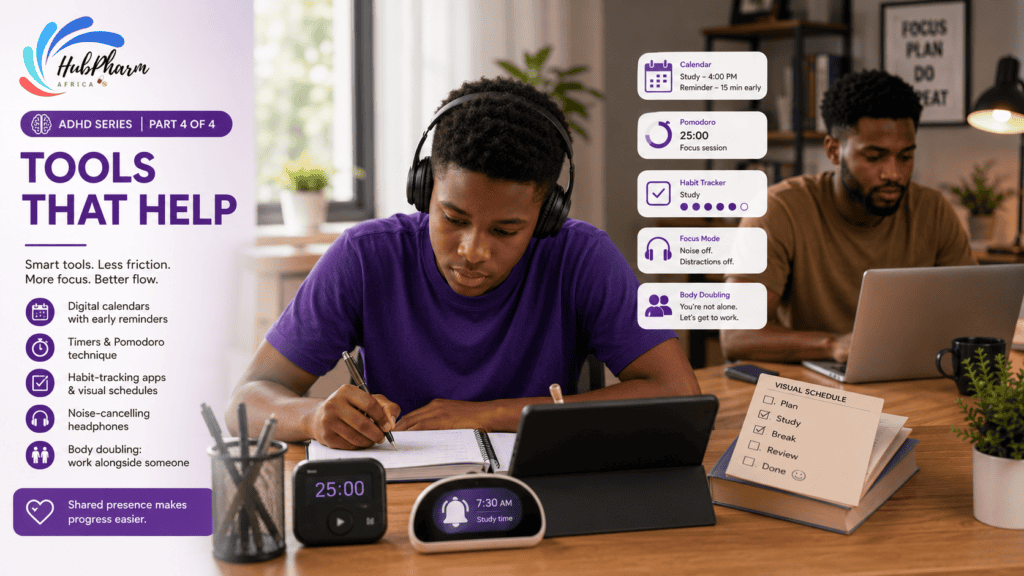
Digital calendars with early reminders, timers including the Pomodoro technique, habit-tracking apps, visual schedules and noise-cancelling headphones all remove friction from tasks that would otherwise depend entirely on memory and willpower. One underused strategy is body doubling, simply working alongside another person, even on something unrelated. Shared presence makes starting and sticking with a task noticeably easier for many people with ADHD.
Living with ADHD in Nigeria
ADHD awareness in Nigeria has grown, but still lags far behind conditions like malaria or typhoid. Many parents’ first instinct, when a child struggles to sit still, is to reach for spiritual explanations or assume the child is simply stubborn, rather than consider a neurological condition. That is not a criticism, it reflects a genuine information gap.
Diagnosis can be hard to access outside major cities, since specialists remain concentrated in Lagos, Abuja and a handful of urban centres. Stigma adds another layer, a diagnosis can carry a quiet fear that the child will be seen as “mad” or “slow.” Schools and workplaces vary widely in how well they understand and accommodate ADHD.
Stimulant medications are controlled substances and cannot be sold openly, which is appropriate given their potential for misuse, but it means families need a reliable, licensed pharmacy partner rather than an open-market purchase. This is the gap HubPharm Africa’s pharmacist-led service is built to close.
ADHD Lifestyle and Medication: Ongoing Care
Medication is not the right fit for everyone, but for many it makes a real difference, especially paired with the strategies covered in part three. Getting ADHD lifestyle and medication working together, rather than treating them as separate tracks, is what actually moves the needle. Our detailed medication guide covers stimulant and non-stimulant options in full. Medication works best alongside routines, behavioural strategies and family support, not as a stand-alone fix. Any changes should go through the prescribing doctor, never decided alone at home.
Medication Management: Consistency is the single biggest factor in whether ADHD medication works. Taking a dose at a different time each day or skipping days when things feel calmer both reduce how well it controls symptoms. Store medication away from heat and humidity, and keep stimulants such as methylphenidate secure and out of reach of others. Non-stimulant options like atomoxetine are more widely accessible and can be sourced through the HubPharm Africa online pharmacy. Our pharmacists are available on WhatsApp for medication counselling and adherence support. This article is educational and does not replace individualised medical advice.
Simple ADHD Lifestyle and Medication Habits to Start Today

- Set a bedtime alarm and start winding down thirty minutes before it goes off
- Add ten minutes of movement to your day, even a brisk walk around the compound
- Build a protein-rich breakfast into tomorrow morning
- Talk to a HubPharm pharmacist before adding any new supplement to a medication routine
- Store any ADHD medication somewhere cool and dry, away from other family members’ reach
Frequently Asked Questions
Does exercise really help ADHD symptoms? Yes. Regular physical activity is linked to measurable improvements in attention and reduced hyperactivity, though it is not a substitute for other treatment.
Is sugar actually a cause of ADHD? No. Sugar has not been shown to cause ADHD, though stable, balanced meals support steadier attention.
Should every child with ADHD take medication? No. The decision should always be made with a qualified doctor. Many children do well with behavioural strategies alone, others benefit from medication and lifestyle strategies combined.
Do supplements replace ADHD medication? No. Some show modest supporting evidence where a real deficiency exists, but none substitute for prescribed medication or professional care.
Where can I get support for ADHD medication in Nigeria? HubPharm Africa’s pharmacist-led team can be reached on WhatsApp & via calls at +234 705 050 5001, or through the online pharmacy.
The Bottom Line
ADHD is not a character flaw. It is a different way the brain manages attention, time and emotion, one that comes with real friction but also real strengths: creativity, resilience, and the ability to hyperfocus on what matters.
Faizah’s taped-up checklist did not cure Soliu’s ADHD. It just stopped fighting his brain and started working with it. Across this four-part series, that has been the whole point: good ADHD lifestyle and medication habits working together, structure over willpower, understanding over blame, and support that is easy to reach when it is needed.
Author
Kelvin is a Physiology graduate from the prestigious University of Ilorin, with a background spanning health science, therapy, and health communications. As Content creation Lead at HubPharm Africa, he brings a science-informed perspective to making health information accessible, accurate, and engaging. You can share your perspectives and/or feedback with Kelvin at kelvin@hubpharmafrica.com