Lupus in Nigeria: Symptoms, Treatment and Getting Care

Lupus can affect much more than the skin or joints.
Systemic lupus erythematosus (SLE), commonly called lupus, is an autoimmune disease in which the immune system mistakenly attacks the body’s own tissues. It can affect the joints, skin, blood, kidneys, lungs, heart and nervous system.
For patients in Nigeria, getting a clear diagnosis can be challenging because lupus can look different from one person to another. Symptoms may also resemble infections, other autoimmune diseases or common conditions.
The result is that some people live with unexplained symptoms for months or years before the underlying disease is recognised.
Treatment can make a major difference. However, lupus usually requires long-term monitoring rather than a single medicine or one-time treatment.
What is lupus?
Lupus is an autoimmune disease.
Normally, the immune system protects the body from infections. With lupus, however, the immune system becomes abnormally activated and produces immune responses that can damage healthy tissues.
The disease can affect several organs at the same time.
For example, one person may mainly have joint pain and skin symptoms, while another may develop inflammation affecting the kidneys or blood cells.
This is why lupus is sometimes described as a multisystem disease.
Lupus is also different from ordinary joint pain or arthritis. Joint symptoms can be part of lupus, but the disease may involve other organs as well.
Why lupus can be difficult to diagnose in Nigeria
There is no single test that confirms every case of lupus.
Doctors usually consider the patient’s symptoms, physical examination, medical history and several laboratory findings before making a diagnosis.
This can make the diagnostic process complicated.
Research from sub-Saharan Africa has identified challenges including limited access to rheumatology services and diagnostic resources. Nigerian patients can therefore face additional barriers when symptoms are unusual or when specialist assessment is not immediately available.
The evidence also shows why we should be careful with Nigerian prevalence figures. Available African research demonstrates that lupus occurs in native sub-Saharan African populations, but researchers continue to identify major gaps in population-level epidemiological data.
In other words, uncertainty about the number of Nigerians living with lupus should not be mistaken for evidence that lupus is uncommon.
Common symptoms of lupus
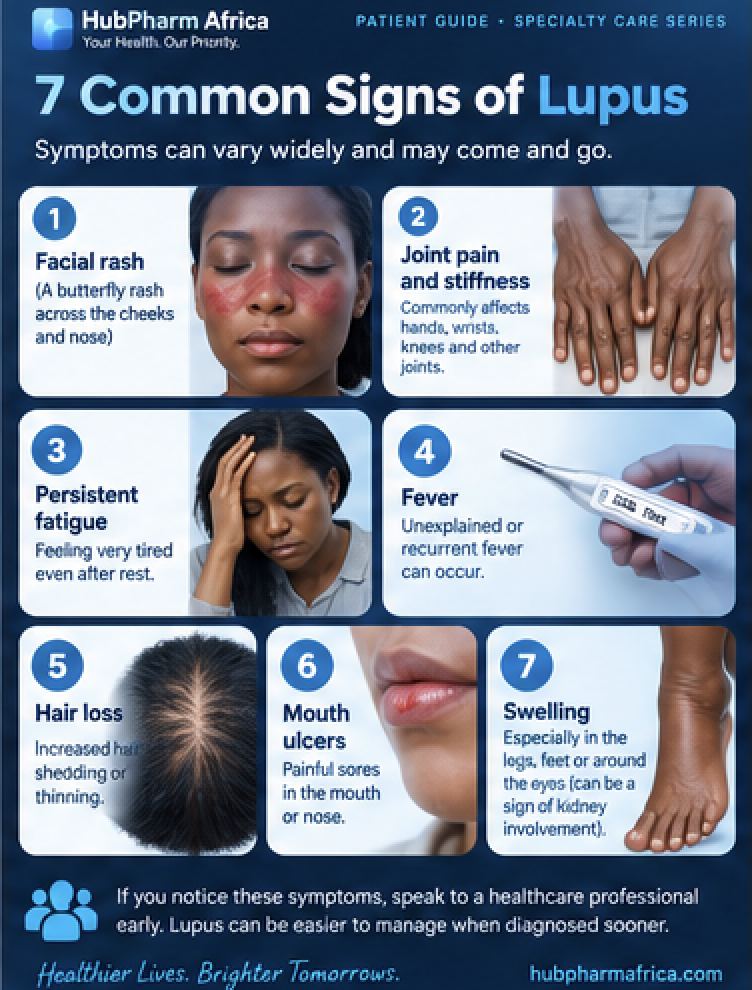
Lupus can produce many different symptoms. They may appear gradually, come and go, or become more noticeable during disease flares.
Joint pain and stiffness
Joint pain is common in lupus.
Some people experience pain, stiffness or swelling involving the hands, wrists, knees or other joints.
Unlike some forms of arthritis, lupus-related joint symptoms may occur alongside symptoms affecting other parts of the body.
Persistent tiredness
Fatigue is one of the symptoms that can have a major effect on daily life.
Someone may feel exhausted even after getting enough sleep. Fatigue can also become worse during periods of active disease.
Skin rashes
Lupus can cause different types of skin problems.
Some people develop a facial rash across the cheeks and nose, commonly called a malar or butterfly rash. Other rashes may appear after exposure to sunlight.
However, not everyone with lupus develops the same rash.
Fever
Unexplained fever can sometimes occur when lupus is active.
Because infections can also cause fever, medical assessment is important rather than assuming that every fever in someone with lupus is a flare.
Hair loss
Some people with lupus experience increased hair shedding or thinning.
This can occur as part of the disease or for other reasons, so it should be discussed with a healthcare professional.
Swelling of the legs or around the eyes
Swelling can be particularly important because it may indicate kidney involvement.
This is one reason lupus should not be treated as simply a skin or joint condition.
Lupus can affect the kidneys
One of the most important complications of lupus is lupus nephritis, which occurs when lupus affects the kidneys.
Kidney involvement deserves particular attention in African patients because available African literature describes significant kidney disease and poor outcomes in some patients.
A recent systematic review of reported African lupus nephritis cases found that many patients presented with proteinuria, swelling and hypertension. Nigerian cases included severe kidney disease, with some progressing to end-stage kidney disease or requiring dialysis.
Possible warning signs include:
- Swelling around the eyes
- Swollen legs or feet
- High blood pressure
- Foamy urine
- Blood in the urine
- Reduced urine output
Importantly, kidney disease can sometimes develop without obvious symptoms in its early stages.
That is why people living with lupus need appropriate monitoring even when they feel well.
How is lupus diagnosed?
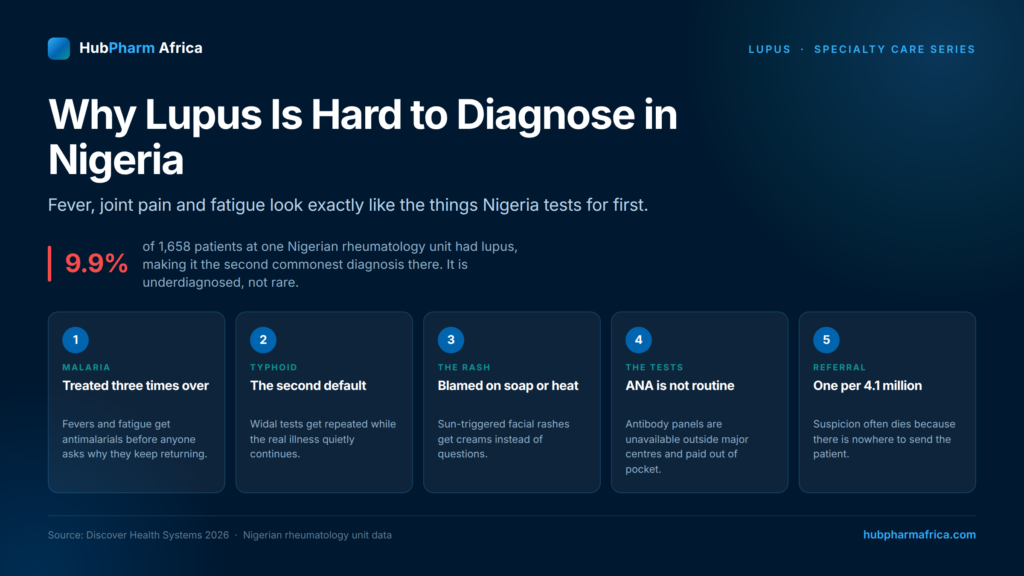
Diagnosis usually involves several pieces of information rather than one test.
1. Medical history and examination
The healthcare professional will ask about symptoms such as:
- Joint pain
- Skin changes
- Fatigue
- Fever
- Hair loss
- Mouth ulcers
- Previous blood problems
- Kidney symptoms
- Neurological symptoms
The doctor will also look for signs of inflammation or organ involvement.
2. Blood tests
Depending on the situation, testing may include:
- Antinuclear antibodies (ANA)
- Anti-double-stranded DNA antibodies
- Anti-Smith antibodies
- Complement levels
- Full blood count
- Kidney function tests
- Liver tests
- Inflammatory markers
The exact tests required depend on the patient’s symptoms and clinical assessment.
3. Urine and kidney tests
Urine testing is particularly important because kidney involvement may not cause obvious symptoms initially.
Doctors may check for:
- Protein in the urine
- Blood in the urine
- Kidney function
- Protein-to-creatinine measurements
4. Further testing when organs are affected
Additional investigations may be necessary when lupus affects the kidneys, lungs, heart, nervous system or other organs.
A kidney biopsy may sometimes be needed to determine the type and severity of lupus nephritis and guide treatment.
Medicines used to treat lupus
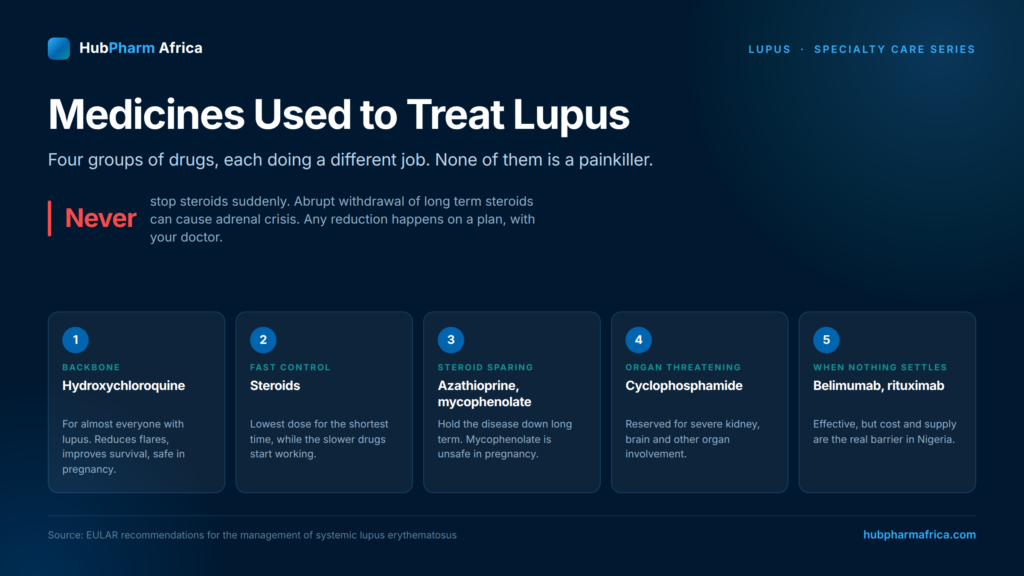
There is no single medicine that works for every person with lupus.
Treatment depends on which organs are affected, how active the disease is, previous treatment, other health conditions and the risk of complications.
Hydroxychloroquine
Hydroxychloroquine is one of the most important long-term medicines used in lupus.
Evidence supports its role in reducing disease activity and flares, and major treatment recommendations generally support its use in people with SLE unless contraindicated.
Hydroxychloroquine can be used for several manifestations of lupus, including joint and skin involvement.
However, it is not a medicine that should simply be started or adjusted without medical supervision.
Long-term use requires appropriate monitoring, including attention to eye health because retinal toxicity is a recognised potential complication.
Corticosteroids
Corticosteroids such as prednisolone can reduce inflammation quickly and may be used when lupus is active.
They can be particularly important when significant organ inflammation needs rapid control.
However, long-term or high-dose steroid treatment can cause important side effects.
For this reason, doctors generally try to use the lowest effective exposure and may introduce other medicines that allow steroid reduction.
Do not stop long-term corticosteroids suddenly unless your healthcare professional tells you to do so.
Immunosuppressive medicines
When lupus affects important organs or cannot be controlled adequately with basic treatment, doctors may use immunosuppressive medicines.
Depending on the clinical situation, these can include:
- Mycophenolate mofetil
- Azathioprine
- Methotrexate
- Cyclophosphamide
- Other specialist-directed therapies
The choice depends heavily on the organ involved.
For example, treatment for lupus nephritis is different from treatment for mild skin or joint symptoms.
Treating lupus nephritis
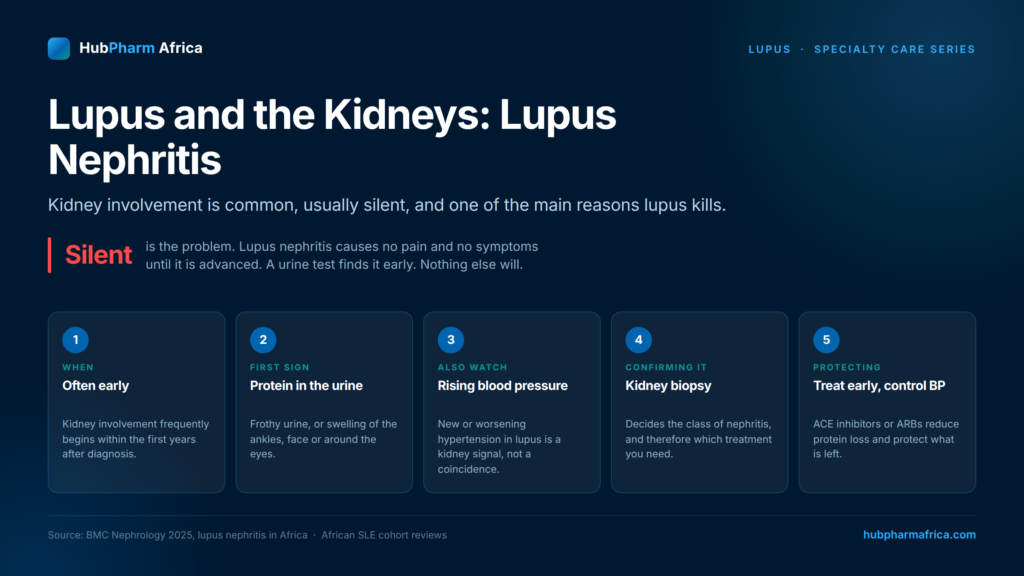
Lupus nephritis requires specialist care because untreated kidney inflammation can lead to permanent kidney damage.
African reports have described the use of corticosteroids alongside medicines such as mycophenolate mofetil in patients with lupus nephritis. Outcomes have varied, with late presentation contributing to poor outcomes in some settings.
Treatment may involve:
Initial treatment
Reducing active kidney inflammation.
↓
Maintenance treatment
Keeping the disease controlled and reducing the risk of relapse.
↓
Kidney monitoring
Checking urine, blood pressure and kidney function regularly.
↓
Long-term protection
Reducing the risk of progressive kidney damage.
Modern lupus nephritis treatment continues to evolve, with newer evidence informing recommendations on immunosuppressive and targeted therapies.
Can lupus be cured?
There is currently no guaranteed cure for systemic lupus erythematosus.
However, lupus can often be managed.
The goal is to control inflammation, prevent disease flares, protect organs and maintain quality of life.
Some people experience periods when the disease is quiet. Others require ongoing treatment to keep symptoms and organ involvement under control.
The important point is that lupus management is usually a long-term process.
Living with lupus in Nigeria
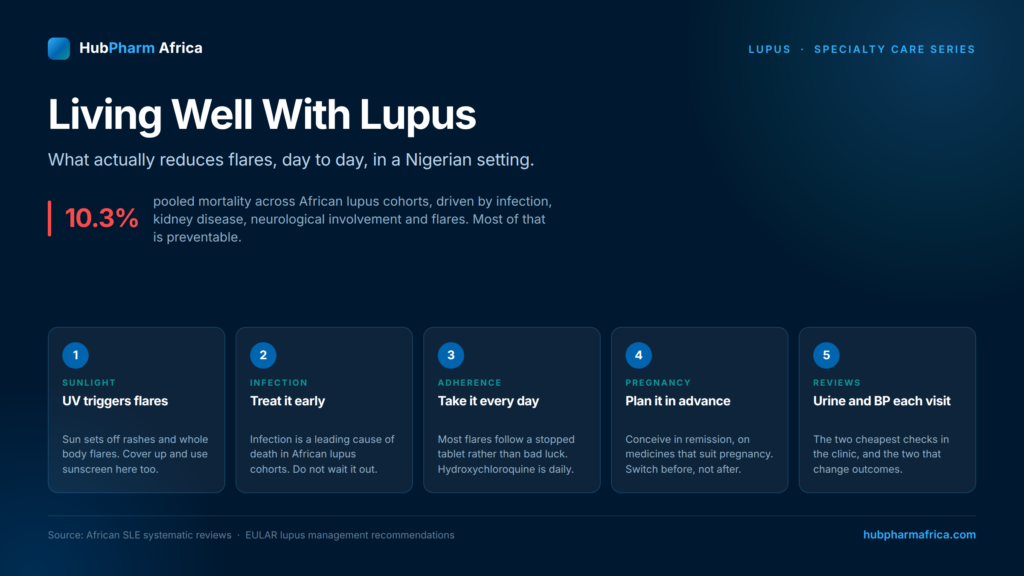
Living well with lupus involves more than taking medicine.
Regular medical follow-up is important because the disease can change over time.
Patients may need monitoring of:
- Blood pressure
- Kidney function
- Urine
- Blood counts
- Disease activity
- Medication side effects
- Other cardiovascular and infection risks
Medication adherence is equally important.
If a medicine causes problems or seems ineffective, the safest approach is to speak with the treating healthcare professional rather than stopping treatment independently.
Getting lupus medicines in Nigeria

Access can become one of the most difficult parts of managing a long-term condition.
Specialty medicines may require prescription verification, appropriate sourcing, careful handling and reliable follow-up.
At HubPharm Africa, our specialty-care approach is designed to help patients and families navigate prescription-based medicine sourcing and access.
Where a prescribed medicine is not immediately available, our role is to be transparent about availability and help identify appropriate sourcing options rather than make promises we cannot keep.
Need help with a prescribed lupus medicine? HubPharm Africa can help you understand the next step, subject to medicine availability and applicable requirements.
When should you seek medical attention?
Speak with a healthcare professional if you have persistent or unexplained:
- Joint pain or swelling
- Extreme fatigue
- Recurrent fever
- Unusual skin rashes
- Hair loss
- Mouth ulcers
- Swelling around the eyes or legs
- Changes in urination
People already diagnosed with lupus should seek prompt medical attention when they develop new or worsening symptoms, particularly symptoms suggesting kidney, neurological, breathing or cardiovascular involvement.
Frequently asked questions
Is lupus common in Nigeria?
Reliable national population-level data for Nigeria are limited. However, evidence from sub-Saharan Africa shows that SLE occurs among native African populations and should not be dismissed as a rare disease simply because national prevalence figures are incomplete.
What is the best medicine for lupus?
There is no single best medicine for everyone. Hydroxychloroquine is an important long-term treatment for many people with lupus, while corticosteroids, immunosuppressants and targeted therapies may be added depending on the disease and organs affected.
Can lupus damage the kidneys?
Yes. Lupus nephritis is a serious complication of SLE and requires appropriate testing and specialist management.
Can someone with lupus live a normal life?
Many people with lupus can continue working, studying, raising families and participating in activities they enjoy. The condition usually requires long-term monitoring and treatment.
Where can I get lupus medicines in Nigeria?
Availability varies by medicine and time. Prescription-based specialty medicine sourcing may require checking availability and appropriate procurement channels. HubPharm Africa can support patients and families with this process where applicable.