Thyroid Disease in Nigeria: Why Getting the Diagnosis Matters
Your thyroid is a small, butterfly-shaped gland at the front of your neck. Despite its size, it has an important role in controlling how your body uses energy.
Thyroid hormones influence your heart rate, body temperature, digestion, muscles and many other body functions.
When the thyroid produces too little hormone, you may develop hypothyroidism, or an underactive thyroid.
When it produces too much, you may develop hyperthyroidism, or an overactive thyroid.
Both conditions can cause symptoms that are easy to mistake for other health problems.
Someone with an underactive thyroid may feel unusually tired, cold or slowed down. Someone with an overactive thyroid may experience a racing heartbeat, sweating, shaking or unexplained weight loss.
Two important autoimmune thyroid diseases are Hashimoto’s thyroiditis and Graves’ disease.
They work in almost opposite directions:
- Hashimoto’s commonly damages the thyroid and can lead to hypothyroidism.
- Graves’ disease stimulates the thyroid and commonly causes hyperthyroidism.
Nigeria has research documenting both thyroid dysfunction and thyroid autoimmunity, but the available evidence does not provide a simple national prevalence figure. Studies from Lagos and Kano demonstrate that thyroid disease and autoimmune thyroid disorders are important clinical problems in Nigeria.
The good news is that thyroid disease usually responds well to appropriate treatment.
What Does the Thyroid Do?
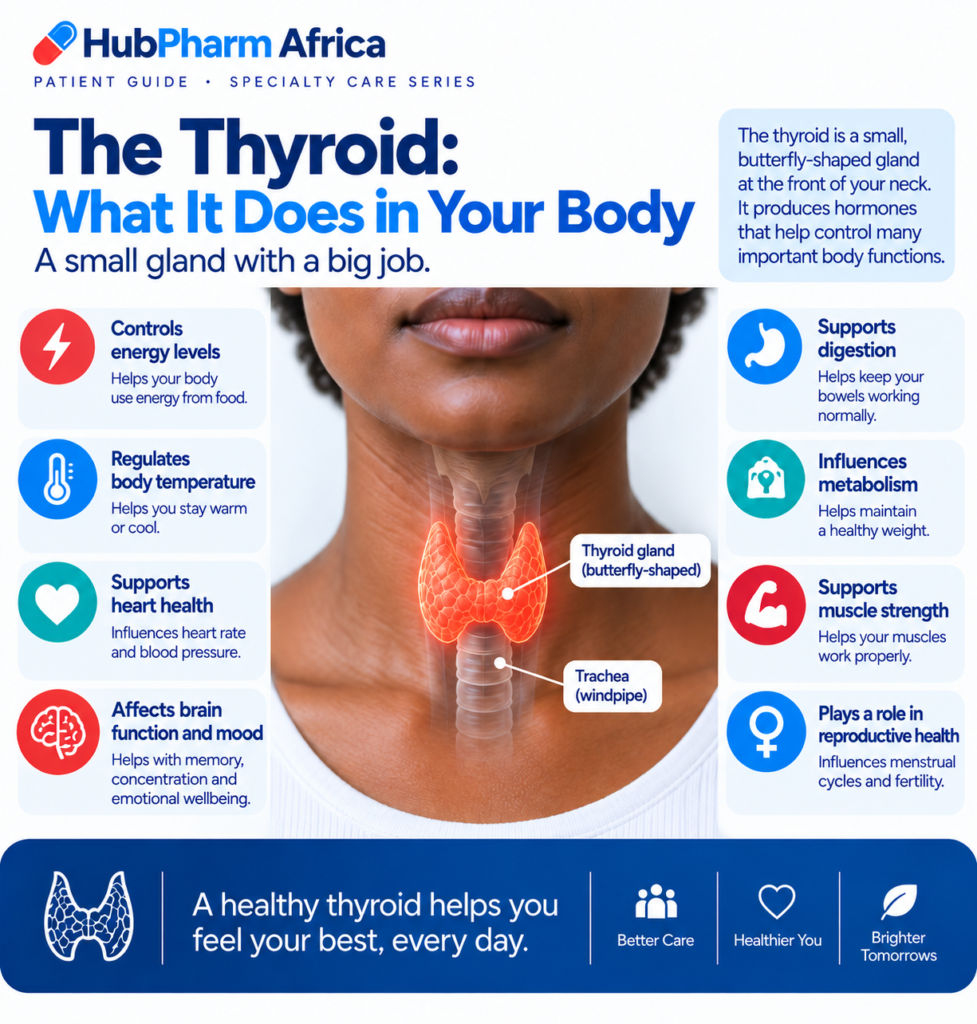
The thyroid produces hormones that help regulate the body’s metabolism.
The two main thyroid hormones are:
- Thyroxine (T4)
- Triiodothyronine (T3)
The thyroid is controlled by a hormone called thyroid-stimulating hormone (TSH), which is produced by the pituitary gland in the brain.
You can think of the system as a feedback loop.
When thyroid hormone levels are too low, the body normally increases TSH stimulation.
When thyroid hormone levels rise, TSH normally falls.
This relationship is why a blood test for TSH is often the starting point when doctors investigate suspected thyroid dysfunction. NICE recommends TSH testing in adults when thyroid disease is suspected, followed by free T4 or free T3 testing depending on the TSH result.
Hypothyroidism vs Hyperthyroidism
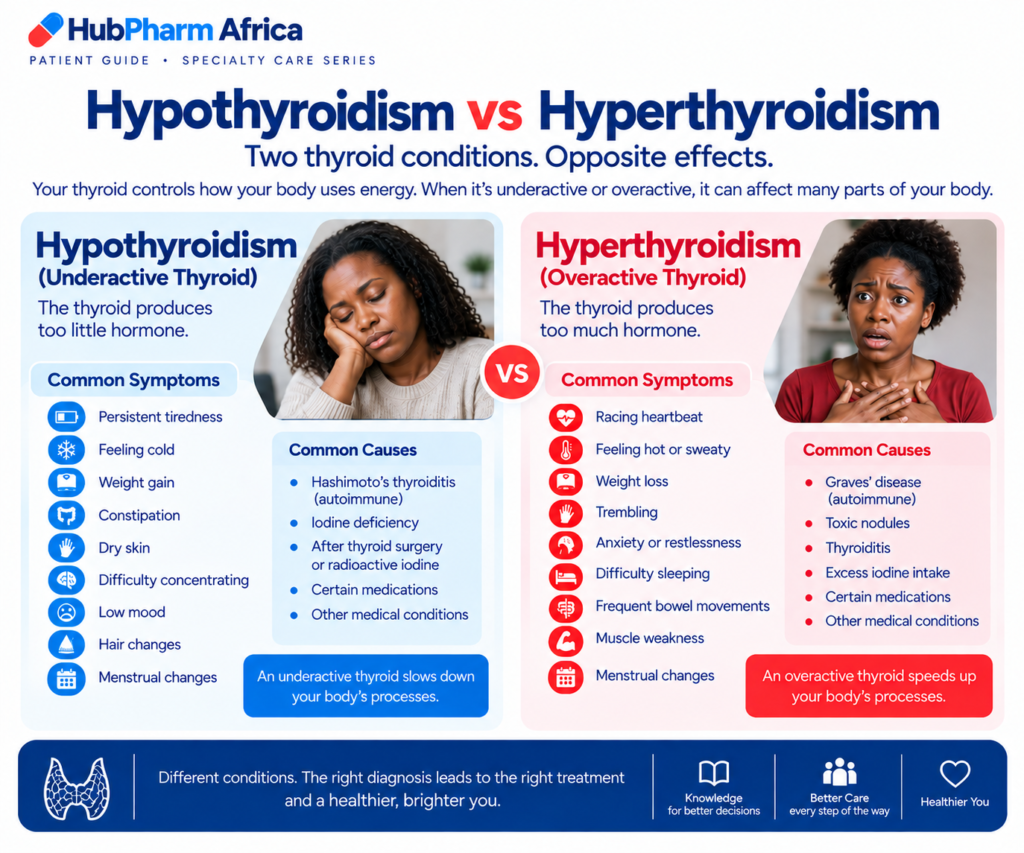
The simplest distinction is:
Hypothyroidism
The thyroid is underactive.
It does not produce enough thyroid hormone.
Common symptoms can include:
- Tiredness
- Feeling unusually cold
- Constipation
- Dry skin
- Reduced energy
- Difficulty concentrating
- Muscle aches
- Low mood
- Changes in menstrual cycles
- Weight gain
Symptoms can develop gradually, so some people may not realise that their thyroid is involved.
Hyperthyroidism
The thyroid is overactive.
It produces too much thyroid hormone.
Common symptoms can include:
- Fast or irregular heartbeat
- Feeling hot or sweaty
- Shaking
- Anxiety or restlessness
- Difficulty sleeping
- Increased bowel movements
- Muscle weakness
- Weight loss despite eating normally or more than usual
- Menstrual changes
Some people develop a visible enlargement of the thyroid called a goitre.
Hashimoto’s Thyroiditis: When the Immune System Attacks the Thyroid
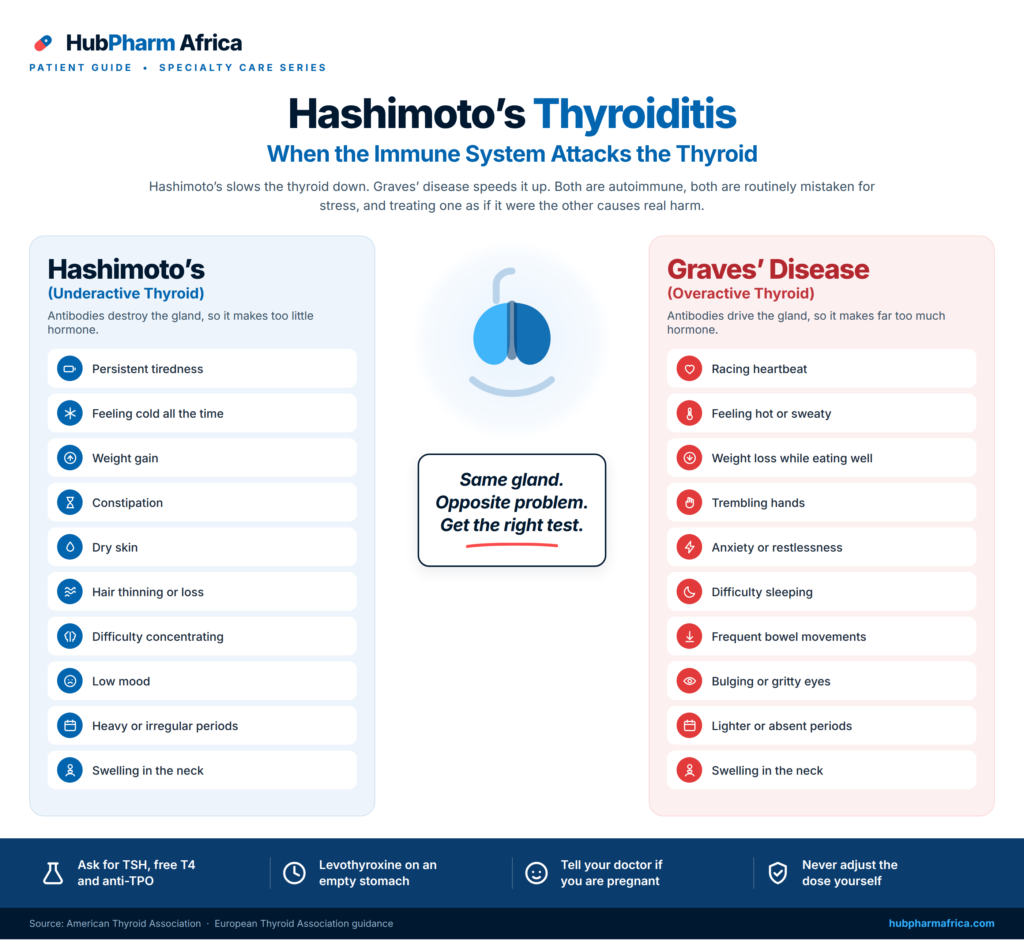
Hashimoto’s thyroiditis is an autoimmune thyroid disease.
In autoimmune diseases, the immune system mistakenly targets the body’s own tissues.
In Hashimoto’s, this immune response damages thyroid tissue over time. The thyroid may eventually produce insufficient thyroid hormone, resulting in hypothyroidism.
Blood tests can help identify autoimmune thyroid disease.
One commonly measured antibody is the thyroid peroxidase antibody (TPOAb).
A Nigerian study conducted at an endocrine referral centre in Lagos found TPO antibodies in a substantial proportion of patients with Graves’ disease and confirmed Hashimoto’s thyroiditis in patients suspected of having the condition. The researchers also found two additional cases that might have been missed without antibody testing.
However, an antibody result should always be interpreted alongside thyroid function tests and the clinical picture.
Graves’ Disease: A Common Cause of Hyperthyroidism
Graves’ disease is another autoimmune thyroid disease.
Instead of damaging the thyroid, antibodies stimulate the thyroid’s TSH receptors.
The thyroid is essentially told to keep working.
As a result, the gland can produce excessive thyroid hormone.
Graves’ disease can cause:
- Fast heartbeat
- Trembling
- Heat intolerance
- Sweating
- Weight loss
- Anxiety
- Difficulty sleeping
- Increased bowel movements
- Muscle weakness
- Goitre
Some people also develop thyroid eye disease.
This can cause symptoms such as:
- Dry or gritty eyes
- Eye irritation
- Light sensitivity
- Eye redness
- Swelling around the eyes
- Bulging eyes
- Double vision in more significant disease
Not everyone with Graves’ disease develops eye problems.
Hashimoto’s vs Graves’ Disease
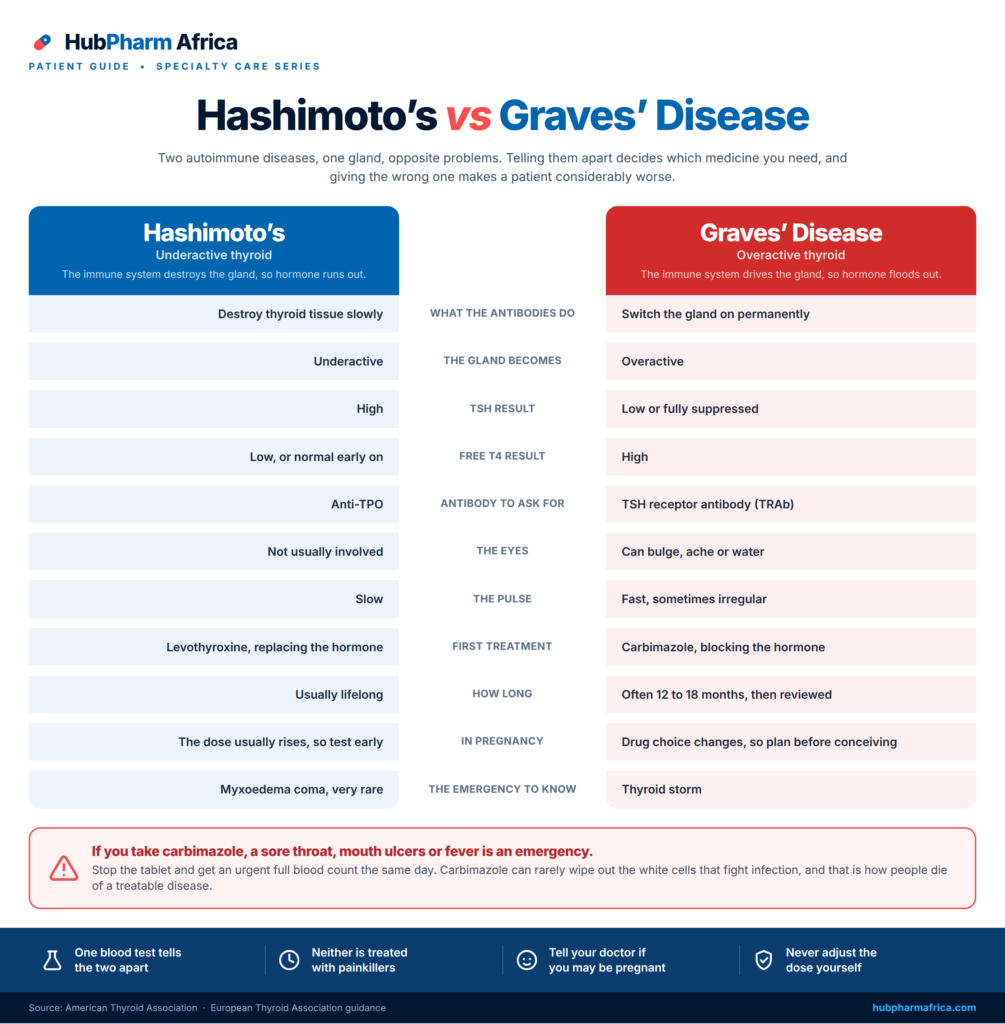
Although both are autoimmune diseases, they usually affect thyroid function in different ways.
| Feature | Hashimoto’s thyroiditis | Graves’ disease |
|---|---|---|
| Main effect | Usually reduces thyroid function | Usually increases thyroid function |
| Typical condition | Hypothyroidism | Hyperthyroidism |
| Important antibody | TPO antibodies | TSH-receptor antibodies |
| Common symptoms | Tiredness, cold intolerance, constipation | Heat intolerance, tremor, racing heart |
| Goitre | Can occur | Can occur |
| Eye disease | Not typical | Can occur |
| Main long-term treatment | Thyroid hormone replacement | Antithyroid treatment, radioactive iodine or surgery depending on circumstances |
These conditions can sometimes change over time, and diagnosis should not be based on symptoms alone.
What Are the Symptoms of Thyroid Disease?
Thyroid symptoms can be surprisingly broad.
That is one reason thyroid disease can be overlooked.
Signs that may suggest an underactive thyroid
- Persistent tiredness
- Feeling cold when others are comfortable
- Constipation
- Dry skin
- Hair changes
- Difficulty concentrating
- Slower heart rate
- Muscle aches
- Menstrual changes
Signs that may suggest an overactive thyroid
- Racing heartbeat
- Trembling hands
- Excessive sweating
- Feeling unusually hot
- Anxiety or restlessness
- Difficulty sleeping
- Frequent bowel movements
- Unexplained weight loss
- Muscle weakness
However, one symptom alone does not prove thyroid disease. NICE specifically advises that individual symptoms should not automatically be interpreted as evidence of thyroid dysfunction.
Blood tests are usually needed.
How Is Thyroid Disease Diagnosed?
Diagnosis normally starts with your medical history and physical examination.
Your healthcare professional may ask about:
- Your symptoms
- Previous thyroid problems
- Family history
- Medicines and supplements
- Changes in weight
- Menstrual or reproductive health
- Heart symptoms
- Neck swelling
- Eye symptoms
They may also examine your neck for thyroid enlargement or nodules.
The TSH Test
TSH is often the first thyroid blood test used in adults when a thyroid problem is suspected.
If TSH is above the reference range, free T4 is generally checked.
If TSH is below the reference range, free T4 and free T3 may be checked.
Free T4 and Free T3
These tests measure the available thyroid hormones in the blood.
They help determine whether the thyroid is producing too little or too much hormone.
Thyroid Antibodies
Antibody tests can help identify autoimmune thyroid disease.
Examples include:
- TPO antibodies
- Thyroglobulin antibodies
- TSH-receptor antibodies (TRAb)
TRAb testing can help confirm Graves’ disease in people with thyrotoxicosis.
Thyroid Ultrasound
An ultrasound can examine the thyroid’s structure.
However, it is not automatically required simply because someone has abnormal thyroid hormone levels.
NICE recommends ultrasound in adults with thyrotoxicosis when a palpable thyroid nodule is present, rather than routinely using ultrasound for every case.
What About a Goitre or Thyroid Nodule?
A goitre means the thyroid gland is enlarged.
There are many possible causes.
Some people have a goitre while their thyroid hormones remain normal.
Others may have a goitre associated with hypothyroidism, hyperthyroidism, autoimmune disease or nodules.
Most thyroid nodules are not cancerous, but certain features require further assessment.
Seek medical assessment if a neck swelling is:
- Growing quickly
- Causing difficulty swallowing
- Causing difficulty breathing
- Associated with persistent hoarseness
- Newly developed or changing
These symptoms do not automatically mean cancer, but they should not be ignored.
Medicines Used to Treat Thyroid Disease
Treatment depends on which thyroid problem you have and why it developed.
There is no single thyroid medicine that is appropriate for everyone.
Levothyroxine for Hypothyroidism
Levothyroxine is a synthetic form of thyroxine and is the standard first-line treatment for primary hypothyroidism.
The medicine replaces the hormone that the thyroid is no longer producing adequately.
The dose is individualised.
It may take several weeks for symptoms and thyroid blood tests to respond after treatment begins or the dose changes.
TSH is generally monitored regularly until the appropriate dose is established, followed by ongoing monitoring once levels are stable.
Taking levothyroxine correctly matters
The way levothyroxine is taken can affect how well it is absorbed.
Patients should follow the instructions provided by their healthcare professional or pharmacist and tell them about other medicines, supplements and over-the-counter products they use.
NICE specifically recommends providing patients with information about possible drug interactions and how and when to take levothyroxine.
Medicines for Hyperthyroidism
Treatment of hyperthyroidism is different.
Doctors may use antithyroid medicines to reduce thyroid hormone production.
Examples include:
- Carbimazole
- Methimazole
- Propylthiouracil in selected circumstances
The choice depends on factors such as the cause of hyperthyroidism, age, pregnancy status, severity and treatment plan.
For Graves’ disease, antithyroid medicines may be used as a course of treatment, while some patients may ultimately require radioactive iodine or surgery. NICE recommends discussing the benefits and risks of these options with patients.
Why Blood Tests Matter Before and During Antithyroid Treatment
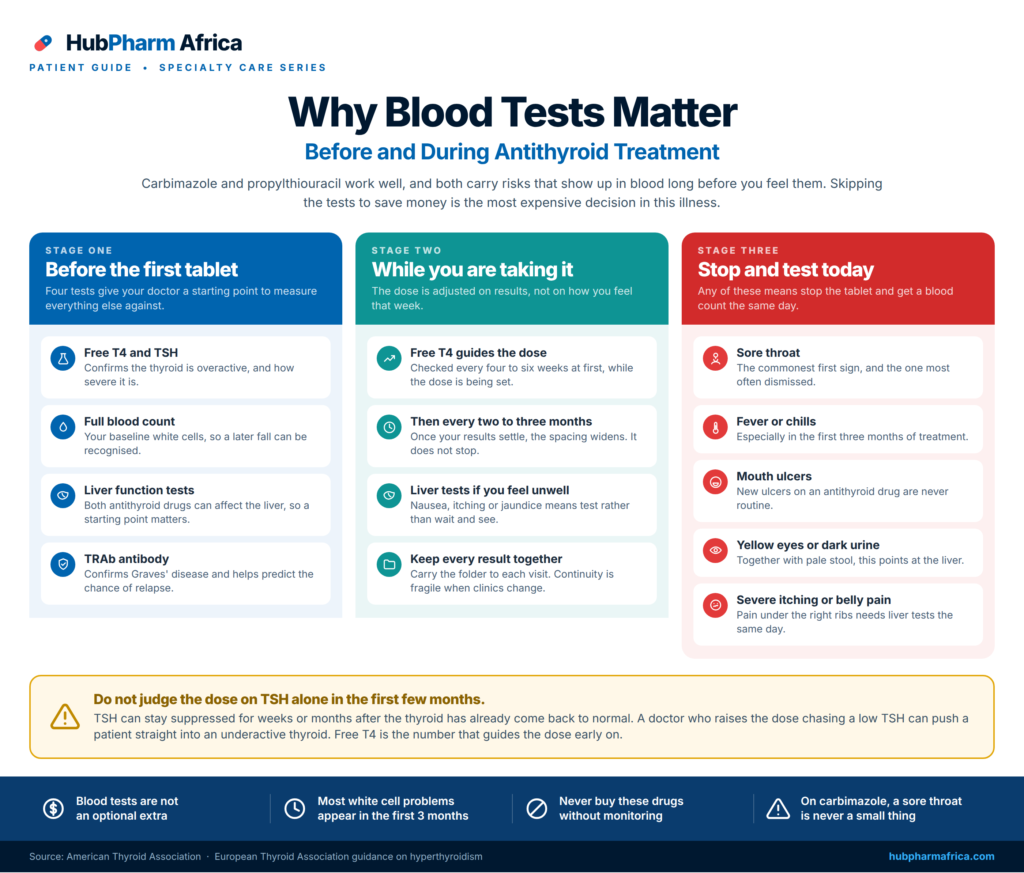
Antithyroid medicines can have important side effects.
Before starting antithyroid medicines, NICE recommends checking a full blood count and liver function tests.
Patients should also know that certain symptoms while taking antithyroid medicines require prompt medical attention.
For example, an unexplained fever or severe sore throat can be important because of the rare risk of a major reduction in white blood cells.
Do not simply ignore new symptoms while taking these medicines.
Contact your healthcare professional promptly for appropriate advice.
Beta-Blockers: Helping Control Symptoms
Some people with hyperthyroidism experience troublesome symptoms such as:
- Rapid heartbeat
- Trembling
- Anxiety-like sensations
A beta-blocker may sometimes be prescribed to help control these symptoms while the underlying thyroid problem is being treated.
Beta-blockers do not cure Graves’ disease or other causes of hyperthyroidism.
They are used for symptom control in appropriate patients.
Radioactive Iodine and Thyroid Surgery
Medication is not the only treatment option for hyperthyroidism.
Depending on the cause and the patient’s circumstances, doctors may consider:
Radioactive iodine
Radioactive iodine destroys some thyroid tissue, reducing thyroid hormone production.
It can be an effective definitive treatment for some people with Graves’ disease.
However, it is not appropriate in every situation, including certain pregnancy-related circumstances and some cases involving active thyroid eye disease.
Surgery
Thyroid surgery may be considered when:
- The thyroid is significantly enlarged
- There is concern about compression
- A suspicious nodule is present
- Other treatments are unsuitable
- A definitive treatment is preferred in certain circumstances
After some definitive treatments, a person may develop permanent hypothyroidism and require lifelong thyroid hormone replacement.
Thyroid Disease and Pregnancy
Pregnancy changes the body’s thyroid hormone requirements and can affect how thyroid disease is monitored.
Both untreated thyroid dysfunction and inappropriate treatment can create important health concerns for the pregnant person and baby.
Anyone who:
- Has known thyroid disease
- Is taking levothyroxine
- Takes antithyroid medicine
- Is planning pregnancy
- Becomes pregnant while receiving thyroid treatment
should tell their healthcare professional promptly.
Medication choices may need to change during pregnancy, and thyroid function may require closer monitoring.
Do not stop thyroid medication on your own because you are pregnant.
Thyroid Disease Can Run in Families
Autoimmune thyroid disease can have a familial component.
This is particularly relevant to Graves’ disease.
A 2025 Nigerian study at Aminu Kano Teaching Hospital examined first-degree relatives of people with Graves’ disease. The researchers found thyroid dysfunction and thyroid autoantibodies among relatives, supporting the importance of recognising familial risk.
This does not mean that every family member needs thyroid testing automatically.
However, a family history of autoimmune thyroid disease is useful information to share with a healthcare professional, especially when symptoms are present.
What About Iodine?
Iodine is essential for producing thyroid hormones.
Too little iodine can contribute to iodine-deficiency disorders, including goitre and hypothyroidism. At the same time, excessive iodine intake can also cause health problems, including iodine-induced hyperthyroidism or autoimmune thyroid disease in susceptible populations.
This is why taking high-dose iodine supplements without medical advice is not a good way to treat suspected thyroid disease.
The appropriate approach is to determine the actual thyroid problem first.
Thyroid Disease in Nigeria: What the Research Shows
Nigerian thyroid research has been conducted in different clinical settings.
A Lagos State University Teaching Hospital study of patients with thyroid disorders found that Graves’ disease/hyperthyroidism accounted for most of the thyroid disorders seen during the study period, while cardiovascular complications such as heart failure and atrial fibrillation contributed to significant morbidity. This was a hospital-based study, however, and should not be interpreted as national prevalence.
Another Nigerian study examining thyroid antibodies found evidence of autoimmune thyroid disease among patients attending an endocrine referral centre in Lagos.
More recently, a 2025 study from Kano examined first-degree relatives of people with Graves’ disease and found thyroid dysfunction and thyroid autoantibodies among some relatives.
Together, these studies show why thyroid disease deserves greater recognition while also demonstrating why we should be cautious about quoting a single national prevalence number.
When Should You See a Doctor?
Consider medical assessment if you have persistent symptoms such as:
- Unexplained changes in weight
- Persistent tiredness
- Unusual sensitivity to cold or heat
- Racing or irregular heartbeat
- Trembling
- Persistent constipation or frequent bowel movements
- Significant changes in menstrual cycles
- A swelling at the front of your neck
- Difficulty swallowing
- Difficulty breathing
- Persistent hoarseness
- Eye changes associated with suspected Graves’ disease
You should also mention a family history of thyroid or autoimmune disease.
When Is Thyroid Disease an Emergency?
Some complications of severe thyroid dysfunction can be serious.
Seek urgent medical attention for symptoms such as:
- Severe difficulty breathing
- Chest pain
- Fainting
- Severe or persistent rapid heartbeat
- Severe confusion
- Extreme weakness
- A rapidly enlarging neck swelling that interferes with breathing or swallowing
These symptoms have many possible causes, so they should be assessed urgently rather than assumed to be a thyroid problem.
Living With Thyroid Disease
A thyroid diagnosis does not mean that you cannot live a normal, active life.
The key is appropriate diagnosis, treatment and monitoring.
Take prescribed medicines consistently
Thyroid medicines work best when taken according to the prescribed schedule.
Keep your follow-up appointments
Your dose may need adjustment over time.
Do not adjust your dose yourself
Taking more or less thyroid medicine than prescribed can cause problems.
Tell healthcare professionals about other medicines
Some medicines and supplements can interfere with thyroid treatment or thyroid blood tests.
NICE specifically advises discussing medicine interactions with people taking levothyroxine.
Keep copies of your thyroid results
If you change hospitals, doctors or pharmacies, having previous TSH and thyroid hormone results can make your care easier.
Getting Your Prescribed Thyroid Medicine in Nigeria
Thyroid medicines are prescription medicines for many patients, and consistent access matters because treatment often needs to continue over the long term.
For someone taking levothyroxine, interruptions or inappropriate dose changes can affect thyroid control.
However, patients should not assume that every brand, strength or formulation is always available at every pharmacy.
Availability can change because of supply, importation, distribution and other factors.
If your prescribed medicine is difficult to obtain, speak with your pharmacist or treating clinician before making a substitution or changing your dose.
HubPharm Africa can support patients seeking prescribed medicines, subject to prescription requirements and actual availability at the time of enquiry.
Frequently Asked Questions About Thyroid Disease in Nigeria
What is the difference between Hashimoto’s and Graves’ disease?
Both are autoimmune thyroid diseases.
Hashimoto’s usually damages the thyroid and leads to hypothyroidism.
Graves’ disease stimulates the thyroid and usually causes hyperthyroidism.
Can Hashimoto’s cause weight gain?
Hypothyroidism caused by Hashimoto’s can contribute to weight gain, but weight changes have many possible causes. A thyroid blood test is needed to determine whether thyroid dysfunction is involved.
Can Graves’ disease cause weight loss?
Yes. Increased thyroid hormone levels can increase metabolism and contribute to unintentional weight loss.
However, unexplained weight loss should always be medically assessed.
Can thyroid disease cause a swollen neck?
Yes.
Thyroid enlargement, known as a goitre, can occur with several thyroid conditions.
A new or growing neck swelling should be evaluated by a healthcare professional.
Can thyroid disease affect the heart?
Yes.
Untreated hyperthyroidism can cause cardiovascular complications, including abnormal heart rhythms. A Nigerian hospital study identified heart failure and atrial fibrillation among important complications in patients with thyrotoxicosis.
Is levothyroxine the same as thyroid hormone?
Levothyroxine is a synthetic form of thyroxine (T4), one of the body’s natural thyroid hormones.
It is the standard first-line treatment for primary hypothyroidism.
Do people with Hashimoto’s need medicine for life?
Many people with established permanent hypothyroidism require long-term, often lifelong, thyroid hormone replacement.
The exact treatment plan depends on the cause and the person’s thyroid function.
Can Graves’ disease be cured?
Graves’ disease can be controlled, and some treatments can provide definitive control of the overactive thyroid.
Options can include antithyroid medicines, radioactive iodine or surgery, depending on the person’s circumstances.
Should everyone with thyroid symptoms take iodine?
No.
Iodine is essential, but taking excessive iodine without medical advice can also cause thyroid problems.
Can thyroid disease be diagnosed without a blood test?
Symptoms and examination can raise suspicion, but blood tests are usually needed to determine whether the thyroid is underactive or overactive.
The Bottom Line
Thyroid disease can affect almost every part of daily life because thyroid hormones influence many body systems.
The two autoimmune conditions discussed most often in this context are Hashimoto’s thyroiditis and Graves’ disease.
Hashimoto’s commonly leads to an underactive thyroid.
Graves’ disease commonly causes an overactive thyroid.
The symptoms can overlap with many other health conditions, so diagnosis should not be based on symptoms alone.
A simple blood test can often provide the first important clue. Depending on the results, additional thyroid hormone or antibody tests may help identify the underlying cause.
Treatment is available.
For hypothyroidism, levothyroxine is the standard first-line treatment. For hyperthyroidism, treatment may involve antithyroid medicines, radioactive iodine or surgery depending on the cause and individual circumstances.
For Nigerians living with thyroid disease, the most important steps are straightforward:
Get the right diagnosis. Take prescribed treatment correctly. Monitor your thyroid function. And seek specialist care when needed.
References
- NICE. Thyroid disease: assessment and management. Updated 2023; reviewed 2025.
- NICE/NCBI Bookshelf. Thyroid disease: assessment and management — diagnosis and treatment recommendations.
- Okosieme OE, et al. Prevalence of thyroid antibodies in Nigerian patients. QJM. PubMed.
- Pattern of thyroid disorders in the southwestern region of Nigeria. PubMed.
- Abdullahi UA, et al. Prevalence of Thyroid Dysfunction and Autoimmunity among First Degree Relatives of Patients with Graves’ Disease at Aminu Kano Teaching Hospital, Kano, Nigeria. Nigerian Medical Journal, 2025.
- WHO. Iodine deficiency — Nutrition Landscape Information System.