High Cholesterol: Symptoms & Treatment

What Is High Cholesterol?
High cholesterol is a condition in which there is too much cholesterol or other fats, called lipids, in the blood. It is also commonly called hyperlipidemia or dyslipidaemia.
Cholesterol itself is not harmful. Your body needs it to make hormones, build cells and perform other important functions. The problem occurs when certain types of cholesterol, particularly low-density lipoprotein (LDL) cholesterol, become too high.
LDL can contribute to the gradual build-up of fatty deposits inside the arteries. Over time, this process, known as atherosclerosis, can reduce blood flow and increase the risk of heart attack, stroke and other cardiovascular diseases. World Health Organization
The World Health Organization estimates that about 39% of adults worldwide have raised total cholesterol, making dyslipidaemia one of the major modifiable risk factors for cardiovascular disease. World Health Organization
Understanding LDL, HDL and Triglycerides

A cholesterol test usually measures several different substances.
LDL cholesterol
LDL is often called “bad cholesterol.”
When LDL levels are high, cholesterol can accumulate in the walls of blood vessels. This contributes to plaque formation and increases cardiovascular risk. CDC
HDL cholesterol
HDL is commonly called “good cholesterol.”
It helps transport cholesterol back toward the liver, where it can be processed and removed from the body. However, cholesterol management should not focus on HDL alone. Your overall cardiovascular risk and LDL level are also important. CDC
Triglycerides
Triglycerides are another type of fat in the blood. Your body uses them for energy, but elevated triglycerides can contribute to cardiovascular risk, particularly when combined with high LDL or low HDL. CDC
Total cholesterol
Total cholesterol is a combined measure that reflects different types of cholesterol in your blood.
This is why simply asking, “Is my cholesterol high?” is not enough. A healthcare professional needs to look at the complete lipid profile alongside other risk factors.
What Causes High Cholesterol?
High cholesterol can have several causes.
Some are related to lifestyle, while others are linked to genetics or other medical conditions.
Diet
Regularly eating foods high in saturated or trans fats can contribute to unhealthy cholesterol levels.
Examples include some fatty meats, processed foods and foods made with certain tropical or industrial fats.
On the other hand, diets containing more vegetables, fruits, whole grains, beans, nuts and sources of unsaturated fats can support healthier lipid levels. CDC
Physical inactivity
Low levels of physical activity can contribute to an unhealthy cholesterol pattern and increase cardiovascular risk.
Regular physical activity is therefore an important part of cardiovascular health.
Excess body weight
Being overweight or having obesity can be associated with higher LDL and triglycerides and other cardiovascular risk factors. CDC
Genetics
Your genes can strongly influence your cholesterol levels.
Some people inherit familial hypercholesterolaemia (FH), a genetic condition that causes very high LDL cholesterol from an early age.
WHO estimates that familial hypercholesterolaemia affects approximately 1 in 250 to 1 in 300 people worldwide, although many people remain undiagnosed. World Health Organization
Other health conditions
High cholesterol can also occur alongside conditions such as:
- Diabetes
- Underactive thyroid disease
- Chronic kidney disease
- Liver disease
- Obesity
Certain medicines can also affect lipid levels. For this reason, finding the underlying cause is an important part of assessment. World Health Organization
Does High Cholesterol Have Symptoms?
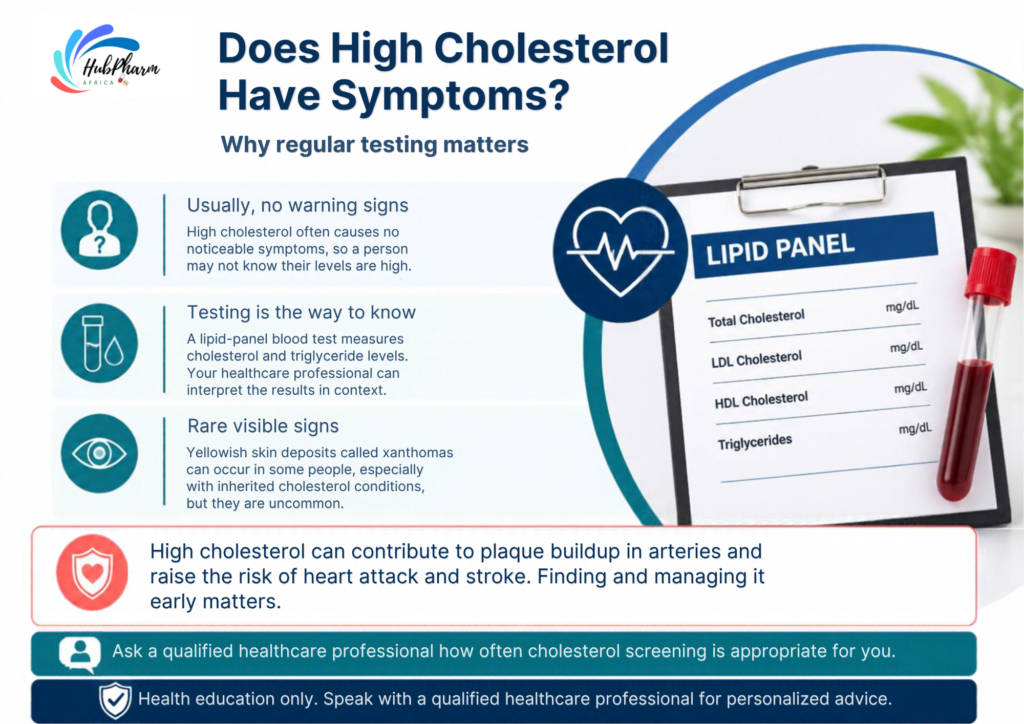
Usually, no.
This is one of the most important things to understand about high cholesterol.
Most people with high cholesterol do not experience pain, dizziness or any other obvious warning sign. A person can therefore feel completely healthy while LDL cholesterol is contributing to plaque formation in the arteries.
The condition is usually discovered through a blood test called a lipid profile or lipid panel. World Health Organization
In some people with very high cholesterol, particularly familial hypercholesterolaemia, healthcare professionals may notice physical signs such as fatty deposits around the eyelids or tendons. However, these signs are uncommon.
Do not wait for symptoms before checking your cholesterol.
How Is High Cholesterol Diagnosed?
A simple blood test can measure your lipid levels.
A typical lipid profile includes:
- Total cholesterol
- LDL cholesterol
- HDL cholesterol
- Triglycerides
Your healthcare professional may interpret these results together with factors such as your age, blood pressure, smoking status, diabetes status, family history and previous cardiovascular disease. CDC
There is no single cholesterol number that tells the complete story for every person.
For example, someone who already has cardiovascular disease may require a different treatment approach from someone with no previous cardiovascular disease.
That is why cholesterol results should be interpreted in the context of your overall cardiovascular risk.
What Happens If High Cholesterol Is Not Treated?
Persistently high LDL cholesterol can contribute to the development of plaque inside the arteries.
As plaque builds up, arteries can become narrower. If a plaque ruptures and a blood clot forms, blood flow can become severely restricted.
This can contribute to:
- Coronary heart disease
- Heart attack
- Ischaemic stroke
- Peripheral arterial disease
WHO estimates that elevated LDL cholesterol contributed to approximately 3.6 million deaths globally in 2023, mainly through ischaemic heart disease and ischaemic stroke. World Health Organization
The important point is that cardiovascular damage can develop silently for years.
High Cholesterol Treatment
Treatment depends on your cholesterol results and your overall cardiovascular risk.
For some people, lifestyle changes may be enough. Others may need cholesterol-lowering medication as well.
Treatment usually focuses on reducing cardiovascular risk rather than simply trying to produce a “normal” cholesterol number.
1. Healthy Eating
Diet is an important part of managing cholesterol.
Try to build meals around:
- Vegetables
- Fruits
- Beans and other legumes
- Whole grains
- Nuts and seeds
- Fish and other nutritious protein sources
- Sources of unsaturated fats
At the same time, reducing foods high in saturated and trans fats can help improve cardiovascular health. CDC
A sustainable eating pattern is generally more useful than following a very restrictive diet for a short period.
2. Regular Physical Activity
Regular physical activity supports cardiovascular health and can contribute to healthier cholesterol and triglyceride levels.
The right activity level depends on your age, health and fitness level.
If you have an existing medical condition or have been told that you have cardiovascular disease, speak with a healthcare professional about an appropriate activity plan.
3. Avoid Tobacco
Smoking damages blood vessels and increases cardiovascular risk.
If you smoke, stopping can improve your overall heart and blood-vessel health.
Cholesterol management works best when it is combined with management of other cardiovascular risk factors. CDC
4. Cholesterol-Lowering Medicines
Lifestyle changes are important, but they are not always enough.
Healthcare professionals may recommend medication when cholesterol levels or overall cardiovascular risk make treatment appropriate.
Statins
Statins are the main group of cholesterol-lowering medicines used to reduce LDL cholesterol and cardiovascular risk.
Examples include:
- Atorvastatin
- Rosuvastatin
- Simvastatin
WHO identifies statins as important medicines for preventing cardiovascular events and includes them among its evidence-based approaches to cardiovascular risk reduction. World Health Organization
Ezetimibe
Ezetimibe is another cholesterol-lowering medicine. It works differently from statins by reducing the amount of cholesterol absorbed from food in the intestine.
It may be considered in certain patients when additional LDL reduction is needed or when statins cannot be used adequately.
Fenofibrate
Fenofibrate belongs to a group of medicines called fibrates.
It primarily affects triglyceride levels and may be considered in selected patients with significant lipid abnormalities.
The choice of treatment depends on the individual’s lipid profile and cardiovascular risk.
Omega-3 products
Omega-3 fatty acids can affect triglyceride levels, although different omega-3 products are not interchangeable and should not automatically be considered equivalent to prescription lipid-lowering medicines.
Your healthcare professional can determine whether they have a role in your particular situation.
High Cholesterol Medicines Listed by HubPharm
HubPharm’s cardiovascular-care portfolio includes medicines commonly used in the management of abnormal cholesterol levels.
Examples include:
- Atorvastatin
- Rosuvastatin
- Simvastatin
- Ezetimibe
- Fenofibrate
- Omega-3 products
These medicines have different roles and are not suitable for everyone.
The appropriate treatment depends on your cholesterol results, cardiovascular risk, other medical conditions and the assessment of your healthcare professional.
Do not start, stop or change a cholesterol medicine without professional advice.
Can You Lower Cholesterol Without Medicine?
Sometimes.
For people with mildly abnormal cholesterol and relatively low cardiovascular risk, lifestyle changes may make a meaningful difference.
These include:
- Eating more fibre-rich foods
- Reducing saturated and trans fats
- Staying physically active
- Maintaining a healthy weight
- Avoiding tobacco
- Limiting excessive alcohol intake
- Managing conditions such as diabetes and high blood pressure
However, lifestyle changes do not replace medication for everyone.
People with established cardiovascular disease, familial hypercholesterolaemia or substantially elevated cardiovascular risk may require medication alongside lifestyle measures. World Health Organization
Familial Hypercholesterolaemia: When High Cholesterol Runs in Families
Familial hypercholesterolaemia deserves special attention.
It is an inherited condition that causes very high LDL cholesterol from an early age.
A person may have FH even if they eat a healthy diet and exercise regularly.
Possible clues include:
- Very high LDL cholesterol
- A family history of high cholesterol
- Relatives who developed heart disease at an unusually young age
- Certain cholesterol-related physical signs
Because FH is inherited, identifying one affected person can also lead to assessment of close relatives.
Early recognition matters because prolonged exposure to very high LDL cholesterol can substantially increase cardiovascular risk. World Health Organization
High Cholesterol and Other Health Conditions
Cholesterol rarely exists in isolation.
A person with high cholesterol may also have:
- High blood pressure
- Diabetes
- Obesity
- Kidney disease
- Thyroid disease
- A history of smoking
Each of these factors can influence cardiovascular risk.
For that reason, managing cholesterol should form part of a broader heart-health plan.
This approach is consistent with modern cardiovascular guidelines, which recommend assessing lipid levels alongside overall cardiovascular risk rather than looking at cholesterol in isolation. NICE
When Should You Check Your Cholesterol?
You should discuss cholesterol testing with a healthcare professional if:
- You have never had your cholesterol checked.
- You have high blood pressure or diabetes.
- You have a family history of high cholesterol.
- A close relative developed cardiovascular disease at a young age.
- You have previously been told that your cholesterol is high.
- You have established cardiovascular disease.
- You have another condition that may affect cholesterol.
Because high cholesterol usually has no symptoms, testing is often the only way to identify it. World Health Organization
HubPharm: Supporting Better Cardiovascular Care
Managing a chronic condition is easier when patients understand their treatment and have consistent access to appropriate healthcare support.
HubPharm’s cardiovascular-care service is designed around patients managing long-term conditions such as high blood pressure and abnormal cholesterol levels.
Our pharmacy team can help patients understand their prescribed treatment, identify questions to discuss with their healthcare professional and support better long-term medication management.
For people managing several cardiovascular conditions at the same time, coordinated pharmacy support can also make it easier to keep track of their overall treatment plan.
If you have been diagnosed with high cholesterol, speak with a qualified healthcare professional about your results and the treatment that is appropriate for you.
Frequently Asked Questions About High Cholesterol
Is high cholesterol dangerous?
High cholesterol can increase the risk of heart disease, heart attack and stroke, particularly when LDL cholesterol remains elevated over time.
Can high cholesterol cause symptoms?
Usually, no. Most people with high cholesterol feel completely well, which is why blood testing is important. World Health Organization
What is the difference between cholesterol and triglycerides?
Cholesterol and triglycerides are different types of lipids found in the blood. Both can contribute to cardiovascular risk when their levels are abnormal.
Is all cholesterol bad?
No. Cholesterol is essential for normal body functions. The concern is an unhealthy balance of lipids, particularly elevated LDL cholesterol. CDC
Can exercise lower cholesterol?
Regular physical activity can support healthier lipid levels and reduce overall cardiovascular risk. It works best as part of a broader healthy lifestyle.
Can young people have high cholesterol?
Yes. High cholesterol can occur at any age. Genetics, certain health conditions and lifestyle factors can all contribute.
Can high cholesterol run in families?
Yes. Familial hypercholesterolaemia is an inherited condition that causes very high LDL cholesterol and can significantly increase cardiovascular risk. World Health Organization
Do I need medicine if my cholesterol is high?
Not necessarily. Treatment depends on your cholesterol levels, overall cardiovascular risk and other health factors. Some people need lifestyle changes, while others need medication as well. NICE
The Bottom Line
High cholesterol is often called a silent condition because most people do not experience symptoms.
However, persistently elevated LDL cholesterol can contribute to plaque formation inside the arteries and increase the risk of heart attack and stroke.
The good news is that cholesterol is one of the important cardiovascular risk factors that can often be improved through a combination of healthy lifestyle choices and, when appropriate, cholesterol-lowering treatment.
Don’t wait for symptoms to check your cholesterol. A simple blood test can help identify a problem before cardiovascular disease develops.
Medical Disclaimer
This article is for general health education and does not replace an individual consultation with a doctor, pharmacist or other qualified healthcare professional. Cholesterol treatment should be based on your individual test results and cardiovascular risk.
References
- World Health Organization. Dyslipidaemia. September 15, 2026. World Health Organization
- CDC. LDL and HDL Cholesterol and Triglycerides. CDC
- CDC. About Cholesterol. CDC
- CDC. Testing for Cholesterol. CDC
- CDC. Preventing High Cholesterol. Updated September 8, 2026. CDC
- NICE. Cardiovascular disease: risk assessment and reduction, including lipid modification (NG238).