Lung Cancer: Symptoms, Diagnosis and Treatment in Nigeria
Lung cancer is a disease that develops when abnormal cells in the lungs grow in an uncontrolled way. These cells can form a tumour, affect normal lung function and, in some cases, spread to other parts of the body.
Although smoking is a major risk factor, lung cancer can also affect people who have never smoked. Exposure to secondhand smoke, certain workplace substances and other environmental factors may increase the risk.
Knowing the possible symptoms and understanding how lung cancer is diagnosed can help people seek medical attention promptly. Treatment depends on the type of lung cancer, how far it has spread and the person’s overall health.
This article explains the types of lung cancer, common symptoms, risk factors, diagnosis, treatment options and medicines used in its management.
What Is Lung Cancer?
Lung cancer begins when cells in the lungs change and start growing abnormally. Over time, these cells may form a tumour and interfere with the normal function of the lungs.
The lungs help the body take in oxygen and remove carbon dioxide. When a tumour grows in or around lung tissue, it may affect breathing or cause other symptoms.
Lung cancer can also spread beyond the lungs to nearby lymph nodes or other organs. When this happens, the cancer is described as having metastasised.
Types of Lung Cancer
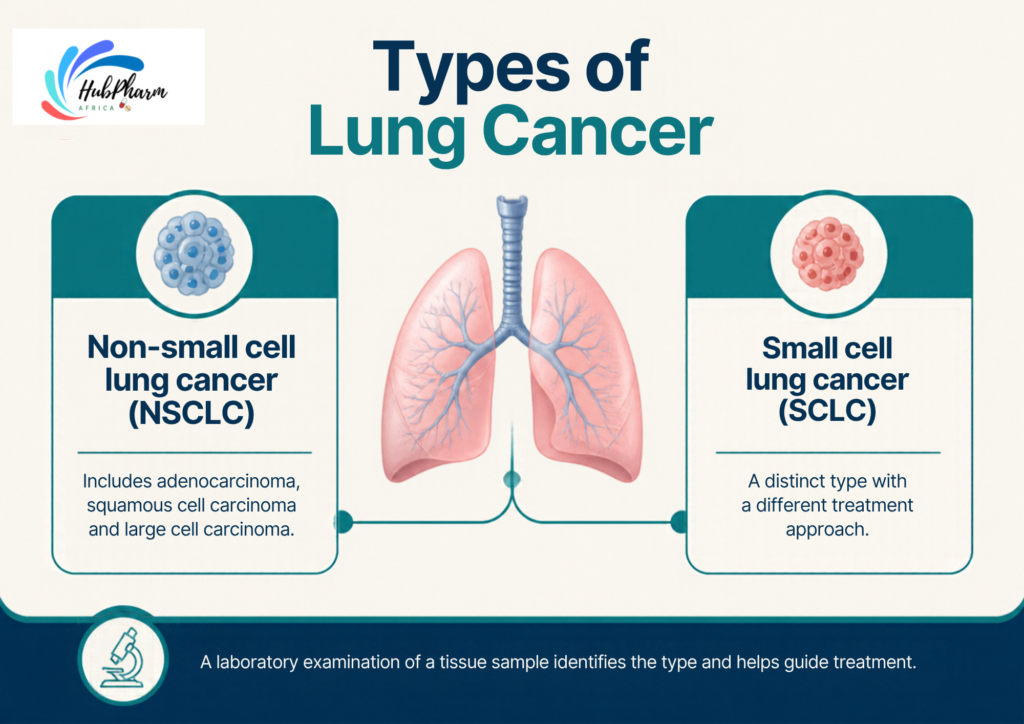
Lung cancer is generally divided into two main types. The distinction is important because each type may respond differently to treatment.
1. Non-Small Cell Lung Cancer (NSCLC)
Non-small cell lung cancer is the most common type of lung cancer. It includes several subtypes, such as:
- Adenocarcinoma: Often develops in cells that produce mucus and may occur in people who have never smoked.
- Squamous cell carcinoma: Usually begins in cells lining the larger airways.
- Large cell carcinoma: A less common type that can develop in different parts of the lung.
The treatment for NSCLC depends on its subtype, stage and whether certain changes in the cancer cells can be identified through testing.
2. Small Cell Lung Cancer (SCLC)
Small cell lung cancer is less common but often grows and spreads more quickly than NSCLC.
It is strongly associated with smoking. Treatment may involve chemotherapy, radiotherapy and, in selected situations, immunotherapy.
Symptoms of Lung Cancer
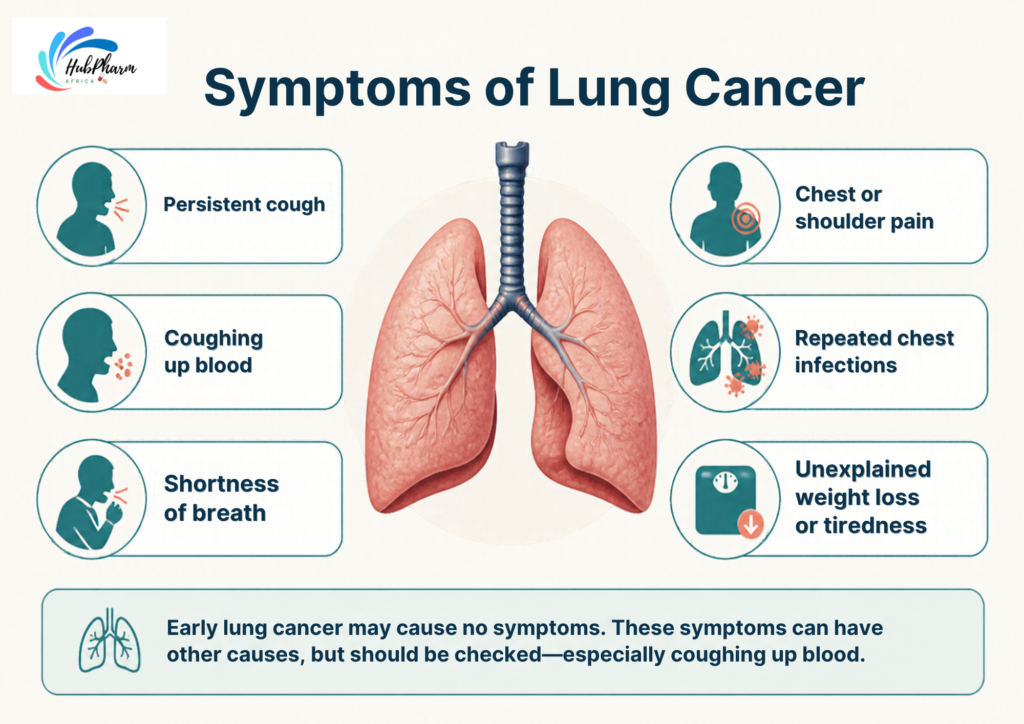
Lung cancer may not cause noticeable symptoms during its early stages. Some people only develop symptoms when the cancer has grown or spread.
Common symptoms include:
- A cough that does not go away or becomes worse
- Coughing up blood
- Chest pain or discomfort
- Shortness of breath
- Wheezing
- Repeated chest infections
- Hoarse voice
- Unexplained weight loss
- Reduced appetite
- Persistent tiredness or weakness
Some symptoms may occur when lung cancer spreads to other parts of the body. For example, a person may develop bone pain, persistent headaches or other changes depending on the area affected.
These symptoms can also occur with infections and other non-cancerous conditions. However, it is important to seek medical advice when symptoms persist, worsen or appear unusual.
When Should You Seek Medical Help?
Arrange a medical assessment if you have a persistent cough, repeated chest infections, unexplained weight loss or other symptoms that concern you.
Coughing up blood requires urgent medical assessment. Severe difficulty breathing or severe chest pain should be treated as an emergency. Seek help at the nearest emergency department.
Risk Factors for Lung Cancer
A risk factor is something that increases the chance of developing a disease. Having one or more risk factors does not mean a person will definitely develop lung cancer.
Smoking and Secondhand Smoke
Smoking is the most important risk factor for lung cancer. Exposure to other people’s tobacco smoke can also increase risk.
Exposure to Certain Substances
Some substances in the environment or workplace may increase lung cancer risk, including:
- Asbestos
- Radon gas
- Silica dust
- Diesel exhaust and certain other workplace pollutants
The risk may depend on the substance, the level of exposure and how long the exposure continues.
Air Pollution
Long-term exposure to outdoor air pollution may contribute to lung cancer risk.
Family History
A family history of lung cancer may be relevant when assessing a person’s overall risk. However, family history alone does not mean someone will develop the disease.
Lung Cancer in People Who Have Never Smoked
Lung cancer can occur in people who have never smoked. Some cases are linked to environmental exposures, while others may involve changes in the cancer cells that are not directly related to smoking.
How Is Lung Cancer Diagnosed?
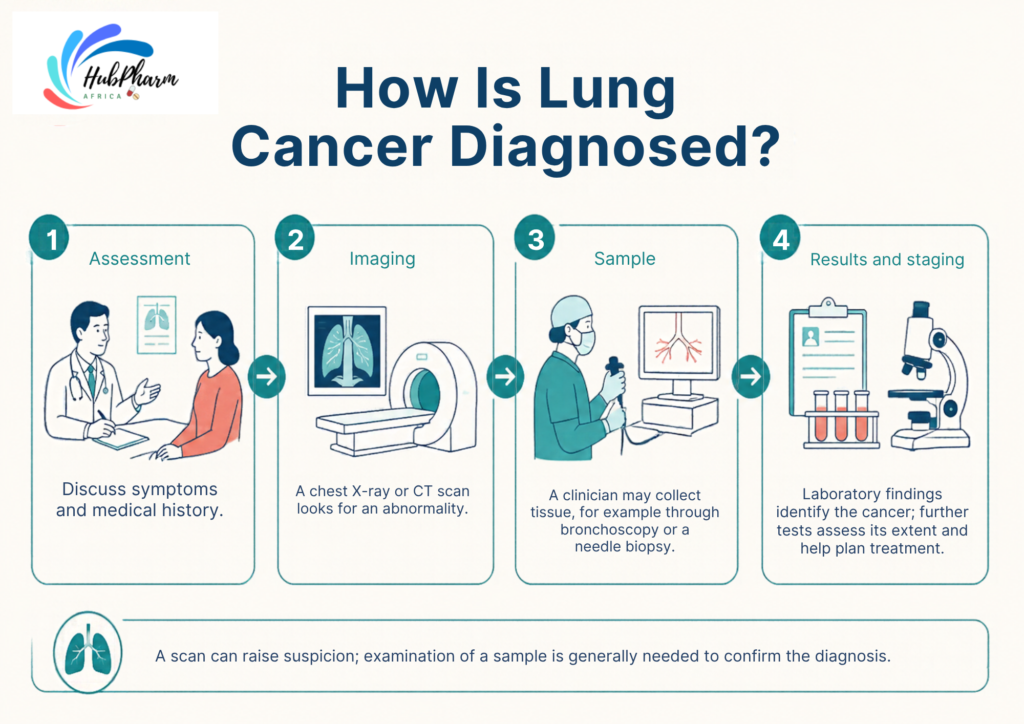
If a healthcare professional suspects lung cancer, they may recommend tests to find out whether cancer is present, identify its type and determine whether it has spread.
1. Medical History and Physical Examination
The healthcare professional may ask about symptoms, smoking history, family history, previous illnesses and possible exposure to substances associated with lung cancer.
They may also perform a physical examination.
2. Imaging Tests
Imaging tests help healthcare professionals examine the lungs and surrounding structures.
These may include:
- Chest X-ray: May identify an abnormal area in the lung.
- CT scan: Provides more detailed images of the lungs and chest.
- PET-CT scan: May help assess whether cancer has spread to other parts of the body.
- MRI: May be used in selected cases, including when checking for spread to the brain.
Imaging can identify suspicious areas, but it does not always confirm that a person has cancer.
3. Biopsy
A biopsy involves collecting a sample of tissue or cells for examination.
The sample may be obtained through bronchoscopy, a needle biopsy or another procedure chosen by the healthcare team.
A pathologist examines the sample to determine whether cancer cells are present and, when possible, identify the type of lung cancer.
4. Staging
Staging describes how far the cancer has grown or spread.
It helps the oncology team determine which treatments may be suitable. Lung cancer may be localised to the lung, involve nearby lymph nodes or have spread to distant parts of the body.
5. Biomarker and Molecular Testing
For some lung cancers, especially NSCLC, tests may be performed to identify specific changes in the cancer cells.
These results can help determine whether targeted medicines or certain immunotherapies may be appropriate.
Not every person needs the same tests. The oncology team decides which investigations are relevant to the type and stage of cancer.
Treatment Options for Lung Cancer
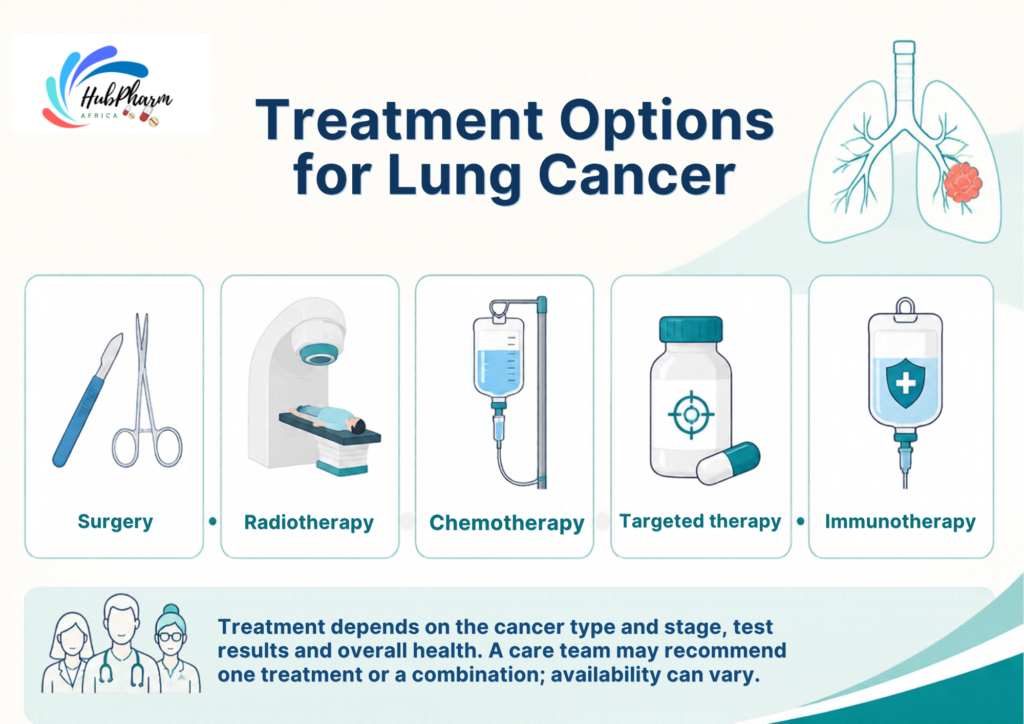
Lung cancer treatment is personalised. The plan depends on the cancer type, stage, molecular test results, overall health and the person’s preferences.
Treatment may include one or more of the following approaches.
1. Surgery
Surgery may be considered when the cancer is limited to an area that can be removed safely.
The operation may involve removing part of the lung or, in some cases, a larger portion. The surgeon and oncology team assess whether surgery is suitable.
2. Chemotherapy
Chemotherapy uses medicines to destroy cancer cells or slow their growth.
It may be used before or after surgery, together with radiotherapy, or to manage cancer that has spread.
3. Radiotherapy
Radiotherapy uses carefully planned radiation to damage cancer cells.
It may be used to treat certain localised cancers, alongside other treatments, or to help relieve symptoms in advanced disease.
4. Targeted Therapy
Targeted therapy uses medicines that act on specific changes or pathways involved in cancer cell growth.
These medicines are suitable only for certain cancers. Molecular or biomarker testing may be needed to determine whether a person is likely to benefit.
5. Immunotherapy
Immunotherapy helps the body’s immune system recognise and attack cancer cells.
It may be used alone or in combination with other treatments in selected cases. The decision depends on the cancer type, stage and relevant test results.
6. Supportive and Palliative Care
Supportive care helps manage symptoms and treatment-related side effects.
Palliative care focuses on improving comfort and quality of life. It can be provided alongside cancer treatment and does not necessarily mean that treatment has stopped.
Medicines Used in Lung Cancer Treatment
Several medicines may be used to treat lung cancer. The choice depends on the cancer subtype, stage, molecular findings and treatment plan.
The following medicines are examples listed in HubPharm Africa’s lung cancer medication category. They are not all suitable for every person with lung cancer.
Chemotherapy Medicines
Cisplatin and carboplatin are chemotherapy medicines used in different lung cancer treatment plans. They may be combined with other medicines depending on the type and stage of cancer.
Pemetrexed is a chemotherapy medicine used in selected cases of non-small cell lung cancer.
Targeted Therapy Medicines
Erlotinib and gefitinib are targeted medicines that may be used for certain lung cancers with specific EGFR gene changes.
Testing is important because these medicines are not suitable for every lung cancer.
Immunotherapy Medicines
Nivolumab and atezolizumab are immunotherapy medicines used in selected lung cancer treatment settings.
Their use depends on factors such as the cancer type, stage, previous treatment and relevant test results.
Why Does the Treatment Differ From Person to Person?
Two people with lung cancer may receive different medicines even if their diagnosis sounds similar.
Their cancer may differ in:
- Type and stage
- Molecular or biomarker results
- Previous treatment
- General health and other medical conditions
- Treatment goals and preferences
Only the oncology team can determine which treatment plan is appropriate.
Do not start, stop or change cancer medicines without guidance from the treating specialist. These medicines require specialist supervision and monitoring.
Can Lung Cancer Be Prevented?
Not all cases of lung cancer can be prevented. However, some actions may reduce risk:
- Avoid smoking and tobacco products.
- Avoid exposure to secondhand smoke where possible.
- Follow workplace safety measures when exposed to hazardous substances.
- Discuss possible environmental or occupational exposure with a healthcare professional.
- Seek medical assessment for persistent or concerning respiratory symptoms.
Screening with low-dose CT may be recommended for some people at increased risk, depending on their age, smoking history and local clinical guidance. It is not a general screening test for everyone.
If you have symptoms, seek medical assessment rather than relying on a screening test.
Getting Help in Nigeria
A lung cancer diagnosis can bring many questions about treatment, medicines, side effects and ongoing care.
In Nigeria, people with suspected or confirmed lung cancer should seek assessment and treatment from qualified healthcare professionals, including a specialist oncology team.
HubPharm Africa can support medicine-related enquiries and provide pharmacist support for prescription medicines. Patients or caregivers can contact HubPharm to ask about a prescribed medicine, understand how to discuss medicine-related concerns with their healthcare team, or make an enquiry about medicine access.
HubPharm does not diagnose lung cancer or replace the patient’s oncologist. Medicine availability and sourcing are subject to verification, and prescription medicines should only be used under appropriate professional supervision.
Speak with a HubPharm pharmacist:
Contact HubPharm on WhatsApp
Frequently Asked Questions
What is the most common symptom of lung cancer?
A persistent or worsening cough is one of the common symptoms. Other symptoms include coughing up blood, chest pain, breathlessness, unexplained weight loss and repeated chest infections.
Can a person who has never smoked develop lung cancer?
Yes. Lung cancer can affect people who have never smoked. Risk factors may include secondhand smoke, environmental or workplace exposures, family history and changes in cancer cells.
Is lung cancer treatable?
Lung cancer can be treated. The available options and expected outcomes depend on the type, stage, molecular features and overall health of the person. Some early-stage cancers may be treated with the aim of cure, while other treatment plans focus on controlling the disease and improving quality of life.
What medicines are used for lung cancer?
Medicines may include chemotherapy, targeted therapy and immunotherapy. Examples include cisplatin, carboplatin, pemetrexed, erlotinib, gefitinib, nivolumab and atezolizumab. The appropriate medicine depends on the individual diagnosis and test results.
Does everyone with lung cancer need chemotherapy?
No. Some people may be treated with surgery, radiotherapy, targeted therapy, immunotherapy or a combination of approaches. Treatment is selected according to the cancer and the patient’s circumstances.
Where can I get help with lung cancer medicines in Nigeria?
You can contact HubPharm Africa for pharmacist support and prescription medicine enquiries. Your oncologist should guide treatment decisions and prescribe the medicines required.
Conclusion
Lung cancer is a serious disease, but its treatment depends on several factors, including the type of cancer, stage and specific features of the cancer cells.
Persistent cough, coughing up blood, breathlessness, chest pain and unexplained weight loss should not be ignored. Seeking medical assessment can help identify the cause and determine whether further tests are needed.
For people already receiving treatment, working closely with an oncology team and seeking reliable pharmacist support can help with medicine-related questions and ongoing care.
Medical Disclaimer
This article is for general educational purposes only. It does not replace medical advice, diagnosis or treatment from a qualified healthcare professional. If you have symptoms or have been diagnosed with lung cancer, consult your healthcare provider or oncology team for personalised guidance. Do not start, stop or change any cancer medicine without professional advice.
References
- National Cancer Institute (NCI) — Lung Cancer: Patient Information
- National Cancer Institute (NCI) — Non-Small Cell Lung Cancer Treatment
- Centers for Disease Control and Prevention (CDC) — Lung Cancer Symptoms
- Centers for Disease Control and Prevention (CDC) — Lung Cancer Treatment
- National Health Service (NHS) — Lung Cancer Symptoms
- American Cancer Society — Lung Cancer Signs and Symptoms