Ovarian Cancer in Nigeria: Symptoms, Diagnosis and Treatment
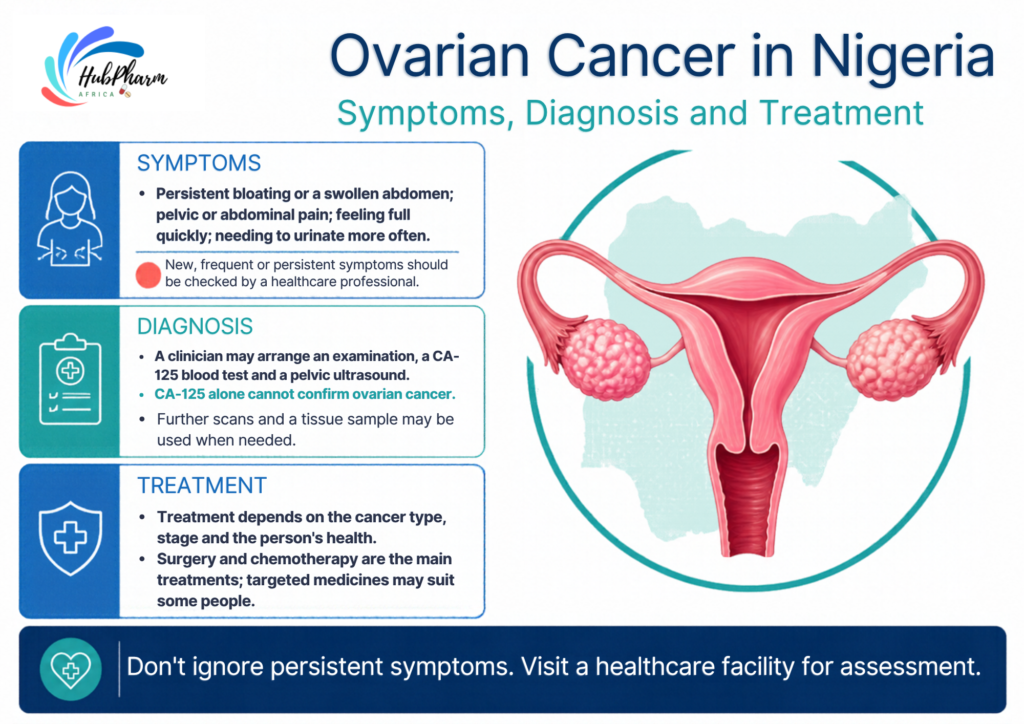
Ovarian cancer develops when abnormal cells grow in or around one or both ovaries. The ovaries are part of the female reproductive system. They produce eggs and hormones, including oestrogen and progesterone.
Ovarian cancer can be difficult to detect early because its symptoms may resemble common digestive or urinary problems. For example, persistent bloating, abdominal discomfort and feeling full quickly can have many causes. However, when these symptoms are new, frequent or getting worse, they deserve medical attention.
In Nigeria, awareness of ovarian cancer symptoms and access to specialist assessment are important parts of improving care. Although ovarian cancer is a serious disease, treatment options are available. These may include surgery, chemotherapy and targeted medicines, depending on the type and stage of the cancer.
This guide explains ovarian cancer symptoms, possible risk factors, diagnosis, treatment options and the medicines specialists may use. It also explains how patients and families can approach treatment discussions and obtain support with prescribed medicines.
What Is Ovarian Cancer?
Ovarian cancer begins when cells in or around the ovaries grow abnormally and form a tumour. The exact behaviour of the cancer depends on the type of cell involved.
The ovaries are located on either side of the uterus, within the pelvis. They release eggs and produce hormones that help regulate the menstrual cycle and other body functions.
There are several types of ovarian cancer.
Epithelial ovarian cancer
Epithelial ovarian cancer begins in the cells covering the outer surface of the ovary or in related tissues. It is the most common type of ovarian cancer.
Some cancers that begin in the fallopian tubes or the lining of the abdomen, called the peritoneum, are closely related to epithelial ovarian cancer. They may be investigated and treated in similar ways.
Germ cell tumours
Germ cell tumours develop from the cells involved in egg production. These tumours are less common than epithelial ovarian cancer and occur more frequently in younger people.
Their treatment depends on the specific tumour type, its stage and other clinical factors.
Stromal tumours
Stromal tumours develop from the supporting tissues of the ovary, including cells involved in hormone production. Some may produce hormones that cause noticeable symptoms.
Because ovarian cancer includes different diseases, a specialist needs to identify the exact type before recommending treatment.
What Are the Symptoms of Ovarian Cancer?
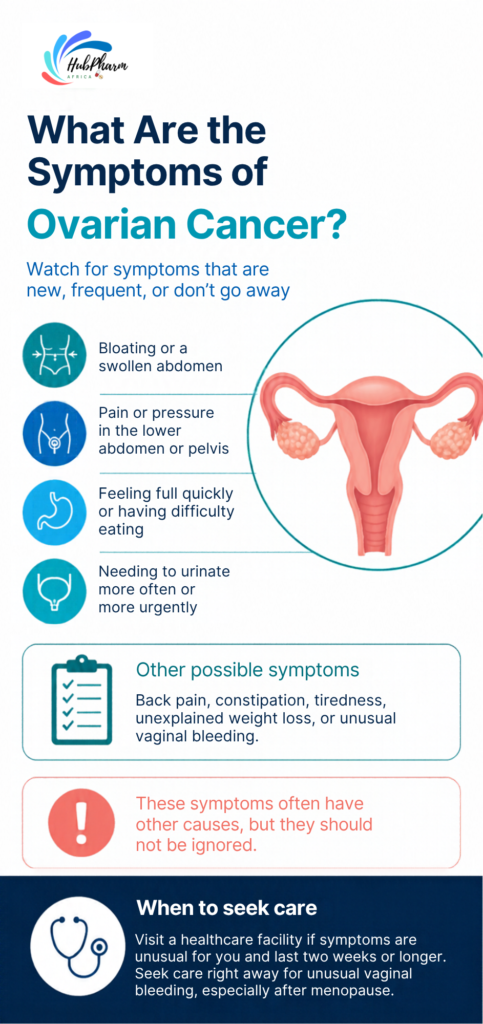
Ovarian cancer may not cause obvious symptoms in its early stages. When symptoms develop, they can be mistaken for digestive problems, urinary infections or other conditions.
Common symptoms include:
- Persistent abdominal bloating or swelling.
- Pain or pressure in the abdomen or pelvis.
- Feeling full quickly when eating.
- Reduced appetite.
- Needing to urinate more frequently or urgently.
- Constipation or other changes in bowel habits.
- Persistent indigestion.
- Lower back pain.
- Unexplained tiredness.
- Unintentional weight loss.
Some people may also experience menstrual changes or unusual vaginal bleeding. Bleeding after menopause should always be assessed by a healthcare professional.
Why persistent bloating matters
Bloating is common and does not automatically mean someone has ovarian cancer. Food intolerance, constipation, menstrual changes and several other conditions can cause similar symptoms.
However, ovarian cancer should be considered when bloating is new, persistent, occurs frequently or is accompanied by pelvic pain, appetite changes or urinary symptoms.
Keep track of symptoms that continue or become more frequent. This information can help a healthcare professional decide what investigations are needed.
When should you seek medical attention?
Arrange a medical assessment if you experience persistent or worsening bloating, pelvic pain, feeling full unusually quickly or changes in urination without a clear explanation.
Seek urgent care for severe abdominal pain, repeated vomiting, fainting or sudden deterioration. These symptoms may have several causes and require prompt assessment.
Do not wait until symptoms become severe before seeking help. Early assessment can help identify the cause and support timely treatment.
What Causes Ovarian Cancer?
There is no single cause of ovarian cancer. It develops through changes in cells that allow them to grow abnormally.
Researchers have identified several factors associated with increased risk. However, having a risk factor does not mean someone will develop cancer. Equally, people without known risk factors can develop ovarian cancer.
Age
The risk of many types of ovarian cancer increases with age, particularly after menopause. Nevertheless, certain ovarian tumours occur in younger people.
Family history
A family history of ovarian cancer may increase risk, especially when close relatives have been affected. A family history of breast cancer, particularly at a young age, can also be relevant.
Tell your healthcare professional if several relatives have had breast, ovarian, pancreatic or prostate cancer. This information may help determine whether genetic counselling is appropriate.
Inherited genetic changes
Inherited changes in genes such as BRCA1 and BRCA2 can increase the risk of ovarian and certain other cancers. Lynch syndrome is another inherited condition associated with increased ovarian cancer risk.
Genetic counselling and testing may be recommended for some people based on their diagnosis and family history. The results can help guide treatment and, in some circumstances, prevention decisions for relatives.
Endometriosis
Endometriosis is associated with an increased risk of certain ovarian cancer types. Most people with endometriosis do not develop ovarian cancer, so the condition alone does not mean cancer is present.
Reproductive and hormonal factors
Some reproductive and hormonal factors are associated with ovarian cancer risk. Their effects vary, and individual risk depends on several factors rather than one characteristic alone.
A healthcare professional can explain which risk factors are relevant to your circumstances.
Can Ovarian Cancer Be Prevented?
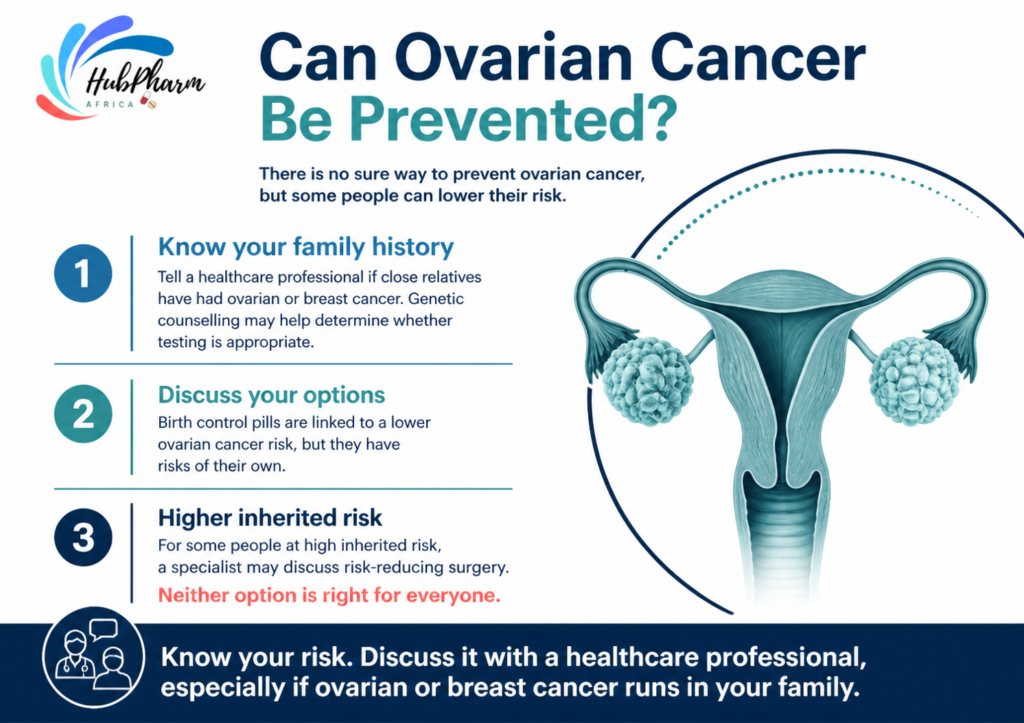
There is no guaranteed way to prevent every case of ovarian cancer. However, people with a strong family history or an inherited genetic risk may benefit from specialist advice about risk reduction.
For people at increased genetic risk, a specialist may discuss closer assessment, genetic counselling or risk-reducing surgery in appropriate circumstances. These decisions require careful consideration of benefits, risks, fertility and the person’s individual situation.
Is there a routine screening test?
There is currently no routine screening test proven to reduce ovarian cancer deaths in the general population at average risk.
A CA-125 blood test and pelvic ultrasound may be used when symptoms or other clinical findings need investigation. However, these tests are not reliable enough to serve as universal screening tests for everyone without symptoms.
A normal result does not always rule out ovarian cancer, while an abnormal result does not automatically mean cancer is present.
If you have persistent symptoms or a strong family history, speak with a healthcare professional about the appropriate next steps.
How Is Ovarian Cancer Diagnosed?
Diagnosis usually involves several steps. The healthcare team considers symptoms, medical history, examination findings, imaging and laboratory tests. Additional procedures may be needed to confirm the diagnosis.
1. Medical history and examination
A doctor may ask when the symptoms began, how often they occur and whether they are changing. They may also ask about menstrual history, previous health conditions and family history of cancer.
A physical or pelvic examination may help identify abnormalities that require further investigation.
2. CA-125 blood test
CA-125 is a protein that can be elevated in some people with ovarian cancer. A blood test may help assess a person with concerning symptoms or monitor certain cancers during treatment.
However, CA-125 can also increase because of non-cancerous conditions, including endometriosis and some inflammatory conditions. Some people with ovarian cancer may have normal CA-125 levels.
Therefore, doctors interpret the result alongside other findings rather than using it alone to diagnose cancer.
3. Pelvic ultrasound
An ultrasound uses sound waves to produce images of the pelvic organs. It can help clinicians assess the ovaries and identify masses or other abnormalities.
Depending on the clinical situation, the scan may be performed through the abdomen or using a transvaginal approach.
An abnormal ultrasound does not automatically confirm cancer. Further tests may be required.
4. CT or other imaging scans
A computed tomography (CT) scan may help assess the size and location of a tumour and whether the disease has spread. Other imaging tests may be appropriate in selected cases.
Imaging helps specialists plan treatment and evaluate the extent of the disease.
5. Tissue examination
In many cases, a tissue sample examined by a pathologist is needed to confirm the cancer type. This may be obtained during surgery or through another appropriate procedure.
The final diagnosis helps determine the cancer’s classification and guides treatment decisions.
6. Genetic and tumour testing
Some patients may be offered genetic testing for inherited changes, such as BRCA1 or BRCA2 variants. Tumour testing may also look for changes that help identify suitable targeted treatments.
These results can influence treatment choices and, in some cases, help relatives understand their own inherited risk.
Understanding the Stages of Ovarian Cancer
Cancer staging describes how far the disease has spread. It helps specialists estimate prognosis and plan treatment.
- Stage I: Cancer is limited to one or both ovaries or fallopian tubes.
- Stage II: Cancer has spread within the pelvis.
- Stage III: Cancer has spread beyond the pelvis to the abdominal lining or nearby lymph nodes.
- Stage IV: Cancer has spread to distant organs or sites.
The exact staging criteria are more detailed than this summary. The specialist team uses examination, imaging, surgery and pathology results to establish the stage.
A stage describes the extent of disease, but it does not determine every person’s outcome. The cancer type, tumour biology, response to treatment and general health also matter.
Ovarian Cancer Treatment Options
Ovarian cancer treatment depends on the tumour type, stage, genetic findings, general health and the person’s preferences.
Treatment may involve surgery, chemotherapy, targeted medicines or a combination of approaches. A gynaecological oncologist—a specialist in cancers of the female reproductive system—can help coordinate care.
1. Surgery
Surgery aims to remove the cancer and assess how far it has spread.
Depending on the disease, the operation may involve removing one or both ovaries, fallopian tubes, the uterus or other affected tissue. In some cases, surgeons remove as much visible cancer as possible.
The extent of surgery depends on the cancer and the treatment plan. Some people may be suitable for surgery that preserves fertility, particularly when the disease is limited and the tumour type allows it.
If fertility is important to you, discuss this with your specialist before treatment whenever possible. Some options must be considered before surgery or chemotherapy begins.
2. Chemotherapy
Chemotherapy uses medicines that kill cancer cells or prevent them from multiplying. It is commonly used for epithelial ovarian cancer, often after surgery.
In some cases, chemotherapy is given before surgery to reduce the tumour and make an operation more manageable. The treatment sequence depends on the clinical assessment.
Common medicines used in ovarian cancer chemotherapy include carboplatin and paclitaxel. Other medicines may be considered depending on the tumour type, previous treatment and response.
Chemotherapy can cause side effects because it may also affect healthy cells. These may include nausea, fatigue, hair loss, low blood counts and an increased risk of infection.
The oncology team can explain what to expect and how to manage side effects safely.
3. Targeted therapy
Targeted therapies act on particular features of cancer cells or the processes that help them grow.
For example, bevacizumab affects a pathway involved in blood vessel growth. It may be used with chemotherapy or as part of maintenance treatment in selected cases.
Not everyone benefits from the same targeted medicine. The decision depends on the cancer’s features, treatment history, other health conditions and the medicine’s potential risks.
4. PARP inhibitors
Poly (ADP-ribose) polymerase, or PARP, inhibitors are targeted medicines that interfere with certain DNA-repair processes in cancer cells.
Examples include:
- Olaparib.
- Niraparib.
- Rucaparib.
These medicines may be used as maintenance treatment for selected patients, often after a response to platinum-based chemotherapy. The most appropriate option depends on the cancer type, genetic or tumour test results, previous treatment and current prescribing guidance.
PARP inhibitors are not suitable for every person with ovarian cancer. They can cause important side effects, including low blood counts, nausea and fatigue. Some have additional risks that require monitoring.
Patients should only use them under specialist supervision.
5. Treatment for recurrent ovarian cancer
Ovarian cancer can return after initial treatment. If this happens, the specialist team will assess the timing of recurrence, previous medicines, the response to earlier treatment, tumour biology and the person’s overall health.
Options may include further surgery in selected cases, additional chemotherapy, targeted therapy, clinical trials or supportive care.
A recurrence does not mean there are no treatment options. The care team can explain the aims of further treatment and help the patient make informed decisions.
6. Supportive and palliative care
Supportive care helps manage symptoms and treatment side effects throughout the cancer journey. It may include pain management, nutrition support, emotional support and help with sleep or fatigue.
Palliative care focuses on comfort and quality of life. It can be provided alongside cancer treatment and does not necessarily mean that treatment has stopped.
Patients and families should feel able to ask for support when symptoms or the emotional burden of cancer become difficult to manage.
Medicines Used in Ovarian Cancer Treatment
The medicines prescribed depend on the diagnosis and treatment plan. The following examples are educational and are not a recommendation for any individual patient.
| Medicine | General role |
|---|---|
| Carboplatin | Platinum-based chemotherapy used in several ovarian cancer treatment plans. |
| Cisplatin | Another platinum-based chemotherapy medicine used in selected circumstances. |
| Paclitaxel | Chemotherapy medicine commonly combined with carboplatin. |
| Docetaxel | An alternative chemotherapy medicine in selected treatment plans. |
| Bevacizumab | Targeted medicine that blocks a pathway involved in blood vessel growth. |
| Olaparib | PARP inhibitor used in selected maintenance or treatment settings. |
| Niraparib | PARP inhibitor used in selected maintenance settings. |
| Rucaparib | PARP inhibitor that may be considered for certain patients, depending on current indications and clinical circumstances. |
The table does not include every available medicine. Treatment guidelines and approved indications can change, and availability varies between countries and healthcare facilities.
Never start, stop, substitute or change an anticancer medicine without the oncology team’s direction. These medicines require careful prescribing, monitoring and management of side effects.
Managing Side Effects During Treatment
Side effects differ from person to person. Some occur during treatment, while others may develop later.
Common challenges include nausea, fatigue, appetite changes, constipation, hair loss and low blood counts. Certain targeted medicines may cause additional effects, so the patient should receive medicine-specific counselling.
The following measures may help support safer care:
- Report new or worsening symptoms to the oncology team.
- Ask which side effects require urgent medical attention.
- Keep an updated list of medicines and supplements.
- Attend scheduled blood tests and follow-up appointments.
- Ask for help if nausea, pain or fatigue makes eating, drinking or daily activities difficult.
- Do not stop prescribed treatment because of side effects without discussing the problem with the care team.
Fever during chemotherapy can be a medical emergency. Follow the oncology team’s instructions about the temperature threshold and contact pathway. If you cannot reach the team and feel seriously unwell, seek urgent medical care.
Ovarian Cancer, Fertility and Emotional Wellbeing
Ovarian cancer and its treatment can affect fertility, menstrual cycles and hormone production. The impact depends on the tumour type, the operation and the medicines used.
For some patients, fertility-preserving treatment may be possible. Others may need surgery that removes both ovaries or other reproductive organs. Chemotherapy can also affect ovarian function.
If having children in the future is important to you, raise this with the specialist team before treatment whenever possible. A fertility specialist may explain whether options such as egg or embryo freezing are appropriate and feasible.
Emotional wellbeing also matters. A cancer diagnosis can affect relationships, family life, work, finances and mental health. Counselling, patient support groups and trusted family members may help patients cope with uncertainty.
Patients do not need to manage every aspect of treatment alone. Asking questions and seeking support are important parts of care.
Ovarian Cancer Treatment and Medicine Support at HubPharm Africa
Managing ovarian cancer involves more than understanding the diagnosis. Patients and families may also need help understanding prescriptions, coordinating medicine supply, recognising possible side effects and maintaining communication with their oncology team.
At HubPharm Africa, our focus is on helping patients understand and manage their prescribed medicines. Our pharmacists can answer medicine-related questions, explain safe use and storage, and help patients understand when to contact their treating clinician.
The ovarian cancer medicines listed in this article are examples of treatments used in specialist care. Their inclusion does not confirm current stock or guaranteed sourcing by HubPharm. Access depends on the specific prescription, supplier availability, regulatory requirements and appropriate storage and handling.
For patients with a valid prescription, HubPharm can discuss medicine-related needs and explain what support may be possible. Any sourcing arrangement should be confirmed individually before a patient makes treatment or financial decisions.
HubPharm pharmacist support does not replace an oncologist, cancer diagnosis or emergency medical care.
Need help understanding a prescribed medicine? Contact a HubPharm pharmacist on WhatsApp.
When Should You Seek Specialist Care?
Speak with a healthcare professional if you have persistent bloating, pelvic discomfort, feeling full quickly or unexplained urinary changes.
A family history of ovarian or certain breast cancers may also justify a discussion about inherited risk.
If tests suggest ovarian cancer, ask about referral to a gynaecological oncologist. Specialist input can help with diagnosis, staging, surgery and decisions about chemotherapy or targeted treatment.
Seek urgent medical attention if you experience severe abdominal pain, persistent vomiting, fainting, heavy bleeding or sudden worsening of your condition.
Frequently Asked Questions About Ovarian Cancer
What is the first sign of ovarian cancer?
There is no single first sign. Persistent bloating, pelvic or abdominal pain, feeling full quickly and urinary changes are among the symptoms that can occur. These symptoms are common in other conditions, so assessment is important if they persist or worsen.
Can ovarian cancer be cured?
Some ovarian cancers, especially those diagnosed at an early stage, can be treated with curative intent. Outcomes depend on the cancer type, stage, tumour biology and response to treatment. Even when cure is not possible, treatment may help control the disease and relieve symptoms.
Is ovarian cancer hereditary?
Some cases are associated with inherited genetic changes, including BRCA1 and BRCA2 variants or Lynch syndrome. However, not every case is inherited. A specialist may recommend genetic counselling or testing based on personal and family history.
Is there a screening test for ovarian cancer?
There is no routine screening test proven to reduce ovarian cancer deaths among people at average risk who have no symptoms. CA-125 testing and ultrasound may be used when symptoms or other findings need investigation, but neither test should be interpreted alone.
What medicines are used to treat ovarian cancer?
Treatment may include carboplatin, paclitaxel and, in selected cases, targeted medicines such as bevacizumab or PARP inhibitors. The appropriate medicines depend on the diagnosis, stage, test results and previous treatment.
Does ovarian cancer always require surgery?
No. Surgery is a common part of treatment, but the sequence and suitability depend on the patient’s condition and the extent of disease. Some patients receive chemotherapy before surgery, while others may need a different approach.
Can ovarian cancer affect fertility?
Yes. Some operations and chemotherapy treatments can affect fertility. Discuss fertility concerns with the specialist team before treatment whenever possible, as the available options depend on the diagnosis and urgency of care.
Can a normal CA-125 result rule out ovarian cancer?
No. Some people with ovarian cancer have normal CA-125 levels. The result must be interpreted alongside symptoms, examination findings and imaging.
Can I buy ovarian cancer medicines without seeing a specialist?
Cancer medicines require specialist prescribing and monitoring. Do not choose or start treatment based on an online article. A qualified oncology team should establish the diagnosis and recommend the appropriate regimen.
The Bottom Line
Ovarian cancer can be difficult to recognise because its symptoms often resemble common digestive or urinary problems. Persistent bloating, pelvic pain, feeling full quickly and changes in urination should not be ignored when they are new, frequent or worsening.
Diagnosis may involve examination, blood tests, imaging and tissue analysis. Treatment often combines surgery and chemotherapy, while targeted medicines may be appropriate for selected patients.
Early assessment, specialist care and informed medicine management are important throughout the treatment journey. If you have concerning symptoms, seek medical advice. If you need help understanding a prescribed medicine, HubPharm Africa can provide pharmacist support within its scope of service.
Medical disclaimer: This article is for general health education. It does not replace professional diagnosis, individual treatment advice or emergency medical care.
References
- National Cancer Institute (NCI). Ovarian Epithelial, Fallopian Tube, and Primary Peritoneal Cancers Treatment — Patient Version. Information on diagnosis, staging and treatment options.
- Centers for Disease Control and Prevention (CDC). Treatment of Ovarian Cancer. Overview of surgery, chemotherapy and targeted treatment.
- National Cancer Institute (NCI). Ovarian Epithelial, Fallopian, and Peritoneal Cancer Treatment — Health Professional Version. Detailed information on treatment options, including platinum-based chemotherapy and PARP inhibitors.
- National Health Service (NHS). Ovarian Cancer: Symptoms. Information on symptoms and when to seek medical assessment.
- National Health Service (NHS). Ovarian Cancer: Tests and Next Steps. Information on investigations and referral for specialist care.
- National Health Service (NHS). Ovarian Cancer: Treatment. Overview of surgery, chemotherapy, targeted medicines and fertility considerations.
- American Society of Clinical Oncology (ASCO). PARP Inhibitors in the Management of Ovarian Cancer: Guideline. Clinical guidance on the use of PARP inhibitors in selected ovarian cancer settings.