Anxiety in Nigeria: Symptoms, Treatment and Medicines
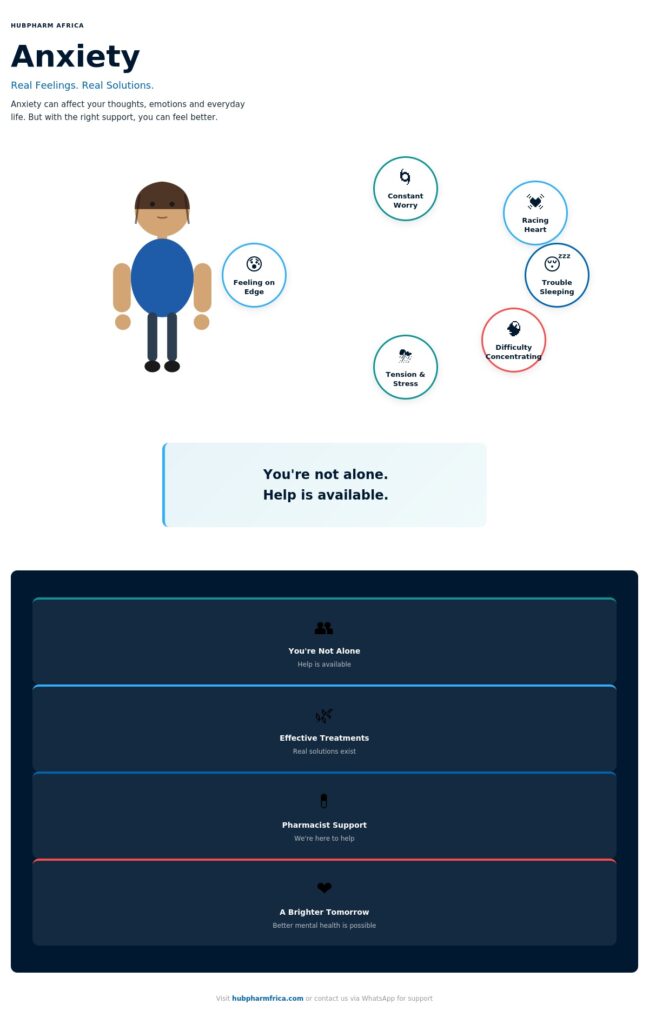
You may feel nervous before an examination, worried about an important decision, or tense during a difficult period. However, anxiety becomes a health concern when fear or worry becomes excessive, difficult to control, or starts interfering with everyday life.
Anxiety disorders are among the most common mental disorders worldwide. The World Health Organization estimated that 359 million people were living with an anxiety disorder in 2021. Effective treatments are available, yet many people do not receive care.
Nigeria also has evidence of a significant anxiety burden. In the Lagos State Mental Health Survey, which included 11,246 adults aged 18–75 years, 3.5% had clinically significant symptoms of generalised anxiety at the time of the survey. The researchers also found that anxiety and depression often occurred together.
So, what does anxiety look like, and when should you seek help?
What is anxiety?
Anxiety involves fear, worry or tension that becomes difficult to control.
A person with an anxiety disorder may worry repeatedly about everyday situations, experience sudden episodes of intense fear, avoid certain places or situations, or spend a lot of time expecting something bad to happen.
Physical symptoms can occur too. These may include a racing heartbeat, sweating, dizziness, muscle tension, stomach discomfort and difficulty sleeping.
Importantly, anxiety is not simply a lack of willpower. Anxiety disorders are recognised health conditions that can affect work, school, relationships and daily activities.
Anxiety is not always the same
There are several types of anxiety disorder.
Generalised anxiety disorder
Generalised anxiety disorder, or GAD, involves excessive worry about several areas of life.
Someone may worry repeatedly about money, family, work, health or other everyday issues. The worry can become difficult to control and may occur alongside tension, poor sleep, tiredness or difficulty concentrating.
Panic disorder
Panic disorder involves recurring panic attacks and ongoing concern about having more attacks or changes in behaviour because of them.
A panic attack can cause sudden intense fear together with physical symptoms such as a racing heart, dizziness, sweating, trembling or difficulty breathing.
Because these symptoms can resemble physical illness, a healthcare professional may need to rule out urgent medical causes.
Social anxiety disorder
Social anxiety involves significant fear or worry about social situations or situations where a person feels they may be judged by others.
The person may begin avoiding social activities, school, work or other situations as a result.
Anxiety related to another condition
Anxiety symptoms can also occur alongside depression, physical illnesses or substance-related problems.
For this reason, proper assessment matters. A healthcare professional should look at the whole picture rather than treating every episode of worry as the same condition.
Common symptoms of anxiety

Anxiety can affect both the mind and the body.
Common symptoms include:
- Excessive or persistent worry
- Feeling restless or constantly on edge
- Difficulty controlling worrying
- Difficulty concentrating
- Irritability
- Muscle tension
- Difficulty falling or staying asleep
- Racing or pounding heartbeat
- Sweating
- Trembling
- Dizziness
- Stomach discomfort
- Avoiding situations because of fear
Nigerian research has also documented physical symptoms among people experiencing anxiety. An earlier clinical study in Nigeria reported symptoms including headaches, difficulty sleeping, concentration problems, rapid or irregular heartbeat, weakness, dizziness and chest discomfort.
However, these symptoms can have many causes. Therefore, they should not automatically be taken as proof of an anxiety disorder.
Why anxiety in Nigeria can go unnoticed
Anxiety does not always present as an obvious mental-health problem.
For example, someone may repeatedly visit a clinic because of headaches, poor sleep, stomach symptoms or a racing heartbeat without realising that anxiety may be contributing to the problem.
Nigeria’s national mental-health research has also identified a substantial treatment gap. In the Nigerian Survey of Mental Health and Well-Being, anxiety disorders were among the most common mental disorders, yet only a minority of people with mental disorders had contact with treatment services.
Stigma can make the problem harder to address. In addition, people may first seek help from different healthcare providers before receiving an appropriate mental-health assessment.
That is why recognising persistent symptoms is important.
How is anxiety diagnosed?
There is no single blood test that confirms an anxiety disorder.
Instead, a healthcare professional usually asks about:
- Your main symptoms
- How long they have been present
- What situations trigger them
- How much they affect daily life
- Sleep and concentration
- Other mental-health symptoms
- Physical health conditions
- Medicines and other substances
- Previous treatment
- Your personal and family history
A short screening tool such as the GAD-2 or GAD-7 may also help identify anxiety symptoms.
However, a questionnaire does not replace a proper assessment.
NICE recommends that assessment should consider not only the symptoms themselves but also distress, impairment, other mental-health conditions, physical conditions and previous treatment.
Treatment for anxiety in Nigeria
Anxiety can be treated.
The appropriate treatment depends on the type and severity of anxiety, the person’s circumstances and their preferences.
Psychological treatment
Psychological treatment is an important part of anxiety care.
Cognitive behavioural therapy, commonly called CBT, is one of the best-established approaches. It helps people understand the connection between thoughts, feelings and behaviour and develop healthier ways of responding to anxiety.
Depending on the anxiety disorder, treatment may also involve exposure-based approaches, relaxation techniques or structured self-help.
WHO identifies psychological interventions as essential treatments for anxiety disorders.
NICE also recommends psychological interventions as part of stepped care for generalised anxiety disorder and panic disorder.
Medicines for anxiety
Some people with anxiety disorders may benefit from prescription medicines.
For longer-term treatment, doctors may consider antidepressant medicines, particularly medicines from the SSRI or SNRIgroups. These medicines can also be used for conditions other than depression.
The choice depends on the person’s diagnosis, other health conditions, previous treatment, possible side effects and individual circumstances.
WHO notes that antidepressants such as SSRIs can be useful for adults with anxiety disorders.
NICE similarly recommends discussing the potential benefits, side effects, withdrawal effects and interactions before starting medication for generalised anxiety disorder.
What about medicines that calm anxiety quickly?
Some medicines can reduce severe anxiety quickly, but that does not mean they are suitable for long-term treatment.
Benzodiazepines, for example, can cause dependence and are generally not recommended as a routine long-term treatment for anxiety disorders. WHO recommends against their use for generalised anxiety disorder and panic disorder, except that they may have a limited role in acute, severe situations under professional supervision.
Therefore, someone should not assume that a medicine that produces rapid calming is automatically the best treatment.
Anxiety treatment should be individualised
There is no single anxiety medicine that works for everyone.
A doctor may consider:
- The specific anxiety disorder
- How severe the symptoms are
- Other medicines being taken
- Other physical or mental-health conditions
- Previous treatment
- Potential side effects
- The person’s preferences
For example, NICE recommends shared decision-making when choosing between psychological and drug treatment for people with more significant GAD.
This approach matters because anxiety can look similar across different conditions while requiring different treatment plans.
Can lifestyle changes help?
Yes, healthy habits can support anxiety treatment.
They do not replace professional care when someone has an anxiety disorder, but they can form part of a broader treatment plan.
Helpful steps include:
- Maintaining a regular sleep routine
- Staying physically active
- Keeping supportive social connections
- Learning relaxation or stress-management techniques
- Eating regular, balanced meals
- Reducing alcohol
- Avoiding illicit drugs
- Following the treatment plan provided by your healthcare professional
WHO recommends self-care measures such as physical activity, stress-management skills and reducing alcohol as part of managing anxiety.
Anxiety and depression can occur together
Anxiety and depression are different conditions, but they can occur at the same time.
In the Lagos State Mental Health Survey, about one in five people with depressive symptoms also had symptoms of generalised anxiety.
This overlap is one reason why a complete assessment is useful.
If someone receives treatment for anxiety but continues to experience persistent low mood, loss of interest, hopelessness or other depressive symptoms, those symptoms should also be discussed with a healthcare professional.
When should you seek professional help?
Consider seeking professional assessment when anxiety:
- Continues for weeks or keeps returning
- Becomes difficult to control
- Interferes with work or school
- Affects relationships
- Disrupts sleep
- Causes significant physical symptoms
- Leads you to avoid normal activities
- Makes everyday decisions unusually difficult
You should also seek medical assessment when new physical symptoms such as chest pain, fainting or severe breathing difficulty occur, because these symptoms can have causes other than anxiety.
What can a pharmacist help with?
Pharmacists can play an important role in medication care.
If a doctor has prescribed medicine for anxiety, a pharmacist can help explain:
- What the medicine is intended to treat
- How it fits into the treatment plan
- Common side effects
- Potential medicine-related concerns
- Questions that should be taken back to the prescriber
- What to do if you have concerns about your treatment
However, a pharmacist should not replace the assessment of a doctor or mental-health professional when diagnosis or treatment needs further review.
These medicines are available at HubPharm Africa
The medicines discussed in this article are available through HubPharm Africa. If your doctor prescribes any of the following, you can order them online or pay us a visit at our pharmacy .
Sertraline for generalized anxiety disorder Order now
Paroxetine for anxiety and panic disorder Order now
Escitalopram for anxiety disorders Order now
Magnesium Supplement for muscle tension and relaxation Order now
B-Complex Vitamins for stress support Order now
Bring your prescription or contact us via WhatsApp with any questions about medicines.
Frequently Asked Questions
Is anxiety normal?
Occasional anxiety is a normal human response to stress or uncertainty.
An anxiety disorder is different because the fear or worry becomes excessive, difficult to control or disruptive enough to affect daily life.
Can anxiety be treated?
Yes. Effective psychological treatments are available, and some people also benefit from prescription medicines.
Does anxiety always require medicine?
No. Treatment depends on the type and severity of anxiety. Psychological treatment, structured self-help and lifestyle measures may play important roles, while some people may also need prescription medicine.
Can anxiety cause physical symptoms?
Yes. Anxiety can cause physical symptoms such as muscle tension, sweating, dizziness, sleep problems and a racing heartbeat. However, similar symptoms can occur with physical illnesses, so persistent or concerning symptoms deserve proper assessment.
Can anxiety and depression happen together?
Yes. Nigerian research has documented significant overlap between symptoms of depression and generalised anxiety.
Are anxiety medicines addictive?
It depends on the medicine. Some medicines used for anxiety can cause dependence, which is one reason healthcare professionals do not generally recommend benzodiazepines as routine long-term treatment for anxiety disorders.
Can a pharmacist help someone taking anxiety medicine?
Yes. A pharmacist can provide medication information, identify medicine-related concerns and help patients understand questions they should discuss with their prescriber.
The bottom line
Anxiety is more than ordinary nervousness when fear and worry become persistent, difficult to control or disruptive to everyday life.
Fortunately, anxiety disorders are treatable.
Psychological treatment remains an important part of care. In some cases, prescription medicines may also form part of the treatment plan. The right approach depends on the specific anxiety disorder, its severity and the person’s individual circumstances.
If anxiety is affecting your sleep, work, relationships or everyday activities, don’t simply assume that you have to live with it. A qualified healthcare professional can help determine what is happening and discuss appropriate treatment options.
Medical note
This article provides general health information and does not diagnose or treat anxiety. Prescription mental-health medicines should be used only under appropriate professional supervision. If symptoms are severe, rapidly worsening, or accompanied by concerning physical symptoms, seek prompt medical care.
References
- World Health Organization. Anxiety disorders, 2025.
- World Health Organization. Mental disorders, 2025.
- NICE. Generalised anxiety disorder and panic disorder in adults: management (CG113).
- World Health Organization. Benzodiazepines in treatment of adults with generalised anxiety disorder and/or panic disorder.
- Adewuya AO, et al. Current prevalence, comorbidity and associated factors for symptoms of depression and generalised anxiety in the Lagos State Mental Health Survey, Nigeria. Comprehensive Psychiatry, 2018.
- Gureje O, et al. Lifetime and 12-month prevalence of mental disorders in the Nigerian Survey of Mental Health and Well-Being.
- Gureje O, et al. Common psychiatric disorders over a lifetime: age of onset, risk and treatment contact in the Nigerian survey of mental health and wellbeing.
- Mbanuzuru AV, et al. Generalized anxiety disorder screening using GAD-7 among in-school adolescents of Anambra State, Nigeria. 2023.