Bipolar Disorder in Nigeria: Symptoms, Treatment and Medicines

Bipolar disorder is a mental health condition that affects mood, energy, activity and thinking. It involves episodes of depression and episodes of unusually elevated or irritable mood, known as mania or hypomania.
These episodes can affect school, work, relationships, finances and everyday life. However, bipolar disorder is treatable, and many people can live meaningful and productive lives with appropriate care.
In Nigeria, bipolar disorder can be difficult to recognise. A person may seek help during depression without mentioning previous periods of unusually high energy or reduced need for sleep. As a result, the full pattern of symptoms may not become clear immediately.
That is why understanding both sides of the condition matters.
What Is Bipolar Disorder?

Bipolar disorder is characterised by changes between different mood states.
Depression
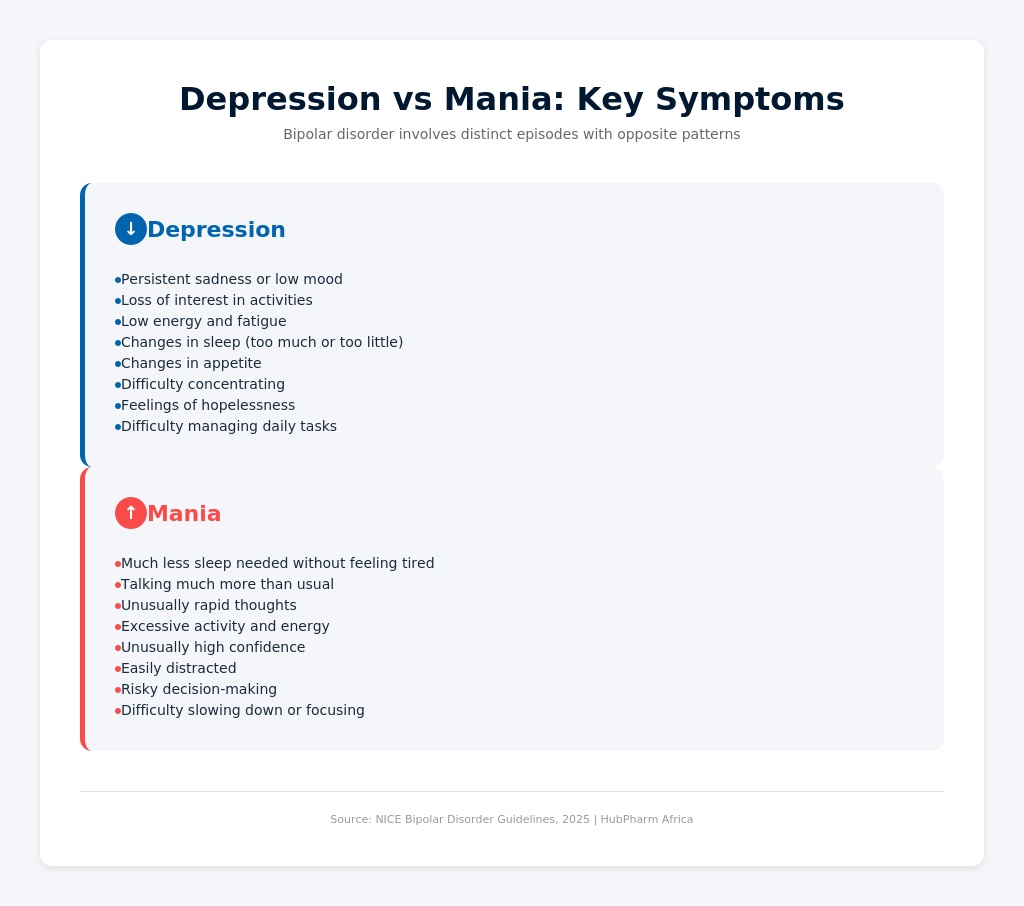
During a depressive episode, a person may experience:
- Persistent sadness or low mood
- Loss of interest in activities
- Low energy
- Changes in sleep
- Changes in appetite
- Difficulty concentrating
- Feelings of hopelessness or worthlessness
- Difficulty managing everyday responsibilities
These symptoms can resemble depression that occurs without bipolar disorder.
Mania
Mania involves a distinct period of unusually elevated, expansive or irritable mood together with increased activity or energy.
A person experiencing mania may:
- Sleep much less than usual without feeling tired
- Talk much more than usual
- Have unusually rapid thoughts
- Become extremely active
- Feel unusually confident or energetic
- Become easily distracted
- Make decisions without considering their consequences
- Find it difficult to slow down
Mania can significantly interfere with everyday functioning and may require urgent specialist assessment.
Hypomania
Hypomania has similar features to mania but is less severe.
Someone may appear unusually energetic, productive, talkative or confident. Because the person may initially feel that they are performing exceptionally well, hypomania can be difficult to recognise as a health problem.
The distinction between mania and hypomania requires professional assessment.
Bipolar I and Bipolar II

You may have heard the terms bipolar I and bipolar II.
Bipolar I involves episodes of mania. Bipolar II involves episodes of hypomania and major depression.
These are not simply different levels of the same illness. They involve different patterns of mood episodes and require proper clinical assessment.
NICE guidance covers bipolar I, bipolar II, mixed affective states and rapid-cycling bipolar disorder.
Bipolar Disorder in Nigeria: What Do We Know?
Nigeria does not currently have a single reliable national figure that can describe the prevalence of bipolar disorder across the entire population.
An African systematic review found lifetime prevalence estimates ranging from 0.1% to 1.83% in community surveys from Nigeria and Ethiopia. However, differences between studies and limitations in available African data make broad national estimates difficult.
Research in Nigeria also shows that awareness remains an important issue.
A 2023 mixed-methods Nigerian study involving patients, family caregivers, clinicians and community members reported low awareness of bipolar disorders in its community sample and highlighted the experiences of people living with the condition and their families.
Therefore, the absence of a diagnosis does not necessarily mean that someone has never experienced symptoms.
Why Bipolar Disorder Can Be Missed

One reason bipolar disorder gets missed is that people often seek treatment during depression.
If previous periods of unusually high energy, reduced sleep or impulsive behaviour are not discussed, the clinician may not have the complete picture.
NICE recommends that adults presenting with depression should be asked about previous periods of overactivity or disinhibited behaviour. When these periods have lasted several days or more, specialist assessment may be appropriate.
Family members can sometimes provide useful information because they may notice changes in behaviour that the person does not recognise.
Importantly, bipolar disorder should not be diagnosed simply because someone has mood changes. Many other conditions can cause changes in mood, energy or behaviour.
How Bipolar Disorder Is Diagnosed
There is no single blood test that confirms bipolar disorder.
Instead, diagnosis involves a detailed clinical assessment.
A mental-health professional may explore:
- Previous episodes of depression
- Periods of increased energy or activity
- Changes in sleep
- Changes in behaviour
- Family history
- Previous treatment
- Other mental-health conditions
- Physical health
- Current medicines
- How symptoms affect school, work and relationships
NICE recommends a full psychiatric assessment and consideration of other possible explanations, including ADHD, schizophrenia-spectrum disorders, substance-related conditions and thyroid disorders.
This is also why online quizzes should not be used to diagnose bipolar disorder.
Treatment for Bipolar Disorder

Treatment usually combines medicines, psychological support, education and practical support.
The exact treatment plan depends on the person’s symptoms, previous episodes, other health conditions and response to treatment.
Medicines
Doctors may prescribe mood-stabilising medicines or antipsychotic medicines during different phases of bipolar disorder.
Lithium is one established long-term treatment option. Other medicines may be selected depending on whether the person is experiencing mania, depression or needs longer-term relapse prevention.
These medicines require professional supervision. Some require blood tests or other physical-health monitoring.
For example, NICE recommends monitoring kidney and thyroid function, as well as calcium levels, for people taking long-term lithium.
Because treatment decisions depend on the individual, a person should not start, stop or change bipolar-disorder medication without the healthcare professional managing their treatment.
Psychological support
Medicines are only one part of bipolar care.
Psychological interventions can help people understand their condition, recognise changes in mood, manage stress and develop plans for staying well.
NICE recommends structured psychological interventions for people with bipolar disorder, including approaches designed specifically for bipolar disorder.
Family support
Bipolar disorder can affect the entire household.
Education can help family members understand the condition and recognise changes that may require professional attention.
NICE recommends carer-focused education and support as part of bipolar care.
Why Medication Monitoring Matters
Some bipolar medicines require regular monitoring because treatment can affect physical health.
For example, NICE recommends regular physical-health assessment covering areas such as blood pressure, metabolic health and weight. People taking long-term lithium also need monitoring of kidney and thyroid function.
This makes follow-up appointments an important part of treatment rather than an optional extra.
In Nigeria, medication monitoring can also be affected by access and availability.
A 2025 survey of 203 Nigerian psychiatrists and trainee psychiatrists found that concerns about lithium monitoring and availability were among factors affecting its use.
Bipolar Disorder and Depression Are Not the Same
This distinction matters.
Someone with depression may have periods of low mood without ever experiencing mania or hypomania. Someone with bipolar disorder experiences a pattern that includes elevated or irritable mood episodes as well.
Therefore, antidepressant treatment should not simply be assumed to be appropriate for everyone experiencing depression.
If someone has previously experienced unusually high energy, reduced need for sleep or other symptoms suggestive of mania or hypomania, that history should be discussed with a healthcare professional.
Bipolar Disorder and Everyday Life
Treatment does not only focus on symptoms.
People living with bipolar disorder may also need support with:
- School or university
- Employment
- Relationships
- Family communication
- Sleep routines
- Stress management
- Physical health
- Recognising early changes in mood
Keeping regular routines can be useful, particularly around sleep and daily activities.
A personalised plan can also help the person and their family recognise changes early and know when to contact their healthcare team.
When Should You Seek Professional Help?

Seek professional assessment when significant changes in mood, energy, sleep or behaviour repeatedly interfere with everyday life.
Particular attention is needed when someone experiences a marked change from their usual behaviour, especially alongside very little sleep, unusually high energy, severe depression or significant disruption to daily functioning.
NICE recommends urgent specialist assessment when mania or severe depression is suspected or when there is an immediate safety concern.
If someone is in immediate danger or unable to stay safe, contact local emergency or urgent mental-health services and involve a trusted adult or family member immediately.
Getting Help With Bipolar Treatment in Nigeria
Managing bipolar disorder can involve several healthcare professionals and ongoing treatment. Questions about a prescribed medicine are also common, particularly when treatment changes.
HubPharm Africa can provide pharmacist support for questions about prescribed medicines, helping patients and families understand what their healthcare professional has prescribed and how to follow their treatment plan safely.
Have questions about a prescribed mental-health medicine? [Talk to a HubPharm Pharmacist →]
Frequently Asked Questions
Can bipolar disorder be treated?
Yes. Effective treatment options include medicines, psychological interventions, education and practical support. The treatment plan should be individualised and reviewed over time.
Is bipolar disorder the same as having mood swings?
No. Everyone experiences changes in mood. Bipolar disorder involves distinct episodes of depression and mania or hypomania that form a clinically significant pattern.
Can someone have bipolar disorder and anxiety?
Yes. Bipolar disorder can occur alongside anxiety disorders and other mental-health conditions. These conditions may need separate assessment and treatment.
Does bipolar disorder go away?
Bipolar disorder is generally considered a long-term condition. However, appropriate treatment can help people manage symptoms, reduce relapse and maintain their quality of life.
Can bipolar disorder affect young people?
Yes. Bipolar disorder can occur in young people, although assessment in children and adolescents requires particular care because mood and behaviour can change for many reasons. NICE has specific recommendations for children and young people.
Should someone stop their bipolar medicine when they feel better?
Medication changes should be discussed with the healthcare professional managing the condition. NICE specifically recommends reassessment when someone who has been stable is considering stopping medication.
The Bottom Line
Bipolar disorder is more than ordinary mood changes. It involves episodes of depression and mania or hypomania that can affect a person’s everyday life.
In Nigeria, research suggests that awareness and access to appropriate care remain important challenges. At the same time, Nigerian research continues to examine how patients, families and clinicians experience and manage bipolar disorder.
The right diagnosis is an important first step. From there, treatment can combine professional care, medicines when appropriate, psychological support, family education and practical strategies for staying well.
Medical note: This article is for health education and does not replace assessment or treatment from a qualified healthcare professional.
References
- World Health Organization. Bipolar disorder, 2025.
- NICE. Bipolar disorder: assessment and management (CG185), updated September 2025.
- Jidong DE et al. Bipolar disorders in Nigeria: a mixed-methods study. 2023.
- Adiukwu FN et al. Challenges of lithium prescription in bipolar disorders in Nigeria. 2025.
- Epidemiology and burden of bipolar disorder in Africa: a systematic review.
- Jidong DE et al. A randomised controlled feasibility trial comparing culturally adapted psychoeducation and treatment as usual for persons with bipolar disorders in Nigeria. 2025.