Melanoma Skin Cancer: Symptoms, Diagnosis and Treatment
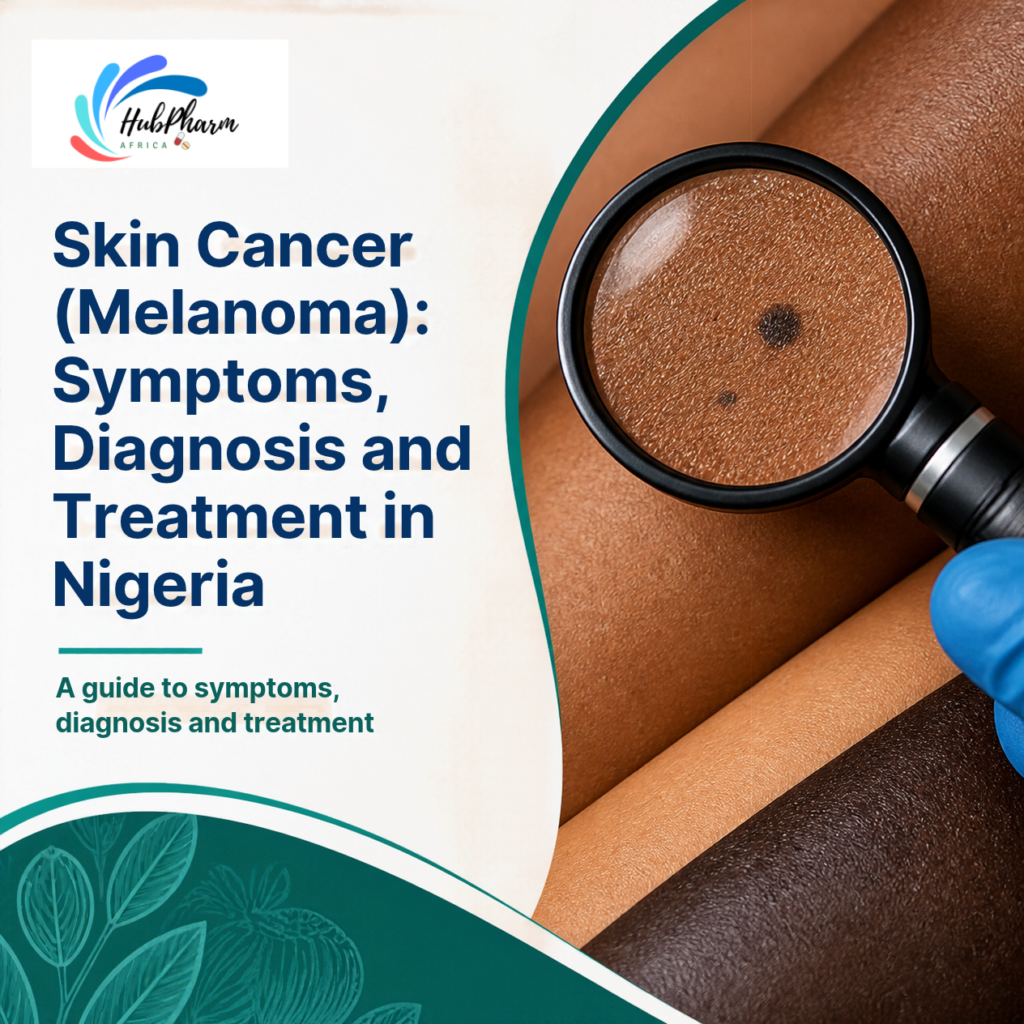
Melanoma is a type of skin cancer that develops in melanocytes, the cells responsible for producing melanin, the pigment that gives skin its colour. Although melanoma is less common than some other skin cancers, it can spread to other parts of the body if it is not treated appropriately.
The good news is that melanoma detected at an early stage can often be treated successfully. However, recognising its warning signs is important because melanoma does not always look like a typical mole.
Melanoma can affect people of every skin tone, including people with dark skin in Nigeria. It may develop on the face, arms, legs or other areas of the body. In addition, it can appear on the palms, soles of the feet or beneath the nails, where people may not expect to find skin cancer. <Cite refs={[“turn780393search0″,”turn780393search13”]}/>
This article explains melanoma symptoms, risk factors, diagnosis, treatment options and how HubPharm Africa can support patients with medicine-related questions.
What Is Melanoma Skin Cancer?
Melanoma develops when melanocytes begin to grow abnormally and form cancerous cells. Most melanomas develop in the skin, although melanoma can also occur in certain other parts of the body, including the eye.
Melanoma is different from other common skin cancers, such as basal cell carcinoma and squamous cell carcinoma. Although these cancers can also cause harm, melanoma has a greater tendency to spread to other parts of the body.
Melanoma may develop in an existing mole, but it can also appear as a new spot on previously normal-looking skin.
The type of melanoma, its location and how far it has spread all influence the treatment plan. Therefore, a suspicious skin mark needs proper medical assessment rather than treatment based on appearance alone.
What Are the Symptoms of Melanoma?
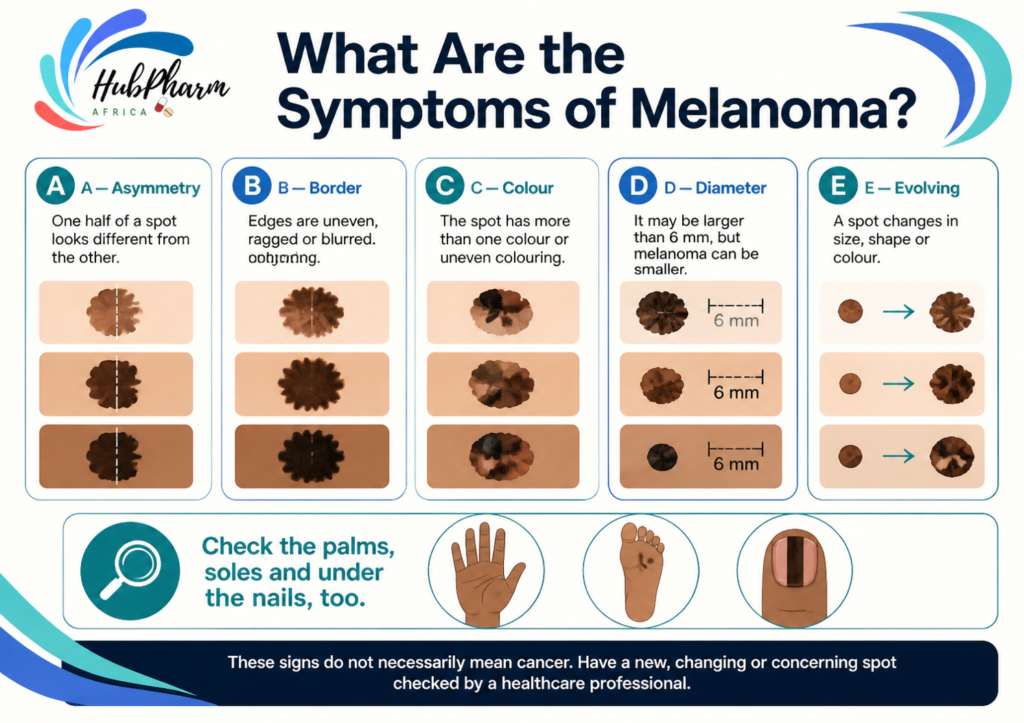
A new or changing mole is one of the most recognised warning signs of melanoma. However, melanoma can appear in different ways, and not every case follows the same pattern.
Possible symptoms include:
- A mole that changes in size, shape or colour.
- A spot with irregular or uneven edges.
- A mark containing several colours or shades.
- A new spot that looks different from other moles.
- A mole that becomes itchy, tender or painful.
- A spot that bleeds, crusts or develops an open sore.
- A dark mark on the palm or sole of the foot.
- A dark line or patch beneath a fingernail or toenail without a clear explanation.
- A skin lesion that continues to change or does not heal.
These symptoms do not automatically mean that someone has melanoma. Nevertheless, a new or changing mark should be assessed by a qualified healthcare professional. <Cite refs={[“turn780393search9″,”turn780393search0”]}/>
The ABCDE Rule for Recognising Melanoma
The ABCDE rule can help people recognise some warning signs of melanoma.
| Letter | Meaning | What to look for |
|---|---|---|
| A | Asymmetry | One half of the spot looks different from the other half. |
| B | Border | The edges are irregular, uneven or poorly defined. |
| C | Colour | The spot has different colours or uneven shades. |
| D | Diameter | The spot may be larger than 6 millimetres, although melanoma can be smaller. |
| E | Evolving | The spot changes in size, shape, colour or appearance over time. |
Not every melanoma displays all these features. Therefore, do not wait until a spot meets every part of the ABCDE rule before seeking medical advice.
Can Melanoma Occur on Dark Skin?
Yes. Melanoma can affect people with dark skin, including people living in Nigeria and other African countries.
A type known as acral melanoma can develop on the palms, soles of the feet, fingers, toes and beneath the nails. These areas may receive little direct sunlight, so checking only sun-exposed skin is not enough. <Cite refs={[“turn780393search13″,”turn780393search1”]}/>
People with darker skin should seek medical assessment for:
- A new or growing dark spot on the palm or sole.
- An unexplained dark line beneath a nail.
- A changing skin mark that bleeds or itches.
- A sore that does not heal or repeatedly returns.
A suspicious mark does not necessarily mean cancer. However, professional assessment can help identify which lesions need further investigation.
What Causes Melanoma?
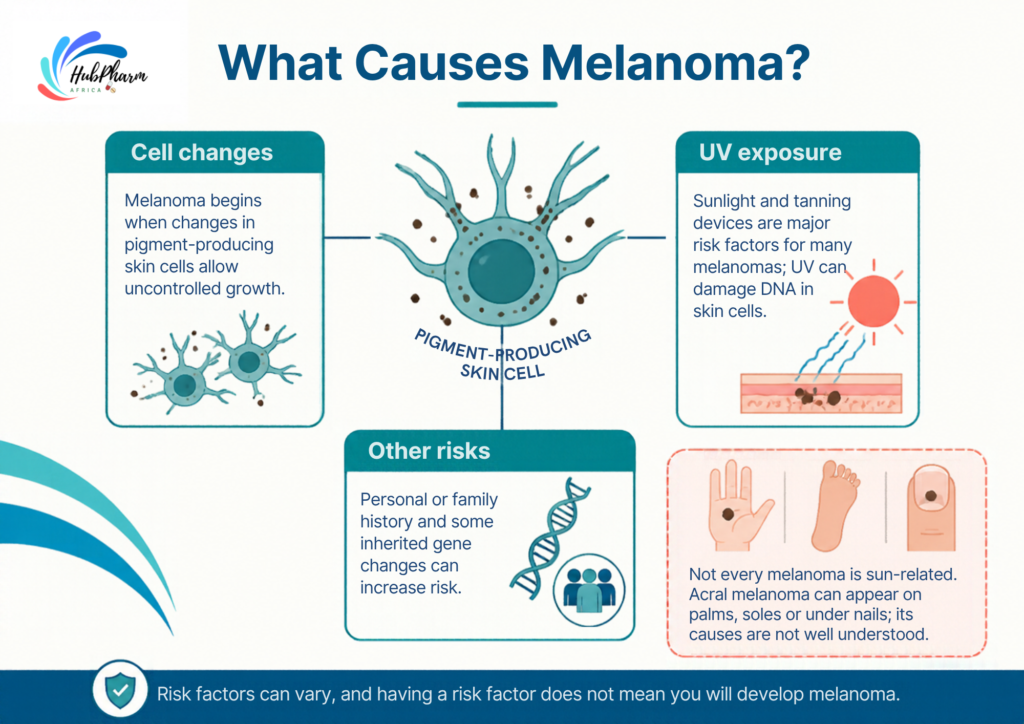
Melanoma develops when changes in the DNA of melanocytes cause them to grow abnormally. There is no single cause, and the disease can occur in people without obvious risk factors.
1. Ultraviolet radiation
Exposure to ultraviolet (UV) radiation from sunlight or artificial tanning devices can damage skin cells and increase the risk of melanoma.
Reducing excessive UV exposure is one way to lower avoidable risk. However, melanoma can also develop in areas that receive little sunlight.
2. Personal or family history
People who have previously had melanoma may have an increased risk of developing another melanoma. Having a close relative with the disease can also increase risk.
3. Many or unusual moles
People with numerous moles or atypical moles may have a higher risk. However, melanoma can develop even in people who have few or no existing moles.
4. Weakened immune system
Certain medical conditions and treatments that weaken the immune system can increase the risk of some skin cancers.
5. Inherited genetic factors
Some inherited genetic changes increase melanoma risk. When several close relatives have had melanoma or certain related cancers, a clinician may recommend further assessment or genetic counselling.
Can melanoma be prevented?
Not every case can be prevented. However, people can reduce avoidable UV exposure by seeking shade, wearing protective clothing and using suitable broad-spectrum sunscreen on exposed skin.
It is also helpful to become familiar with your skin and notice changes. These steps support prevention and early recognition, but they cannot guarantee that melanoma will not develop.
How Is Melanoma Diagnosed?
A suspicious skin mark needs proper medical assessment. A clinician may recommend several steps to determine whether melanoma is present.
1. Skin examination
The clinician will ask about the mark, when it appeared and whether it has changed. They may also ask about personal and family history of skin cancer.
The examination may include checking other moles and pigmented areas for unusual features.
2. Dermoscopy
A clinician may use a handheld instrument called a dermatoscope to examine a skin mark more closely. This provides a magnified view of features that are not always visible to the naked eye.
Dermoscopy can help assess suspicious lesions, but it does not replace a biopsy when cancer is suspected.
3. Skin biopsy
A biopsy involves removing all or part of a suspicious lesion so that a specialist can examine the tissue under a microscope.
A biopsy is the main way to confirm melanoma. The results can also help determine the thickness and other features of the tumour.
A qualified clinician should decide how to sample the lesion. Avoid trying to remove or treat a suspicious mark yourself.
4. Tests to determine the stage
If melanoma is confirmed, additional tests may be needed to find out whether it has spread. Depending on the findings, these may include examination of nearby lymph nodes, a sentinel lymph node biopsy or imaging scans.
Not everyone needs every test. The care team chooses investigations according to the melanoma’s characteristics and the patient’s clinical situation. <Cite refs={[“turn780393search0″,”turn780393search7”]}/>
What Are the Stages of Melanoma?
Melanoma is generally classified from stage 0 to stage IV.
- Stage 0: Abnormal cells remain in the outermost layer of the skin.
- Stage I: The melanoma is relatively limited and has not spread to distant parts of the body.
- Stage II: The melanoma has additional high-risk features, such as greater thickness or ulceration, but has not spread to distant organs.
- Stage III: The melanoma has spread to nearby lymph nodes or nearby areas of skin.
- Stage IV: The melanoma has spread to distant parts of the body.
Doctors consider tumour thickness, ulceration, lymph node involvement and other clinical findings when assigning a stage.
The stage is important because it helps determine whether surgery alone may be sufficient or whether additional treatment is appropriate.
How Is Melanoma Treated?
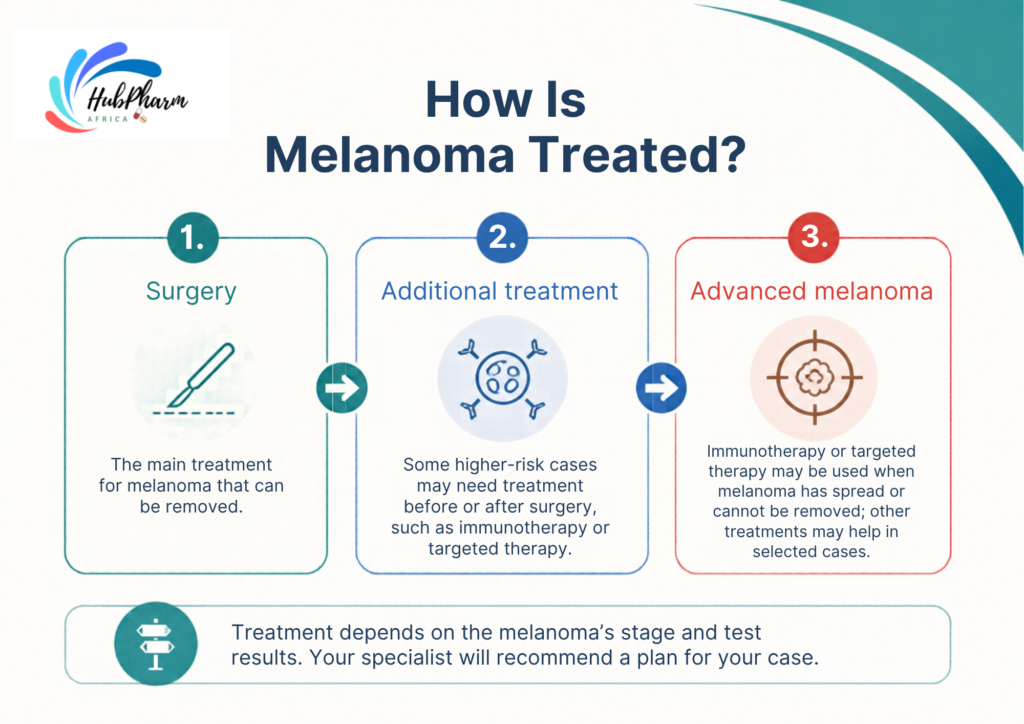
Treatment depends on the stage, location and characteristics of the melanoma, whether it has spread and the patient’s general health. The care team should explain the expected benefits, possible side effects and available alternatives.
1. Surgery
Surgery is the main treatment for many melanomas, particularly those detected early.
The surgeon removes the melanoma along with a margin of surrounding skin. The size of the margin depends on the tumour’s features.
Some patients may also need a sentinel lymph node biopsy to check whether cancer cells have reached nearby lymph nodes.
When melanoma is found early, surgery may be sufficient. However, regular follow-up remains important because melanoma can sometimes return. <Cite refs={[“turn780393search8″,”turn780393search0”]}/>
2. Immunotherapy
Immunotherapy helps the immune system recognise and attack cancer cells.
Some medicines work by blocking proteins that cancer cells use to avoid immune attack. These treatments are called immune checkpoint inhibitors.
Examples include:
- Pembrolizumab.
- Nivolumab.
- Ipilimumab.
Doctors may recommend these medicines for selected patients whose melanoma has spread, cannot be removed completely with surgery or has a high risk of returning after surgery.
Immunotherapy can cause the immune system to attack healthy organs, so patients need specialist monitoring.
3. Targeted therapy
Some melanomas contain specific genetic changes, including certain BRAF mutations, that make them suitable for targeted treatment.
Targeted medicines act on pathways that cancer cells use to grow. For selected patients, combinations such as dabrafenib with trametinib or vemurafenib with cobimetinib may be considered.
Tumour testing is generally needed before doctors select this type of treatment. These medicines are not suitable for every melanoma.
4. Radiotherapy
Radiotherapy uses high-energy radiation to damage cancer cells. It may be considered in selected situations, including when melanoma affects particular areas or when treatment is needed to relieve symptoms.
Radiotherapy is not required for every patient with melanoma.
5. Chemotherapy
Chemotherapy uses medicines that destroy cancer cells or limit their growth. Dacarbazine is one example that has been used to treat melanoma.
However, immunotherapy and targeted therapy are important options for many patients with advanced melanoma. The oncology team determines which approach is most suitable based on the disease and the patient’s circumstances.
6. Supportive and palliative care
Supportive care helps patients manage symptoms, treatment side effects and the emotional impact of cancer.
Palliative care may be provided alongside cancer treatment to improve comfort and quality of life. It does not necessarily mean that treatment to control the cancer has stopped.
Medicines Used to Treat Melanoma
The following medicines are used in selected melanoma treatment plans. Their suitability depends on the cancer’s stage, tumour characteristics and previous treatments.
| Medicine | General role |
|---|---|
| Nivolumab | Immunotherapy that helps the immune system recognise and attack cancer cells. |
| Pembrolizumab | Immunotherapy used in selected melanomas, including certain cases after surgery or when the disease has spread. |
| Ipilimumab | Immunotherapy that targets a different immune checkpoint and may be used in selected treatment plans. |
| Dabrafenib | Targeted medicine used for melanomas with certain BRAF mutations. |
| Vemurafenib | Targeted medicine used for selected melanomas with specific BRAF mutations. |
| Trametinib | Targeted medicine that may be combined with dabrafenib in appropriate cases. |
| Dacarbazine | Chemotherapy medicine that may be considered in selected circumstances. |
| Interferon alfa | An immune-based medicine that has been used in particular melanoma settings; its role is more limited than some newer options. |
Treatment recommendations change as research develops. These medicines are examples, not a prescription or recommendation for a particular patient.
Melanoma medicines must only be used under specialist supervision. Immunotherapy, targeted medicines and chemotherapy can cause serious side effects and require appropriate monitoring.
The inclusion of a medicine in this article does not confirm that it is currently available through HubPharm Africa.
Possible Side Effects of Melanoma Treatment
Side effects depend on the treatment and the individual. They may include:
- Fatigue and reduced energy.
- Skin irritation or rash.
- Nausea or changes in appetite.
- Diarrhoea.
- Joint or muscle discomfort.
- Changes in liver or other organ function.
- Immune-related inflammation caused by immunotherapy.
- Fever or other medicine-specific effects with certain targeted treatments.
Patients should report new or worsening symptoms to their oncology team. Some side effects can become serious if they are not assessed promptly.
Do not stop or change a cancer medicine without consulting the treating specialist, unless emergency clinicians instruct you otherwise.
How Can People Reduce Their Risk of Skin Cancer?
Although melanoma cannot always be prevented, several practical steps can help reduce avoidable UV exposure.
- Seek shade when sunlight is intense.
- Wear clothing that protects exposed skin.
- Use suitable broad-spectrum sunscreen on exposed areas and reapply according to the product instructions.
- Avoid artificial tanning devices.
- Become familiar with existing moles and skin marks.
- Seek medical assessment for new or changing spots, including marks on the palms, soles or beneath the nails.
These measures do not eliminate melanoma risk. Therefore, continue to seek medical advice when a skin mark changes, even if you use sun protection regularly.
How HubPharm Africa Can Support Patients With Melanoma
Melanoma care may involve surgery, immunotherapy, targeted medicines and ongoing follow-up. Patients may also need help understanding prescriptions, medicine precautions and refill arrangements.
HubPharm Africa is a digital pharmacy focused on helping patients access genuine medicines and receive pharmacy support. For patients managing melanoma, the team can assist with medicine-related questions and prescription enquiries, subject to applicable requirements.
Support may include:
- Prescription guidance: Helping patients understand prescribed medicines and clarify medicine-related questions.
- Medication management: Supporting refill planning and questions about possible medicine interactions.
- Pharmacist support: Explaining medicine precautions and when to contact the oncology team about side effects.
- Medicine enquiries: Responding to enquiries about prescribed cancer medicines, subject to prescription requirements, regulatory rules and confirmed availability.
HubPharm does not replace a dermatologist, surgeon or oncologist. Diagnosis and treatment decisions must remain under qualified medical care.
To ask a medicine-related question, contact a HubPharm Africa pharmacist on WhatsApp.
Getting Help in Nigeria
If you notice a new or changing mole, an unusual skin mark or a dark line beneath a nail without a clear explanation, arrange an assessment with a qualified healthcare professional.
Depending on the findings, you may be referred to a dermatologist, surgeon or oncology team. A suspicious mark does not automatically mean cancer, but an examination can help determine whether further tests are needed.
If melanoma is diagnosed, ask the care team to explain the stage, treatment options, expected side effects and follow-up plan. You may also ask whether tumour testing could help identify suitable targeted treatments.
If you have difficulty understanding a prescription or need support with medicine-related questions, a pharmacist can help clarify appropriate next steps.
Frequently Asked Questions About Melanoma Skin Cancer
1. Is melanoma the same as other skin cancers?
No. Melanoma is one type of skin cancer. It develops in melanocytes, the cells that produce pigment. Basal cell carcinoma and squamous cell carcinoma are other common types of skin cancer.
2. Can people with dark skin develop melanoma?
Yes. Melanoma can affect people of every skin tone. It may develop on the palms, soles of the feet or beneath the nails, so unusual marks in these areas should not be ignored.
3. Is every changing mole cancerous?
No. Many changing skin marks are not cancerous. However, a mole that changes in size, shape or colour, or that begins to itch or bleed, should be assessed by a healthcare professional.
4. Can melanoma be cured?
Melanoma detected at an early stage can often be treated successfully, frequently with surgery. More advanced disease may require immunotherapy, targeted therapy or other specialist treatment. Outcomes depend on the stage and individual clinical factors.
5. What medicines are used to treat melanoma?
Treatment may include immunotherapy medicines such as nivolumab or pembrolizumab, or targeted medicines such as dabrafenib and trametinib for selected tumours. The oncology team chooses treatment based on the diagnosis and relevant test results.
6. Does melanoma only occur on sun-exposed skin?
No. Melanoma can develop on skin that receives little direct sunlight, including the soles of the feet, palms and areas beneath the nails. New or changing marks in these locations should be assessed.
7. Can HubPharm Africa help with melanoma medicines?
HubPharm can assist with prescription-related enquiries and pharmacist support. Specific medicines are subject to prescription requirements, regulatory rules and confirmed availability. Contact the pharmacy directly to enquire about a particular prescribed medicine.
Conclusion
Melanoma is a serious type of skin cancer, but recognising suspicious skin changes and seeking medical assessment promptly can make a meaningful difference.
Look out for new or changing moles, irregular spots and unusual marks on any part of the skin, including the palms, soles and nails. If melanoma is diagnosed, treatment may involve surgery, immunotherapy, targeted therapy or other specialist care.
Patients can also benefit from regular follow-up and support with medicine-related questions throughout treatment.
Need help with a prescribed cancer medicine? Speak with a HubPharm Africa pharmacist on WhatsApp.
Medical Disclaimer
This article is for general educational purposes only. It does not replace medical advice, diagnosis or treatment. A qualified healthcare professional should assess suspicious or changing skin marks. Cancer medicines must only be used under appropriate specialist supervision.
References
- National Cancer Institute (NCI). Melanoma Treatment — Patient Version.
- National Cancer Institute (NCI). Skin Cancer in People with Darker Skin.
- National Health Service (NHS). Symptoms of Melanoma Skin Cancer.
- National Health Service (NHS). Treatment for Melanoma Skin Cancer.
- American Academy of Dermatology (AAD). Finding Skin Cancer in Darker Skin Tones.
- National Cancer Institute (NCI). Melanoma Treatment — Health Professional Version.
Recommended Internal Links for WordPress
Add links to relevant HubPharm pages once their exact live URLs are confirmed:
- Cancer medication page: Link from the section on medicines used to treat melanoma.
- Ovarian cancer article: Link from the general discussion of cancer diagnosis and treatment.
- Prostate cancer article: Link from the discussion of specialist cancer care.
- Pharmacist support or contact page: Link from the HubPharm support section and final call to action.